NASA Astronaut Captures Auroras in Crimson and Emerald, Provides View from 262 Miles Up
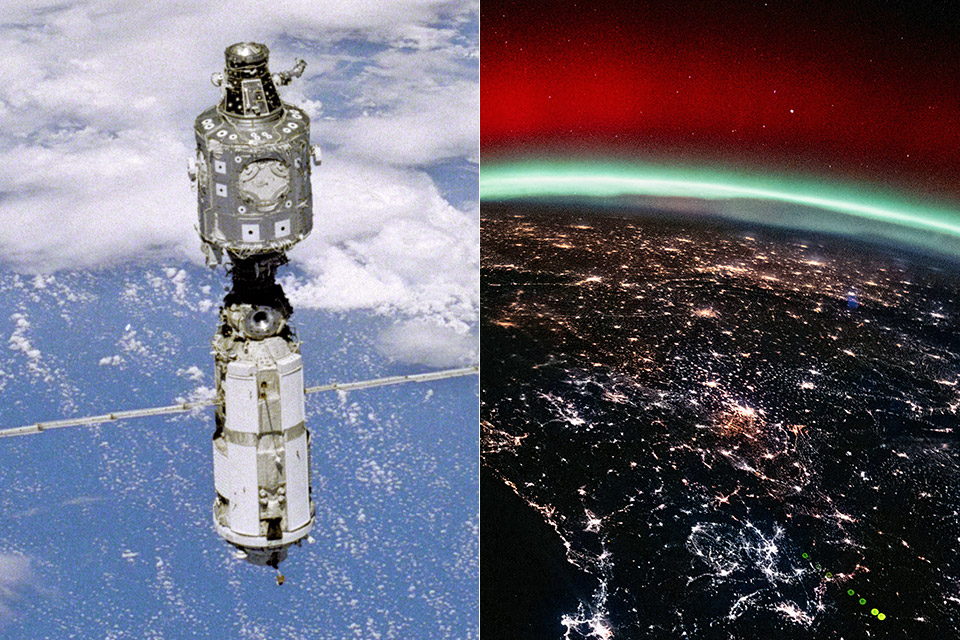
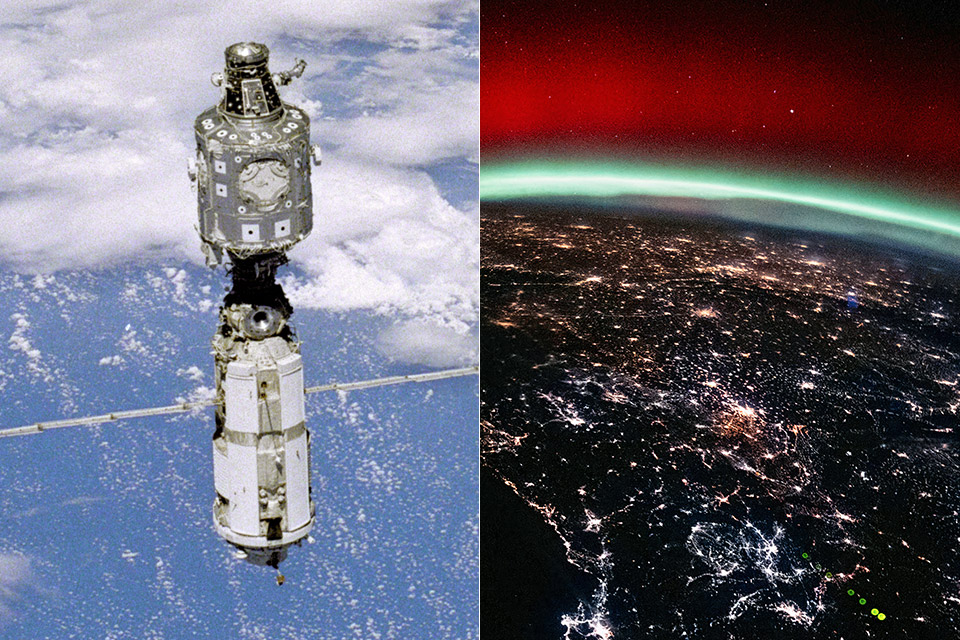
Photo credit: Chris Williams
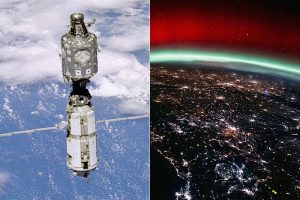
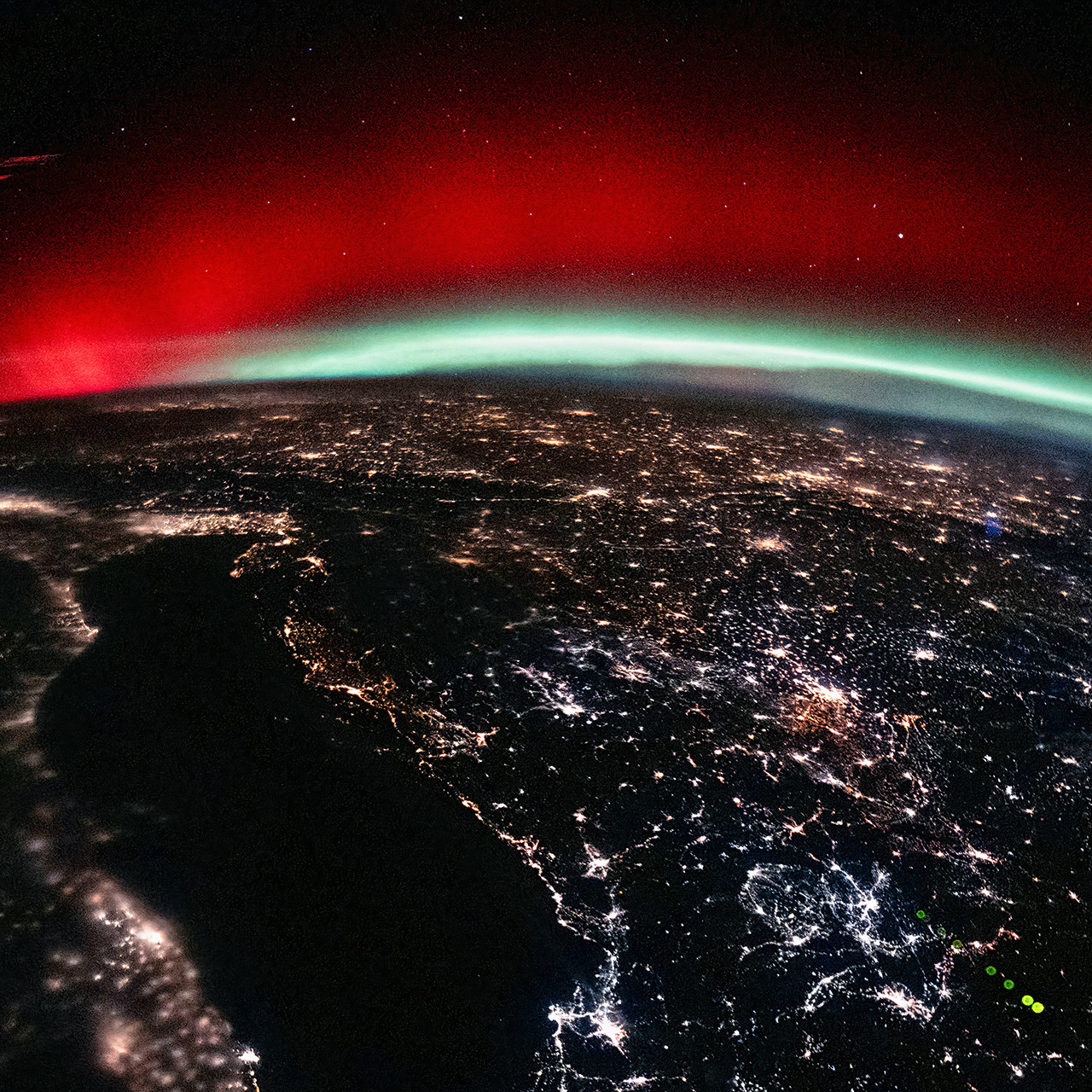
On January 19, 2026, NASA astronaut Chris Williams took amazing images of an aurora while floating high above the Mediterranean Sea onboard the International Space Station. The final sight is breathtaking, with blazing green and red light ribbons arching along the Earth’s edge and European city lights glittering like stars beneath, with a view north from the Italian coast to Germany.
Auroras are the consequence of a remarkable interplay between our Sun and the planet. Charged particles originate from the Sun, resulting in a stream of solar wind that is more than a gentle breeze. When these particles reach Earth, the magnetic field guides many of them to the poles. In the upper atmosphere (60 to 250 miles above ground), particles smash with atoms and molecules.
Sale

Northern Galaxy Light Aurora Projector with 33 Light Effects, LED Star Projector for Bedroom Nebula Lamp,…
- 🏡【𝐔𝐩𝐠𝐫𝐚𝐝𝐞𝐝 𝟑-𝐢𝐧-𝟏 𝐆𝐚𝐥𝐚𝐱𝐲 𝐏𝐫𝐨𝐣𝐞𝐜𝐭𝐨𝐫】Watch the splendid aurora…
- 🌈【𝐑𝐨𝐦𝐚𝐧𝐭𝐢𝐜 𝐆𝐚𝐥𝐚𝐱𝐲 𝐀𝐮𝐫𝐨𝐫𝐚 𝐏𝐫𝐨𝐣𝐞𝐜𝐭𝐨𝐫】 Featuring four…
- 🌲【𝐒𝐨𝐨𝐭𝐡𝐢𝐧𝐠 𝐖𝐡𝐢𝐭𝐞 𝐍𝐨𝐢𝐬𝐞 𝐒𝐥𝐞𝐞𝐩 𝐀𝐢𝐝】Equipped with 8 natural white…
When it comes to the colors we see here, oxygen takes center stage. At altitudes ranging from 60 to 120 miles above the surface, excited oxygen atoms begin to release energy in the form of green light, which is the most common colour seen in an aurora. Higher up, over 180 miles, oxygen begins to emit red emissions. It all comes down to how the atoms return to normal after being stimulated in the first place: lower altitudes have a lot more collisions, thus the green wavelength gets the call while the red wavelength is left behind. Higher up, however, the red wavelength truly comes to life.
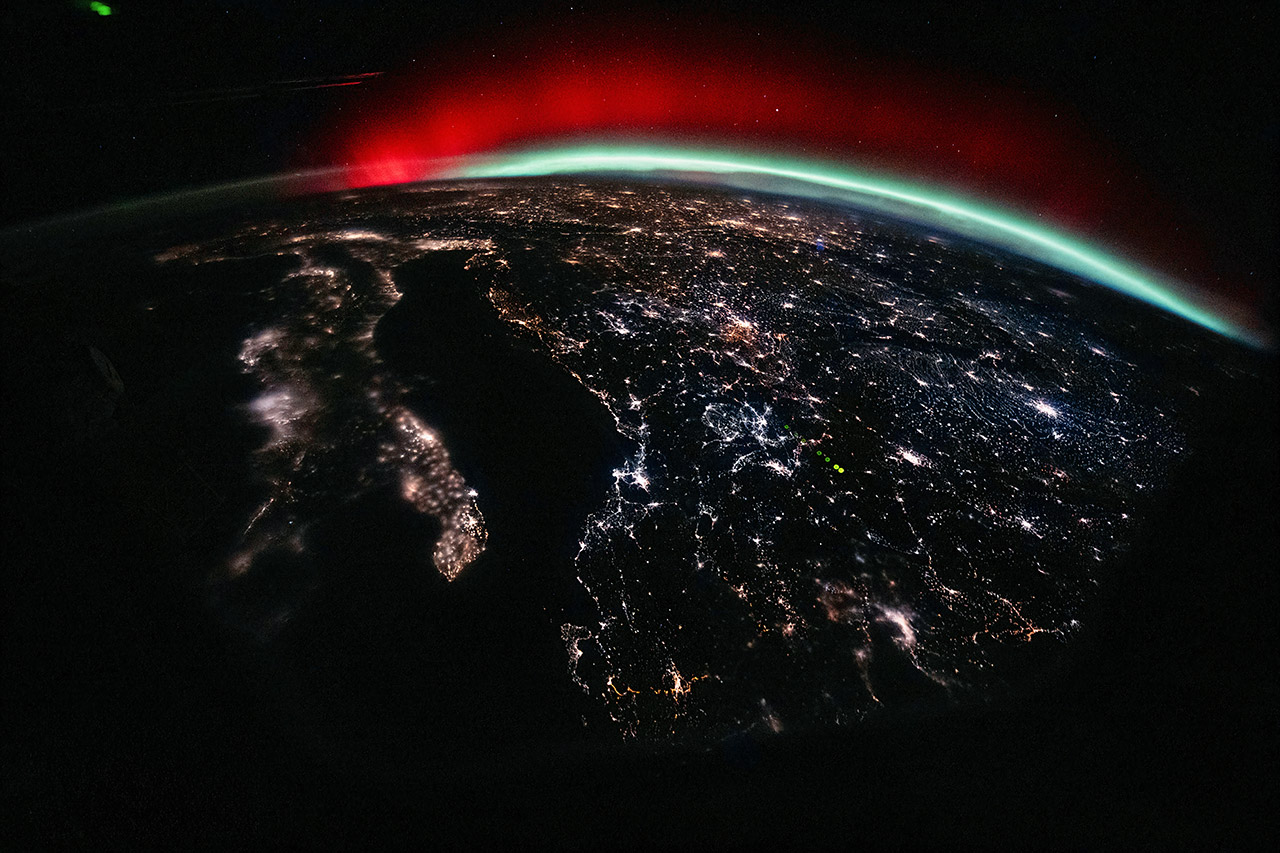
Taking it all in, Williams was able to capture both the green and red in one shot from the vantage point of the space station, which is 262 miles above. The green is directly below the curving horizon, hugging the denser regions of the atmosphere, while the red extends all the way up into the thinner air. The city lights on the ground give a stunning contrast to the ethereal display and the black arc of the planet.
If you’re wondering what’s driving all of this, the answer is space weather. When the Sun becomes active, whether through large coronal ejections or high-speed solar winds, it throws more particles our way. When the activity is high, the auroral zones expand and the colors intensify, sometimes pushing the red emissions lower or making them more bright. Williams photographed this spectacle during a period of active solar activity, transforming a relatively typical night in space into a once-in-a-lifetime light extravaganza.
NASA Astronaut Captures Auroras in Crimson and Emerald, Provides View from 262 Miles Up
#NASA #Astronaut #Captures #Auroras #Crimson #Emerald #View #Miles