Fascinating Look Back at Sony’s PS-FL99, a Turntable That Bridged Eras with its Automatic Music Sensor (AMS)
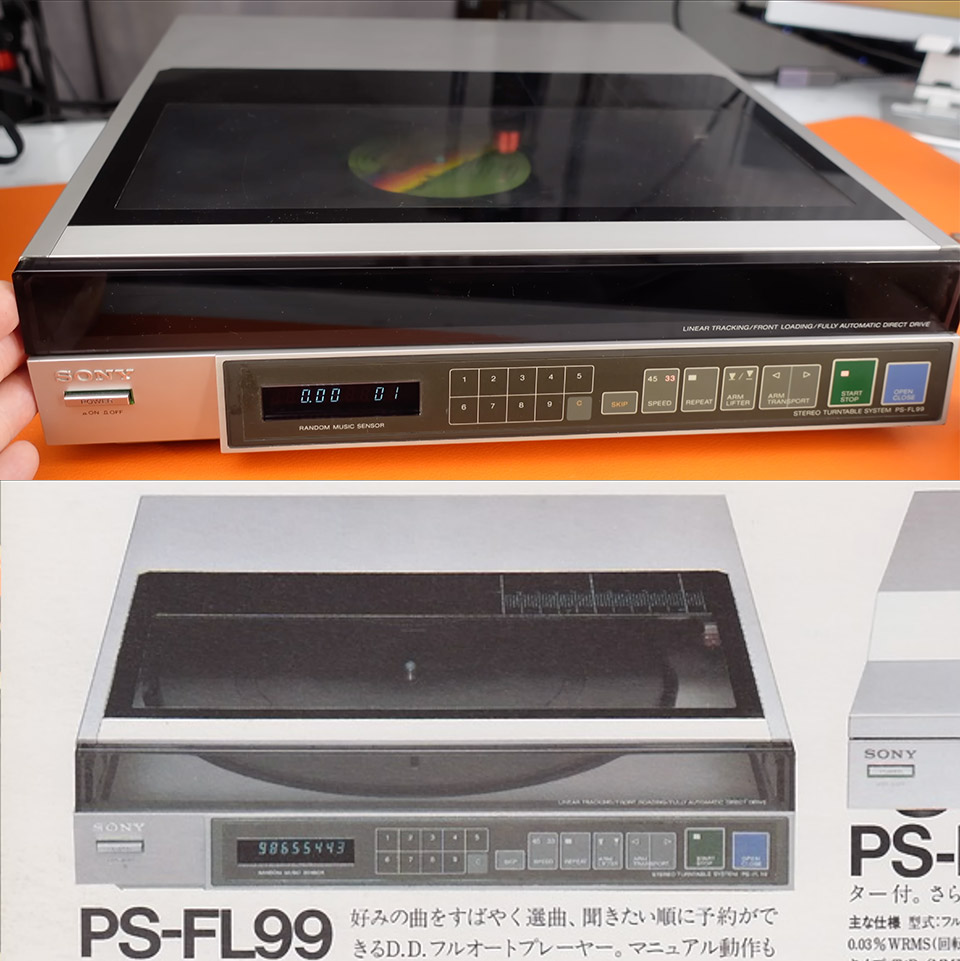
Sony released the PS-FL99 in 1983, just as compact discs were changing the way people listened to music. Vinyl records still held strong appeal for many listeners at that time, and Sony crafted this model to keep the format fresh with clever engineering. Collectors these days are looking for any surviving PS-FL99s they can find since, let’s face it, after more than four decades, most of them aren’t functional.
When you remove the front panel, a drawer pulls out smoothly, bringing with it the entire turntable mechanism. Put on a record, close the drawer, and the system will take it from there. Built-in sensors handle the work for you by automatically determining the size of the record, whether it’s 12 inches or 7 inches, and positioning everything accordingly. This front-loading design is excellent for keeping the platter dust-free and makes the entire procedure extremely straightforward, even in a confined environment.
Sale

Vinyl Record Player Turntable with Built-in Bluetooth Receiver & 2 Stereo Speakers, 3 Speed 3 Size…
- 【Vintage Record Player】Bluetooth Input & AUX Audio input & RCA line-out & Headphone jack. 2 Built in stereo speakers,with Bluetooth wireless…
- 【Belt Drive Vinyl Turntable】Easy to use, simple setup and operation. Great ideal for vinyl lovers. Three-speed Turntable (33, 45, 78 RPM) plays…
- 【Record Player Bluetooth】 Built-in Bluetooth receiver & 2 stereo speakers,,you can listen to your favorite music from your Bluetooth compatible…
Linear tracking is an important feature of the listening experience here. Most classic turntables have pivoting tonearms that swing over the record in a curve, which can cause minor distortions over time. But not this one. The tonearm is short and glides directly across the record on parallel rails, ensuring that the stylus is in excellent contact with the groove throughout. To ensure this, Sony combined it with a very precise servo-controlled system that adjusts the tonearm position on the fly to keep things operating smoothly.
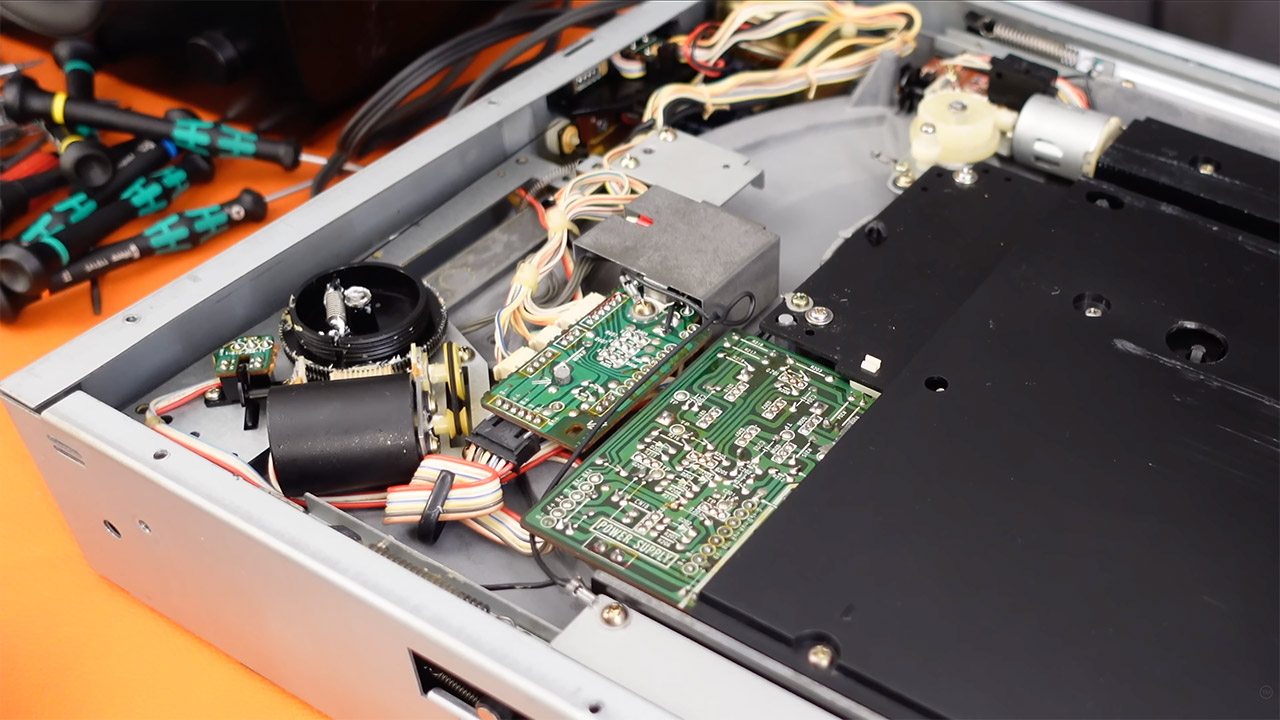
The motor that powers the 290mm aluminum diecast platter is a quartz-locked direct drive. A brushless servo motor rotates the platter at 33 1/3 or 45 rpm, with wow and flutter numbers as low as 0.03% weighted RMS. The signal-to-noise ratio is a good 75 dB, resulting in quiet, rumble-free listening without any speed changes.
The controls are located on the front panel, making them easily accessible. The simple buttons control start, stop, repeat, and speeds, while more complex features include random play and a muting circuit that disables the output during cueing to prevent annoying pops.
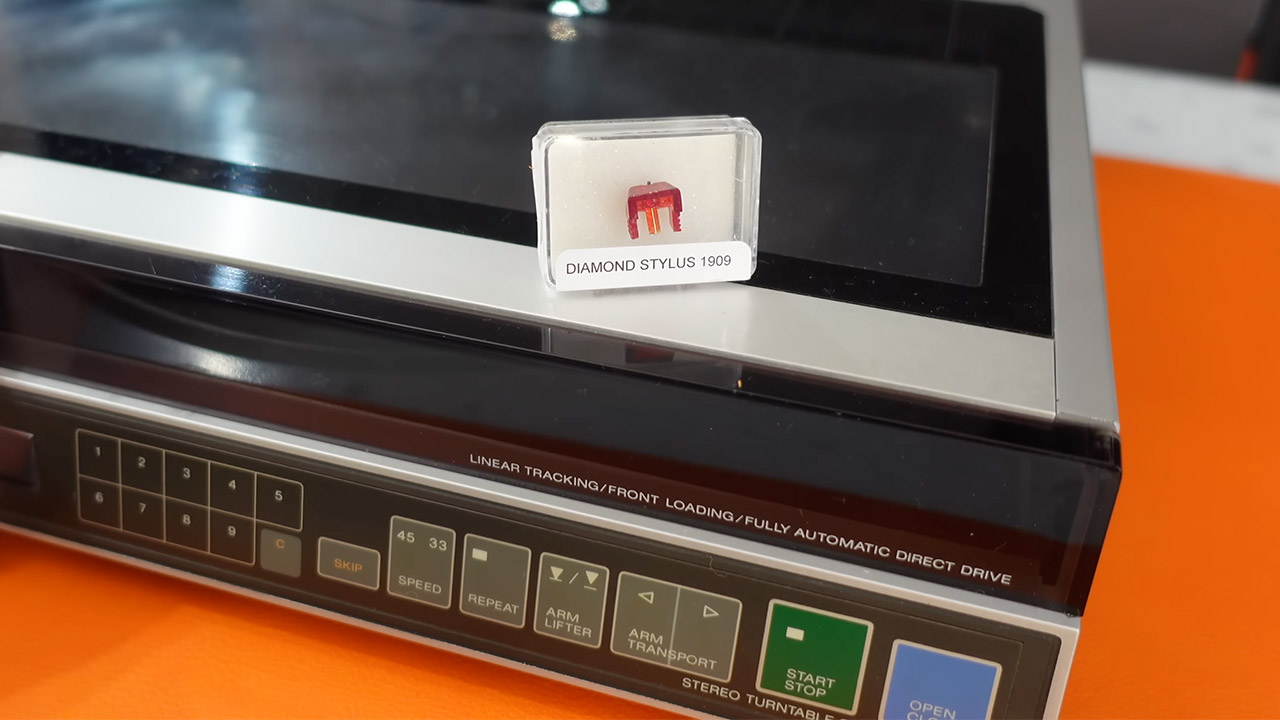
The Automatic Music Sensor (AMS) is one feature that sets the PS-FL99 apart from most other turntables at the time. It is based on technology created by Sony for their cassette decks and early CD players, and it employs optical sensors to scan the record surface for silent gaps between tracks. Simply input the track numbers you want to play on the numeric keypad, and the tonearm will elevate, go directly to the desired groove, and then lower down to begin playing. You can program up to ten tracks in any order you want, or have the system shuffle them randomly, and this direct-access programming provides some of the same ease of use as a digital player, without interfering with the sound, which, of course, is the whole point of having a vinyl player.
The PS-FL99’s build quality demonstrates Sony’s attention to detail in their devices during the early 1980s. It’s fairly compact (for the 1980s) at 430 x 96 x 382mm while weighing 7.6 kg for solid stability. There were several PS-FL99 variants for the Japanese market that ran on 100V power, but they also managed to release a few export versions, so you might be able to find one that runs on your local voltage.
Fascinating Look Back at Sony’s PS-FL99, a Turntable That Bridged Eras with its Automatic Music Sensor (AMS)
#Fascinating #Sonys #PSFL99 #Turntable #Bridged #Eras #Automatic #Music #Sensor #AMS