This is What Happens When You Over-Engineer a Spinning Top
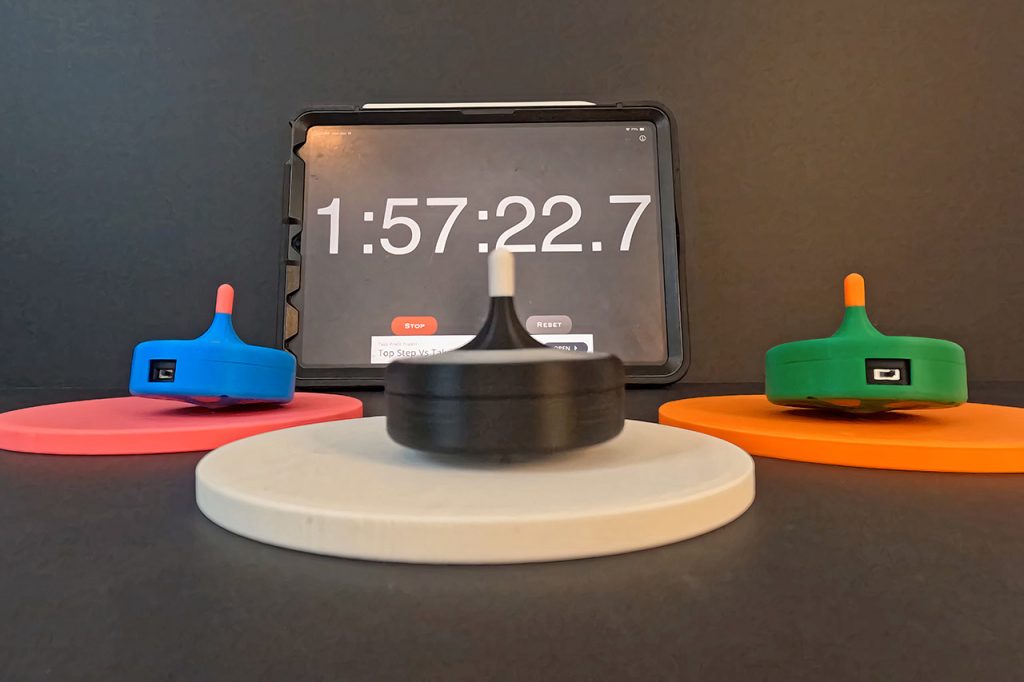
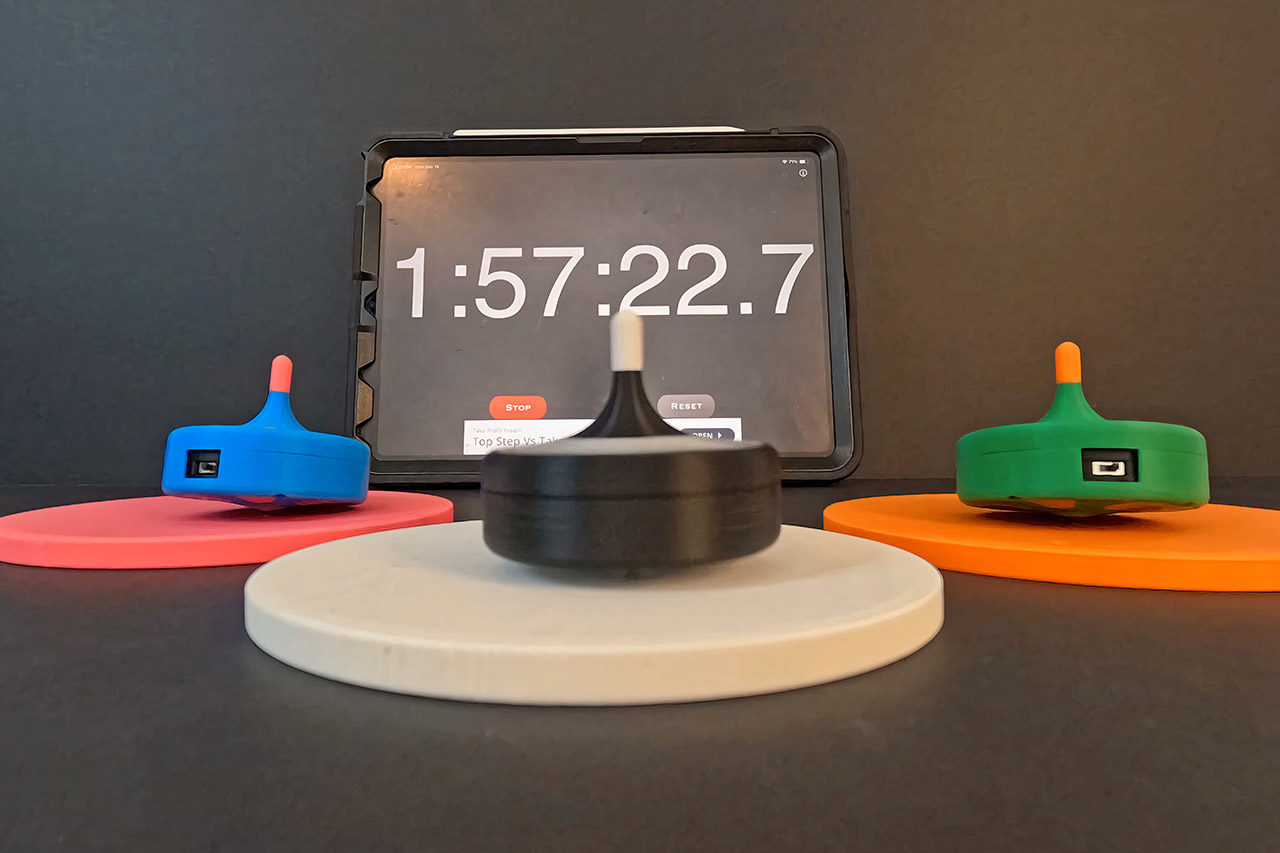
A spinning top rests on a desk, still running full throttle after hours have passed, with an almost hypnotic rhythm. Most common tops have a short lifespan, succumbing to air resistance and surface friction. This one, however, refuses to give up, thanks to Aaed Musa’s fantastic design.
Musa began by setting himself a modest but ambitious challenge: get a traditional top spinning for more than a minute or two. These toys typically spin up quickly with a twist of the hand before succumbing to the laws of physics. Friction at the tip saps the top’s energy, air resistance drags on its surfaces, and the slightest wobble spells death, but Musa desired much more, namely hours of spinning from a plain top with no hidden tricks or power packs. He realized that everything required to complete this task could be incorporated directly into the shell, no messy cords, no secret base, just the top itself.
Sale

Bambu Lab A1 Mini 3D Printer, Support Multi-Color 3D Printing, Set Up in 20 Mins, High Speed & Precision,…
- High-Speed Precision: Experience unparalleled speed and precision with the Bambu Lab A1 Mini 3D Printer. With an impressive acceleration of 10,000…
- Multi-Color Printing with AMS lite: Unlock your creativity with vibrant and multi-colored 3D prints. The Bambu Lab A1 Mini 3D printers make…
- Full-Auto Calibration: Say goodbye to manual calibration hassles. The A1 Mini 3D printer takes care of all the calibration processes automatically,…
Early tests utilized a response wheel arrangement directly from the satellite playbook. A little engine spins a balanced weight one direction, while the conservation of angular momentum causes the top to spin the opposite way. Sounds excellent in principle, but in actuality, the motors would reach a maximum speed and then simply give up, falling in speed and coming to a halt. Musa took that way, but it led nowhere, so he decided to try another approach.

The true breakthrough came from noticing how a top behaves when it starts to wobble, and how that slow circle of the axis can really keep the top spinning if handled correctly. So he devised a method based on an eccentric rotating mass, an off-center weight that circles around, powered by a constant-speed motor. As the weight moves, the center of mass shifts repeatedly, resulting in a controlled vibration that gives the top a consistent circular motion at the tip, and rather than being a flaw, the wobble becomes the very thing that keeps the top spinning.
Inside the top, there is a tiny drone motor that handles the drive, as well as an electrical speed controller that manages power delivery. There’s even bespoke firmware that ensures everything runs smoothly. The power comes from a rechargeable 3.7-volt lithium battery, which is small but powerful. The shell began as a 3D-printed plastic prototype, but it quickly evolved into a beautiful piece of CNC-machined aluminum, precision-balanced and durable, with a teeny-tiny high-grade ball bearing at its heart, a silicon nitride thingy that’s so hard and smooth that friction is minimal.
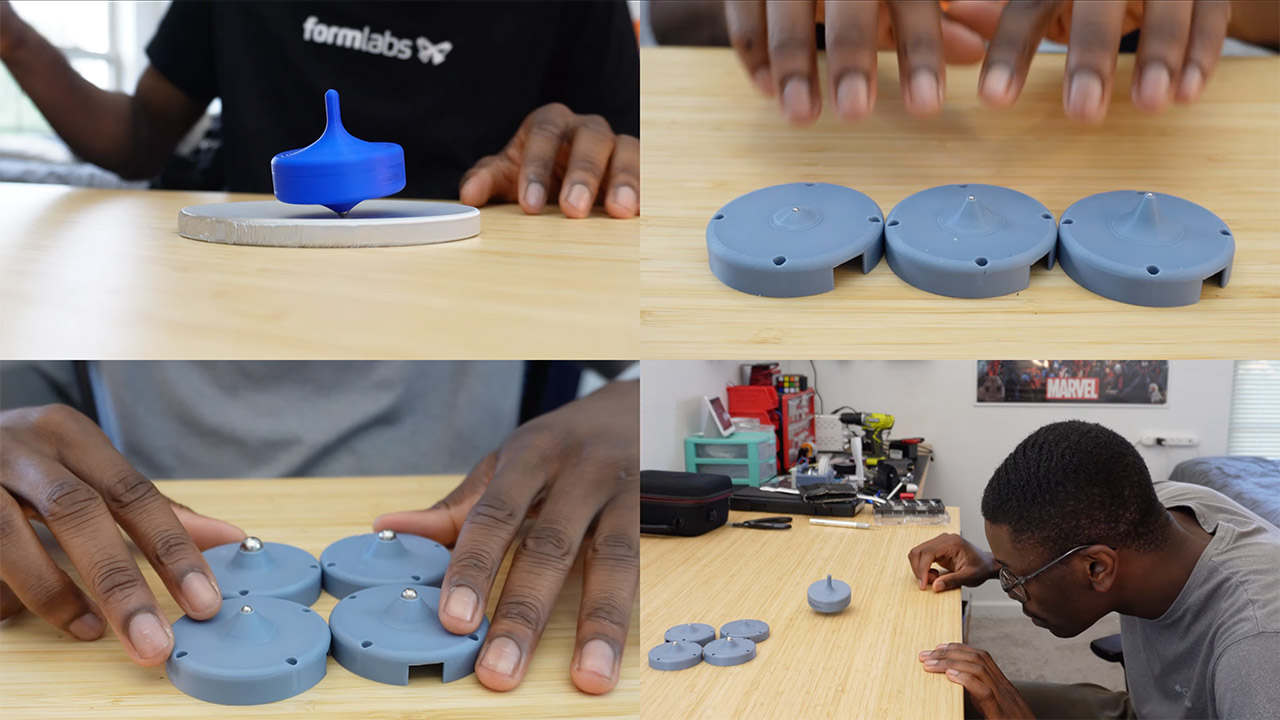
Success was dependent on fine-tuning, as the higher the moment of inertia, the more the top can resist slowing pressures. Musa placed bulk as far away from the axis as feasible. Loudering the center of gravity was also a brilliant idea, since it allows the top to withstand all of the minor bumps and wobbles that would otherwise cause it to topple. The proper tip size is critical, since too small and it digs in, while too large and stability is lost. It required dozens of prototypes, with over 40 variants created in total, to get those elements just right. He used one of those fancy Inertial Measurement Units to send data back to the microcontroller, which then tried to figure out how fast the top was spinning based on how fast it was accelerating, but in the end, it was just easier to use a steady old motor speed rather than all that fancy active feedback nonsense.
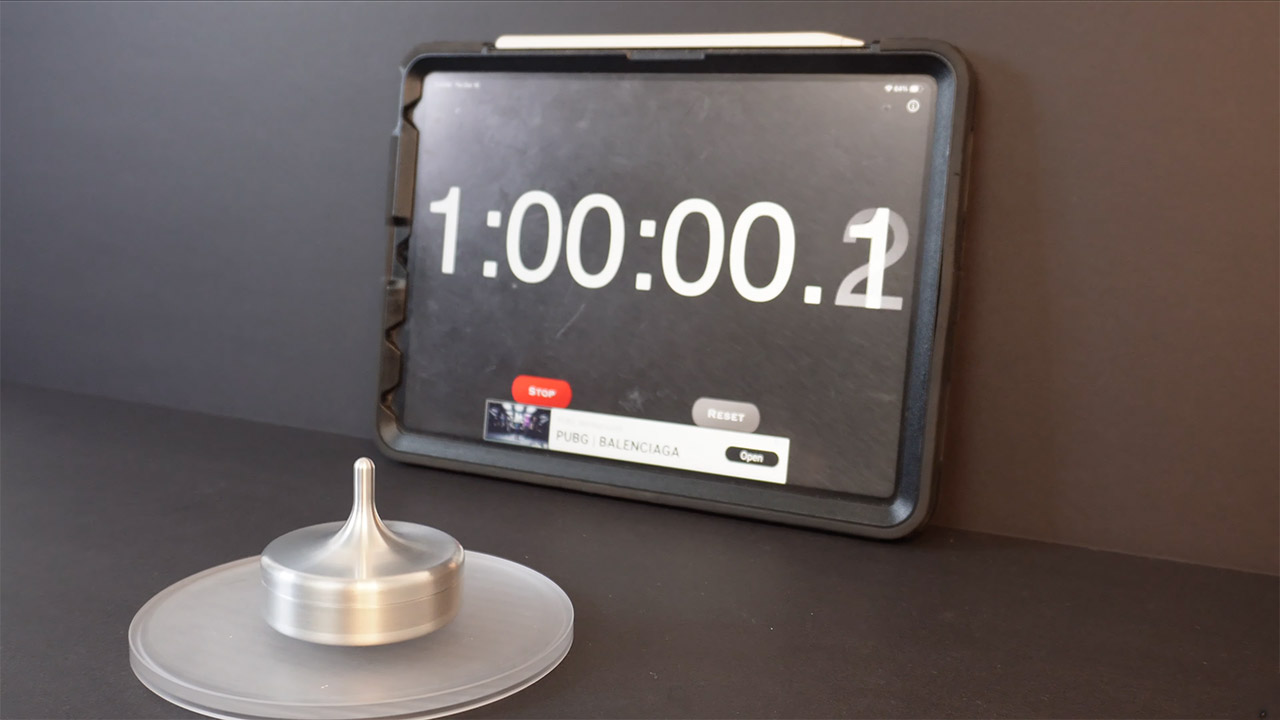
The end result spins a top over a smooth concave polycarbonate plate. Videos show it gliding along for more than an hour, or more often than not, two hours at a time, before the power runs out. There are no magic tricks, no magnets levitating it, no vacuum chambers attempting to cancel out air resistance, and no sneaky coils extracting energy from thin air. Just good old-fashioned engineering, converting stored electrical power into a beautiful smooth spinning motion, employing the same force that every conventional top normally uses, and turning it against itself.
[Source]
This is What Happens When You Over-Engineer a Spinning Top
#OverEngineer #Spinning #Top