Slow Mo Guys Uncover the Virtual Boy’s Hidden Speed

Gavin Free of The Slow Mo Guys begins his latest video with a clear warning: the lights on a Virtual Boy flicker in ways that few displays ever do. He brings out Nintendo’s 1995 Virtual Boy console, a strange red-tinted tabletop that was a nightmare to use and a commercial disaster.
You might remember it for its unusual color and for being a bit of a chuckle when it first came out… but for some reason, the engineering on the thing has always piqued Gavin’s interest, particularly the way it managed to create 3D visuals without the use of any of the sophisticated screens or headsets we use today. He decides to experiment with it and shoot the results with a Phantom TMX7510 camera, which can catch some very extreme frame rates.
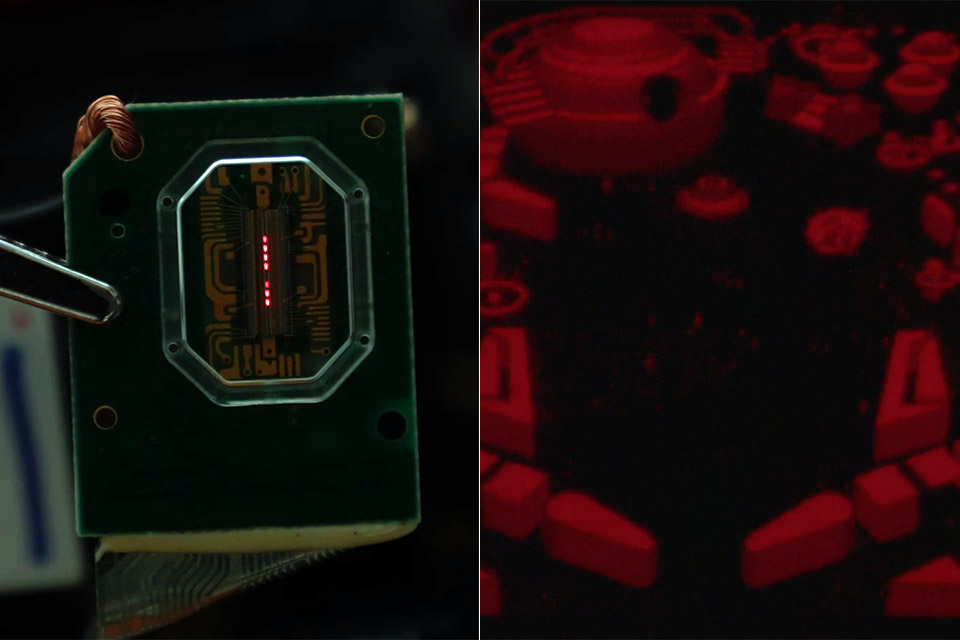
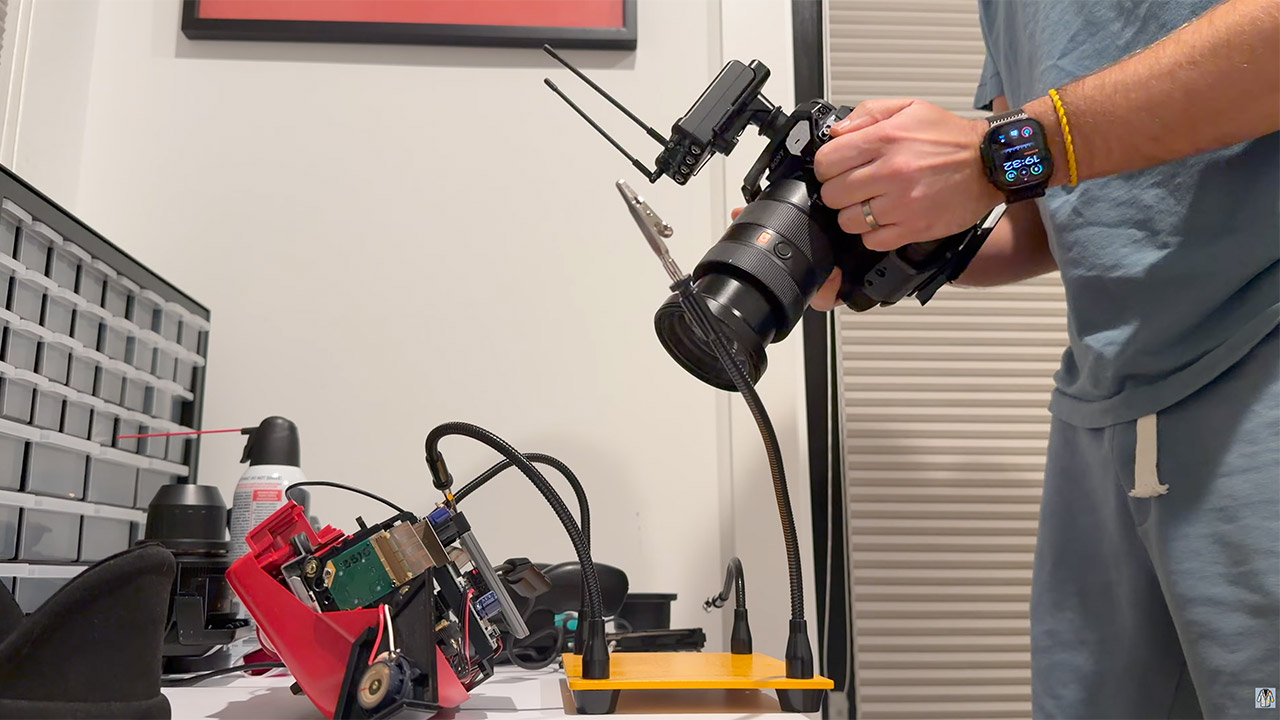
First, he picks a Nintendo screwdriver and removes the bottom panel. The speakers fall out to the side, and the red plastic lenses are removed, revealing circuit boards that are a gorgeous shade of green in normal light but only manage crimson under the Virtual Boy’s special red-tinted filter. The actual magic happens inside: two long, thin columns of red LEDs, each a pixel wide but 224 pixels tall. Rather than being a whole screen, light from the LEDs bounces off a central magnifying lens, hits a 45-degree mirror, and then enters the viewer’s eyes. The setup converts the two little columns into 384 × 224 images per eye.
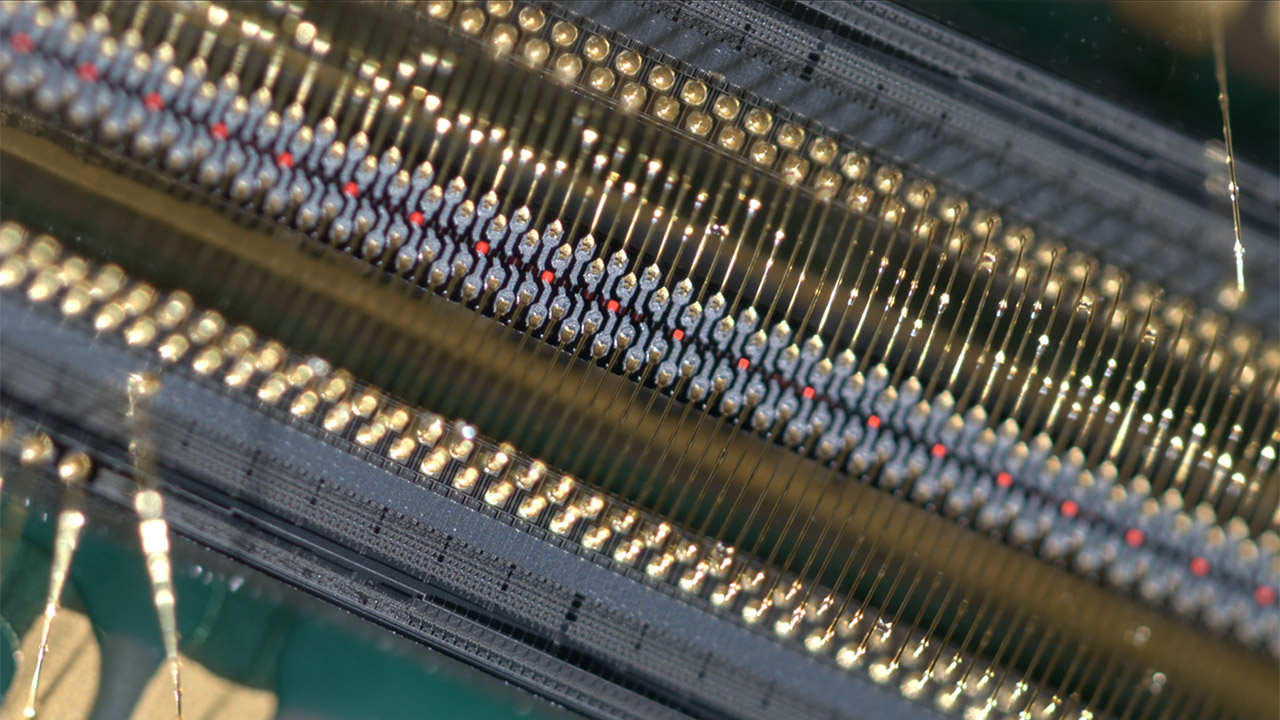
He then turns on the equipment and shoots the exposed LEDs in real time. At 100 frames per second, the flicker is rather evident. He increases the pace to 80,000 frames per second, and the motion of the LEDs becomes almost undetectable. That’s due to the mirrors, which vibrate 50 times each second to move the image from left to right. One eye sees one picture, the other remains dark, and the mirror has a chance to reset.
This technology’s ability to make the image appear stable is entirely down to persistence of vision, and Gavin demonstrates the point by overlaying footage to show how the brain fills in the gaps, similar to how previous CRT TVs scanned lines. The Virtual Boy refreshes 50 times per second, yet the mirrors are precisely in sync, allowing them to sweep a single column over the viewer’s field of view.

He loads a copy of Galactic Pinball and sets the camera to 450,000 frames per second. In this super slow-motion video, the columns appear to be built one by one from left to right, with no gaps between them. The pixels turn off briefly between rows, for a total of 384 flashes every frame, 50 frames per eye per second, or a staggering 38,400 flashes per second across both eyes. That explains why the image appears so sharp and stable.
To observe fine detail, he uses a 10x microscope lens and turns the camera so the image is sideways to achieve the desired resolution. At 1000 frames per second, the luminance flickers, most notably on 3D edges such as the bottom of a flipper. At lower frame rates, the contrast is evident, yet at higher speeds, the individual pixels appear to be a homogenous blob.
He then reduces the vertical resolution to 64 pixels, resulting in 875,000 frames per second. You can now see the gaps in the scan lines, as well as the fact that each column of pixels passes through multiple on/off lighting phases. Then, at 1.75 million frames per second, the pattern begins to make sense: three stages of illumination, followed by full darkness, and then repeated. By stacking the phases in this manner, they can achieve varied brightness levels on the same pixel width without having to extend the mirrors or slow down the process. Nintendo’s engineers devised this method, and they were only able to use red LEDs since blue ones were either too large or too expensive in 1995.
The 3D effect is based on the image being slightly different for each eye at the same time, and the brain then converts that mismatch into a perception of depth. By flashing the images alternately between the two eyes, you eliminate interference and allow the mirror to reset properly. There is no backlight to worry about; instead, the LEDs fire directly, leaving the borders crisp.
Slow Mo Guys Uncover the Virtual Boy’s Hidden Speed
#Slow #Guys #Uncover #Virtual #Boys #Hidden #Speed