Fascinating Look Back at Cyclops, the Monstrous Nuclear Bus That Actually Rolled in The Big Bus (1976)

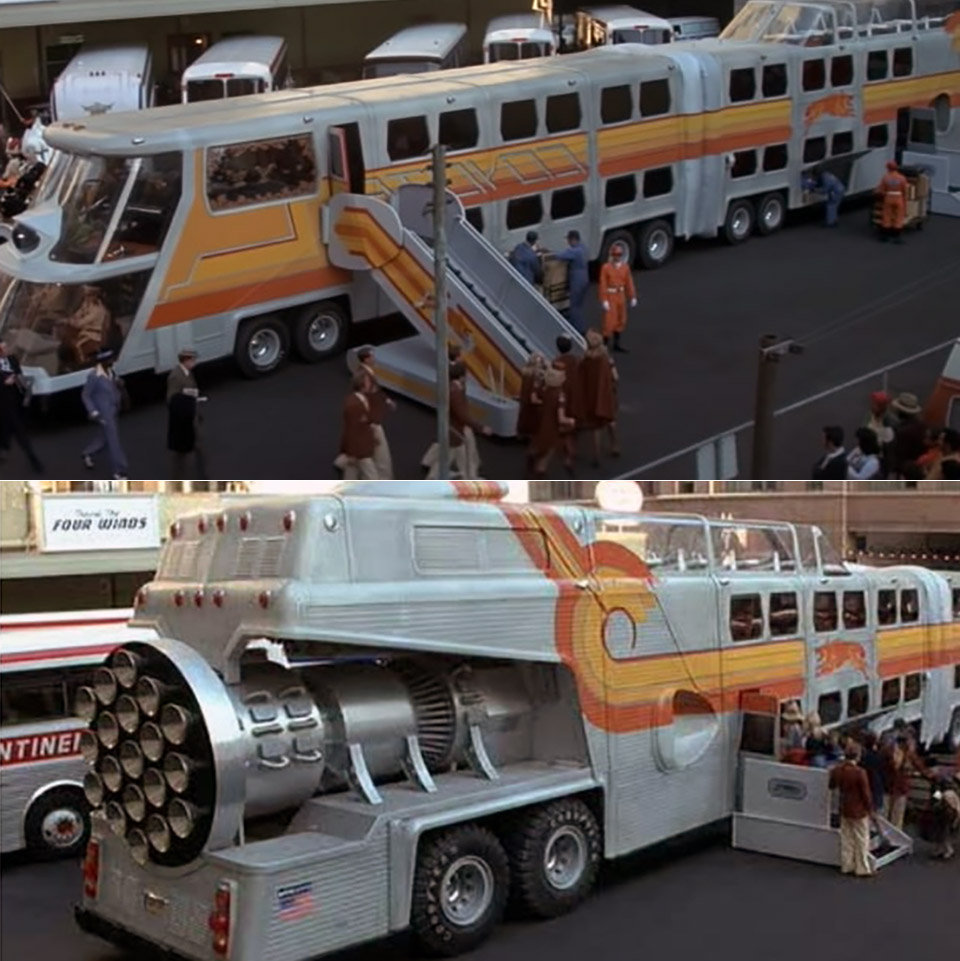
In 1976, Hollywood attempted to mock the plethora of disaster films that were filling theaters at the time. Paramount Pictures stepped up with The Big Bus, a comedy about a comically enormous bus attempting to go from New York to Denver nonstop. Cyclops, the bus, was there in the middle of the mayhem, a genuine article capable of driving on real roads.
Joel Schiller, the production designer, was the mastermind behind the project, while Gaile Brown and Lee Vaque oversaw construction and special effects at Paramount. They started from scratch, removing the engine from two International cab-over-engine trucks and substituting it for a Ford, replacing the transmission with an Allison automatic, and ditching the front axle in favor of a tandem system with dual tires. Then they wrapped the entire thing in fiberglass, complete with a large fake nuclear reactor situated up front for added humor.

LEGO Fortnite Battle Bus Building Toy – Collectible Fortnite Toy for Kids, Boys & Girls, Ages 10+ -…
- FORTNITE BUILDING TOY – This video game toy for boys and girls ages 10 years old and up lets kids set out on adventures with the LEGO Fortnite…
- FORTNITE BATTLE BUS COLLECTIBLE – Fortnite fans will be thrilled to create a brick-built version of the Battle Bus, a feature in the LEGO Fortnite…
- AMAZING DETAILS – This Fortnite toy features accessories that include Slurp Juice, a Grappler, Pickaxes and Slap Juice
Cyclops measured 110 feet in length, 18.3 feet tall (without the retractable back glass canopy), and 10.5 feet in width. What kept things rolling? Thirty-two wheels, with eight steering tyres for good measure. The inside areas were mostly empty, but that was fine because they were just there for the steel structure, which provided much-needed strength, especially since the bus would be dangling off a cliff. Window seats created the illusion of passengers, but you wouldn’t catch them trying to sneak into a bowling alley or swimming pool in real life; it was just set dressing. The lounge bar, however, on the second level was the real deal, completely stocked and ready to go.
Getting this monster on the road needed a little teamwork. There was the front driver, sitting comfortably in the cockpit, while the second driver was locked in the rear area, with little forward view and dependent on radio orders from the front to get by. In case of an emergency, there was a quick-release lever that allowed the rear unit to break free and navigate away from the commotion. Cyclops was still linked and capable of reaching 65 mph. And when it came time to call it a day and separate the two portions, it only took around 45 minutes to get them back together and ready for the next day’s filming.
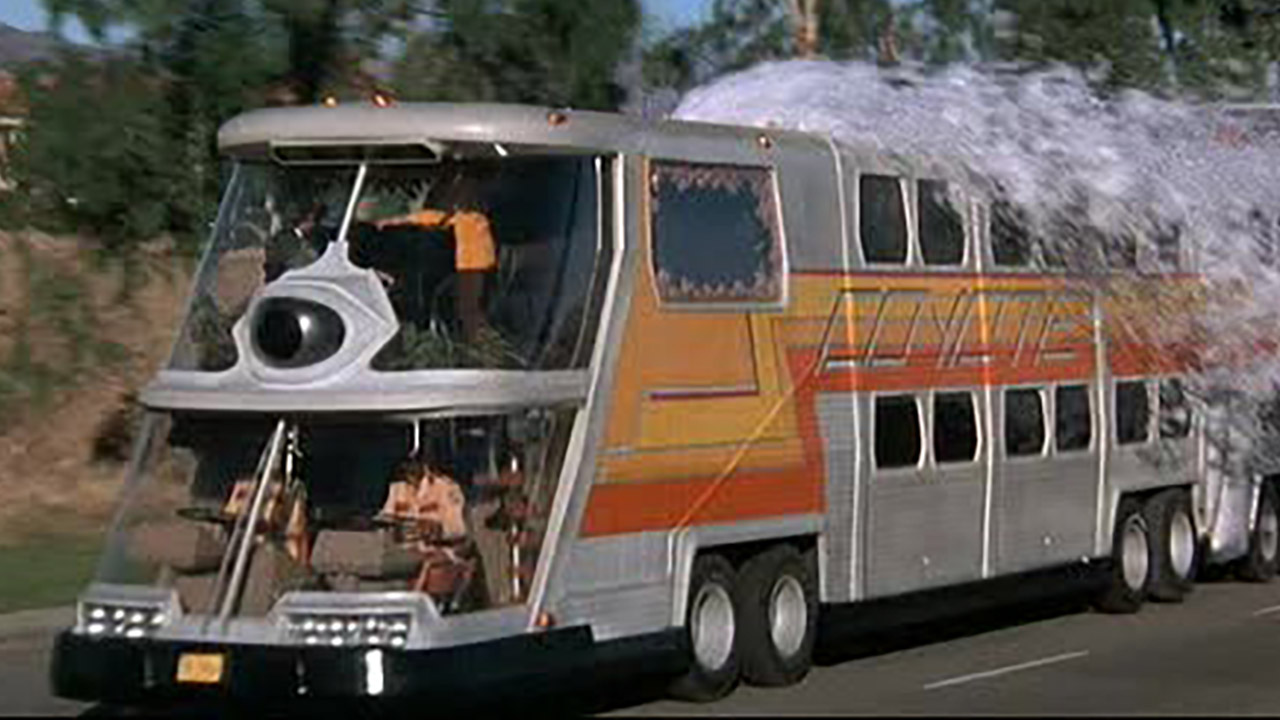
None of that came cheap, as Paramount spent a whopping $500,000 on Cyclops construction in 1976. In today’s money, that would be closer to $2.7 million. The picture itself bombed, with a film budget of $6 million but only $3.5 million at the box office. The good news is that Cyclops proved to be roadworthy enough to go to San Diego for some promotional fun and even participate in the Los Angeles Bicentennial Parade.
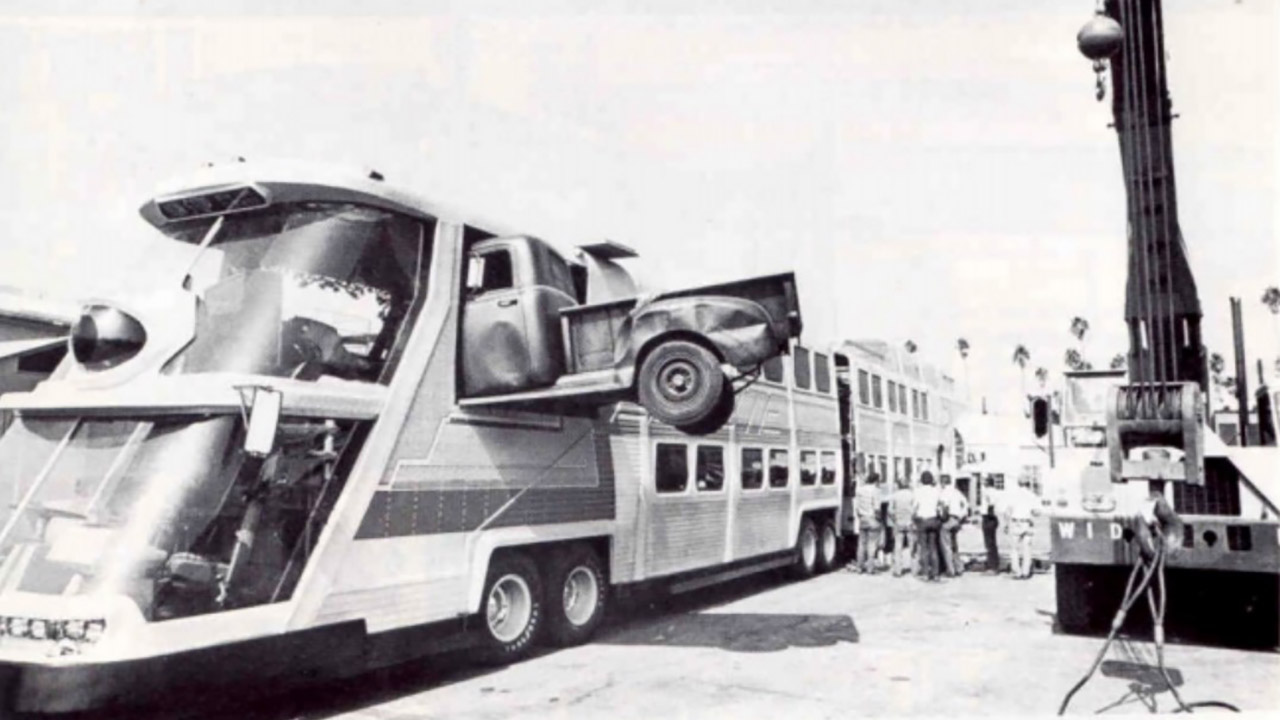
Poor old Cyclops had a quiet end, as Paramount simply scrapped and demolished it, and there isn’t a single fully intact survivor left today. However, you can still catch a glimpse of it in shaky footage, as well as old images and magazine spreads from Motor Trend or Bus World, proving that this folly did once lumber down California roadways.
[Source]
Fascinating Look Back at Cyclops, the Monstrous Nuclear Bus That Actually Rolled in The Big Bus (1976)
#Fascinating #Cyclops #Monstrous #Nuclear #Bus #Rolled #Big #Bus