Can AI helps bridge the healthcare divide?
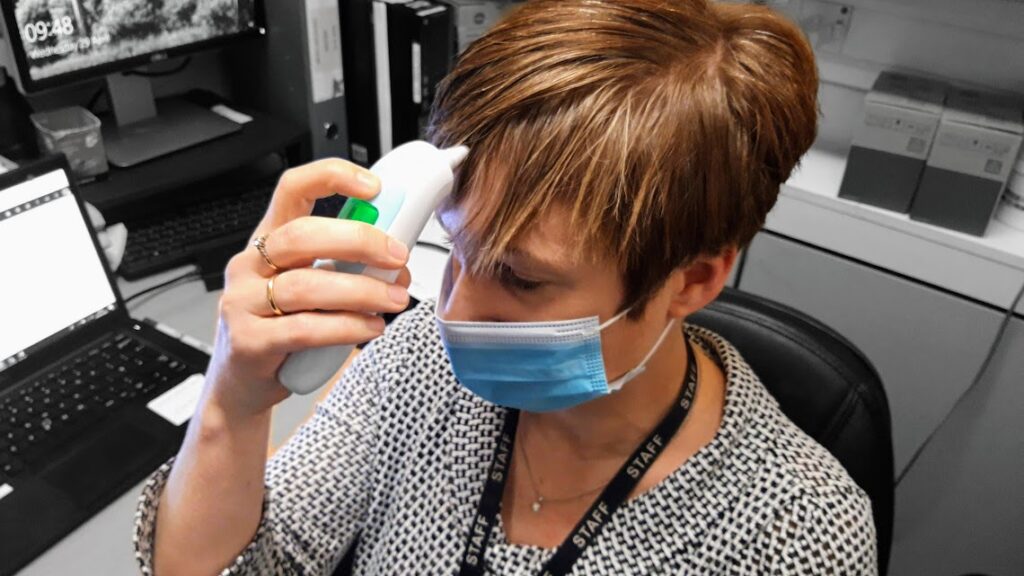
The use of technology in healthcare. Image by Tim Sandle.
Commentators and policy experts, including the World Health Organization (WHO), are raising alarms about the rising use of AI in healthcare. The WHO has released comprehensive guidelines on the ethics and governance of AI for health and co-leads the Global Initiative on AI for Health (GI-AI4H).
WHO warns that despite some key advantages, when it comes to considering whether or not to implement AI for healthcare: “Methodological aspects should be duly considered to make real progress in benefitting science and, therefore, universal health care.”
Risks of AI in healthcare
Other risks include:
- Diagnostic Errors: AI systems can make clinical mistakes, such as misinterpreting medical images or providing incorrect treatment recommendations.
- Bias and Inequality: AI algorithms learn from historical data, which can be biased. If the training data does not represent diverse populations, the AI may perform poorly for underrepresented groups.
- Data Privacy and Security: The use of AI in healthcare raises concerns about data privacy. AI systems often require access to sensitive patient information, which can be vulnerable to breaches.
- Automation Bias: There can be a tendency for healthcare professionals to over-rely on AI recommendations, known as automation bias.
- Misalignment of Goals: AI systems may not always align with the ethical and operational values of healthcare providers.
- Systemic Risks: As AI becomes more integrated into healthcare, the potential for systemic risks increases.
Alternative perspective: Benefits of AI in healthcare
According to Rocket Doctor AI Inc. CEO Dr. Essam Hamza the problem is not with artificial intelligence itself. Instead, it is the wrong kind of AI.
Hamza takes the view that some forms of AI cannot only benefits doctors but, most importantly, patients. He maintains that AI offers a safer, evidence-based alternative designed to reduce errors and provide earlier disease detection, personalized treatment plans, faster drug discovery, improved imaging analysis, and streamlined administrative processes, leading to better patient outcomes and reduced costs all around.
“The WHO is absolutely right to highlight the risks that come with the rapid rise of AI in healthcare,” Hamza tells Digital Journal. “Too many systems rely on opaque algorithms and the possibility of hallucinations, without the legal or clinical safeguards patients and health workers deserve. At Rocket Doctor AI, we’ve taken a fundamentally different approach.”
In describing his own technology, Hamza details how Rocket Doctor AI is positioning its proprietary, physician-built Global Library of Medicine (GLM) and suite of AI-driven solutions as the counterpoint to opaque, hallucination-prone systems currently prompting global concern.
Hamza explains why he thinks this is important: “As demand surges for trustworthy clinical tools that reduce administrative load and strengthen accuracy in diagnoses, the company believes its methodology, built over more than a decade by hundreds of clinicians, is the model the industry needs.”
“We use large language models only as a presentation layer — never as the source of clinical judgment,” Hamza sadds. “The clinical pathways, differential diagnoses and recommendations generated within GLM are grounded in vetted, evidence-based medical knowledge.
In terms of current and future beneficial applications, Hamza finds: “This design ensures that AI is used to support, not replace, healthcare professionals — strengthening safety, improving decision-making and ultimately delivering better outcomes for patients…Innovation in healthcare must move fast, but it must also move safely. Our commitment is to do both.”
Can AI helps bridge the healthcare divide?
#helps #bridge #healthcare #divide