At DevOpsDays Dallas 2025, Nihar Karra’s talk cut through the noise: Why infrastructure is only half the battle
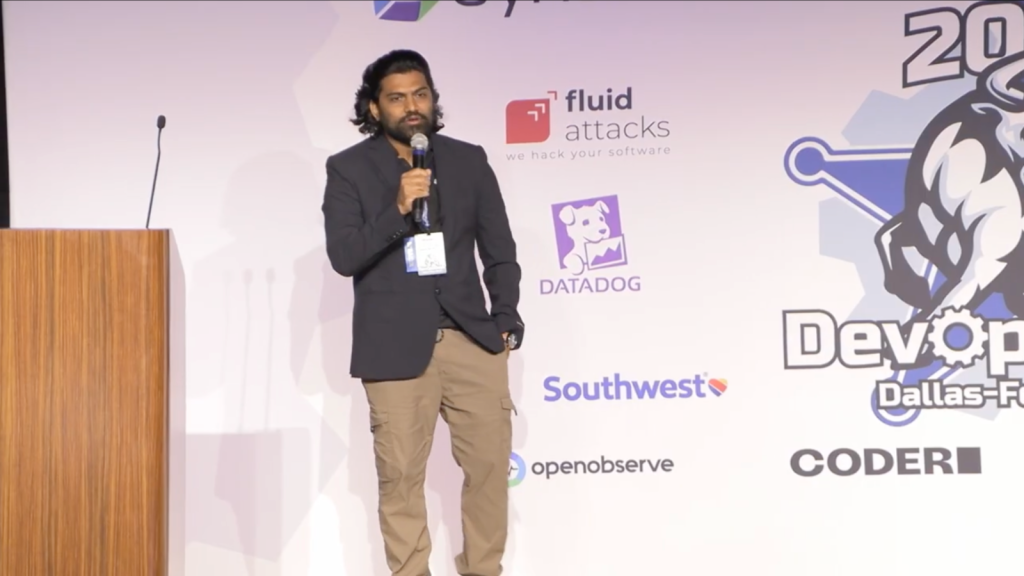
Photo courtesy of DevOpsDays.
Opinions expressed by Digital Journal contributors are their own.
DevOpsDays Dallas is a highly selective, community-organized DevOps conference renowned for its rigorous speaker curation. Each year, organizers receive hundreds of proposals from engineers, architects, and practitioners worldwide, accepting only a small fraction for the main program—making it a notable honor to be chosen. At the 2025 event, few speakers went on stage on the main program. Among them was a session that quickly became a standout moment of the conference, not because it showcased the flashiest tools or the newest buzzwords, but because it tackled a problem almost every engineering team faces yet rarely talks about openly.
Among them was a session that quickly became a standout moment of the conference—delivered by Nihar Karra, a Cloud Support Engineer at Amazon Web Services whose work has influenced infrastructure practices across hundreds of enterprise customers and who is widely recognized as a thought leader in the global DevOps community. As soon as the session began, it became clear why the selection committee placed it on the main stage. Nihar’s perspective was relatable, honest, and grounded in real world experience supporting hundreds of companies navigating Infrastructure as Code.
Nihar opened with a story that nearly every engineer in the room recognized. He described the moment he thought he had achieved perfection with his CloudFormation templates. They were clean, modular, reusable, and elegant. They represented every best practice an engineer strives for. But what followed was not applause from his organization. Instead, he encountered a challenge far more difficult than YAML validation or dependency management. The struggle was not the infrastructure code. It was the people using it.
This realization shaped the heart of his presentation. While most conference talks focus on automation frameworks, template design, or orchestration patterns, Nihar redirected the discussion toward something far more impactful. He introduced a counterintuitive but increasingly validated perspective: that organizations consistently underestimate the cultural, procedural, and human elements that determine the success or failure of Infrastructure as Code—a viewpoint that challenges conventional tool-centric narratives in the industry. In his words, the technical problems are the easy ones. The real work begins when teams try to adopt and operationalize the infrastructure.
Drawing on his first-hand experience supporting enterprise clients at AWS, he shared three anonymized but real-world cases from customer environments that demonstrated how Infrastructure as Code initiatives fail even when the code itself is flawless. One story centered on ownership confusion, where a team launched stacks they did not own and expected someone else to maintain. When a production issue emerged at two in the morning, no one understood who was responsible. This produced more chaos than any technical defect could.
Another example involved a knowledge silo. A highly skilled engineer crafted beautiful templates but never documented them or shared context. When they left the company, those templates became nearly unusable. The infrastructure was technically impressive, but operationally fragile.
The third story highlighted governance pitfalls. A company had pristine templates stored in repositories but no guardrails to prevent teams from deploying resources without oversight. Costs inflated rapidly, security reviews failed, and leadership was left wondering why Infrastructure as Code created more problems than it solved.
These stories resonated deeply with the audience. Every attendee seemed to recognize similar patterns within their own organizations. Nihar used these examples to push forward a central message: Infrastructure as Code is not truly about writing code. It is about building the infrastructure of people. Success requires clear ownership models, shared knowledge, aligned practices, and governance structures that enable teams to move quickly while staying secure and compliant.
One of the session’s most memorable moments came when Nihar outlined the clear difference between what organizations can copy and paste and what they cannot. Templates, modules, pipelines, and policies are replicable. Trust, accountability, communication, and cultural alignment are not. This contrast drew nods throughout the room because it captured the consistent gap between what companies expect automation to solve and what it actually solves.
The talk also offered practical takeaways, not high level theory. Nihar provided a straightforward framework that teams could start applying immediately. First, audit ownership, knowledge distribution, and governance. Second, begin with one project or one team rather than attempting a large-scale transformation all at once. Third, measure indicators that reflect cultural maturity rather than just deployment speed. These recommendations felt grounded in real world experience and gave attendees actionable ways to improve their own environments.
What made the session particularly compelling was its balance between technical expertise and organizational insight. Nihar brought the credibility of someone who has supported more than 500 companies with CloudFormation related challenges, but he delivered the material with humility and clarity. His background, which includes major modernization work at American Airlines and Walmart, provided context but never overshadowed the practical lessons of the talk. Instead, his experience reinforced the importance of focusing not just on infrastructure performance, but on team behavior and cross departmental alignment.
By the end of the session, it was clear why the DevOpsDays selection committee viewed Nihar’s talk as essential for this year’s program. It addressed a universal problem that transcends tools or programming languages. Engineers left the room not thinking about template optimization, but about how their teams collaborate, share responsibility, and support one another. In a conference filled with technical innovation, this human centered message was one of the most impactful contributions to the event.
Nihar’s presentation serves as a reminder that infrastructure automation is only truly powerful when paired with intentional organizational design. For any company investing in cloud transformation, the lessons from his talk provide a roadmap for building not only better infrastructure, but stronger engineering cultures.Beyond the stage, Nihar has spent over a decade shaping the practical foundations of modern DevOps and cloud engineering. His body of work—spanning the resolution of mission-critical cloud infrastructure challenges, leadership of large-scale enterprise modernization initiatives, and advocacy for human-centered infrastructure practices—demonstrates a sustained impact on how engineering organizations approach DevOps at scale. Sustainable engineering excellence emerges not just from better code, but from better collaboration. Through speaking engagements, community mentorship, and hands-on problem-solving, Nihar continues to bridge the gap between technical possibility and organizational reality in the DevOps world.
At DevOpsDays Dallas 2025, Nihar Karra’s talk cut through the noise: Why infrastructure is only half the battle
#DevOpsDays #Dallas #Nihar #Karras #talk #cut #noise #infrastructure #battle