Webb Shows Dwarf Stars Stealing the Show in Westerlund 2
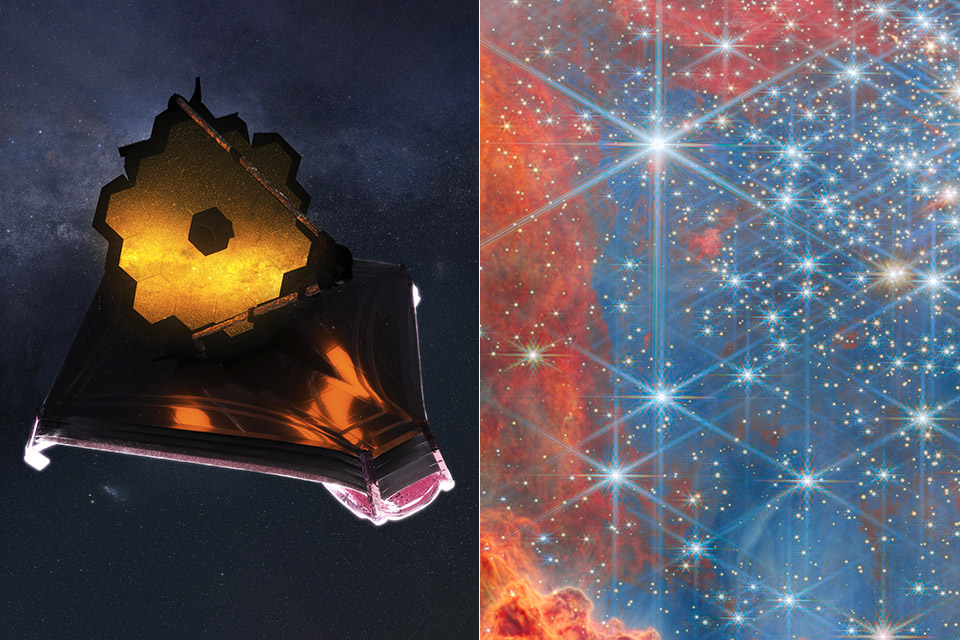
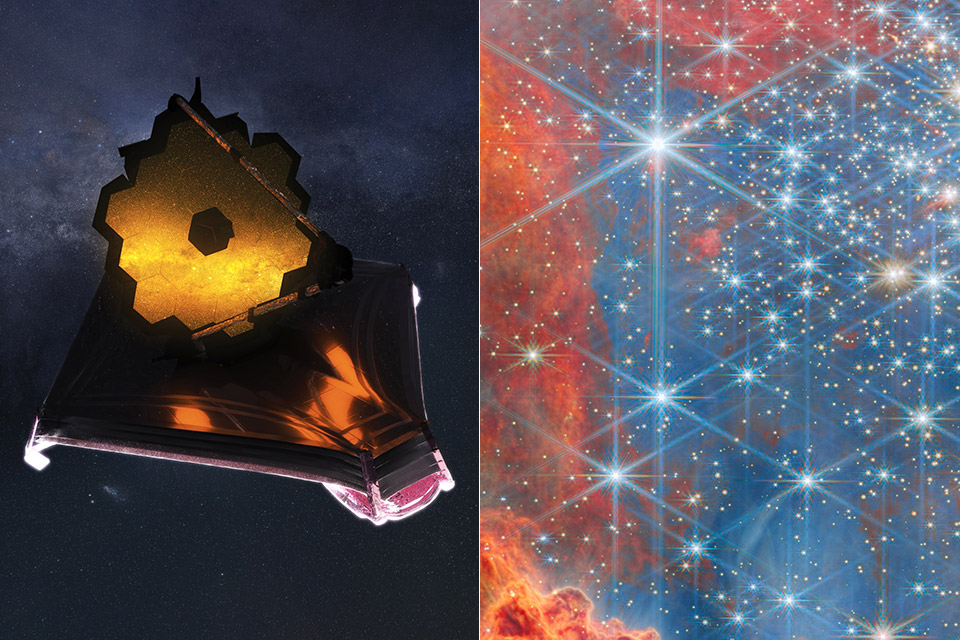
NASA’s James Webb Space Telescope got 2026 off to a fantastic start by capturing another breathtaking glimpse of the Westerlund 2 star cluster, a wild and wacky collection of stars buried inside the Gum 29 nebula in the constellation Carina, 20,000 light years away. The image of this starry panorama, released on December 19 as ESA’s final Picture of the Month for 2025, displays what JWST’s NIRCam and MIRI cameras were able to capture in infrared, providing a good look at an area around 6 to 13 light-years across and filled with thousands of stars.
Westerlund 2 is named for Swedish astronomer Bengt Westerlund, who discovered it in the 1960s. It is only 1 to 2 million years old and has a total mass that is 36,000 times that of our Sun. Clusters like this one are still forming new stars from massive clouds of gas and dust. Radiation bursts from the larger stars inside carve sharp edges into the clouds, leaving behind sculpted walls of orange and red gas that shine because to the heat.

LEGO Technic NASA Artemis Space Launch System Rocket Building Toy for Boys & Girls – STEM Learning &…
- BUILD AN OFFICIAL NASA ROCKET – Kids prepare to explore outer space with the LEGO Technic NASA Artemis Space Launch System Rocket (42221) building…
- 3-STAGE ROCKET SEPARATION – Young builders can turn the hand crank to watch the rocket separate in 3 distinct stages: solid rocket boosters, core…
- STEM BUILDING TOY FOR KIDS – This educational rocket kit was created in collaboration with NASA and ESA to showcase the authentic system that will…
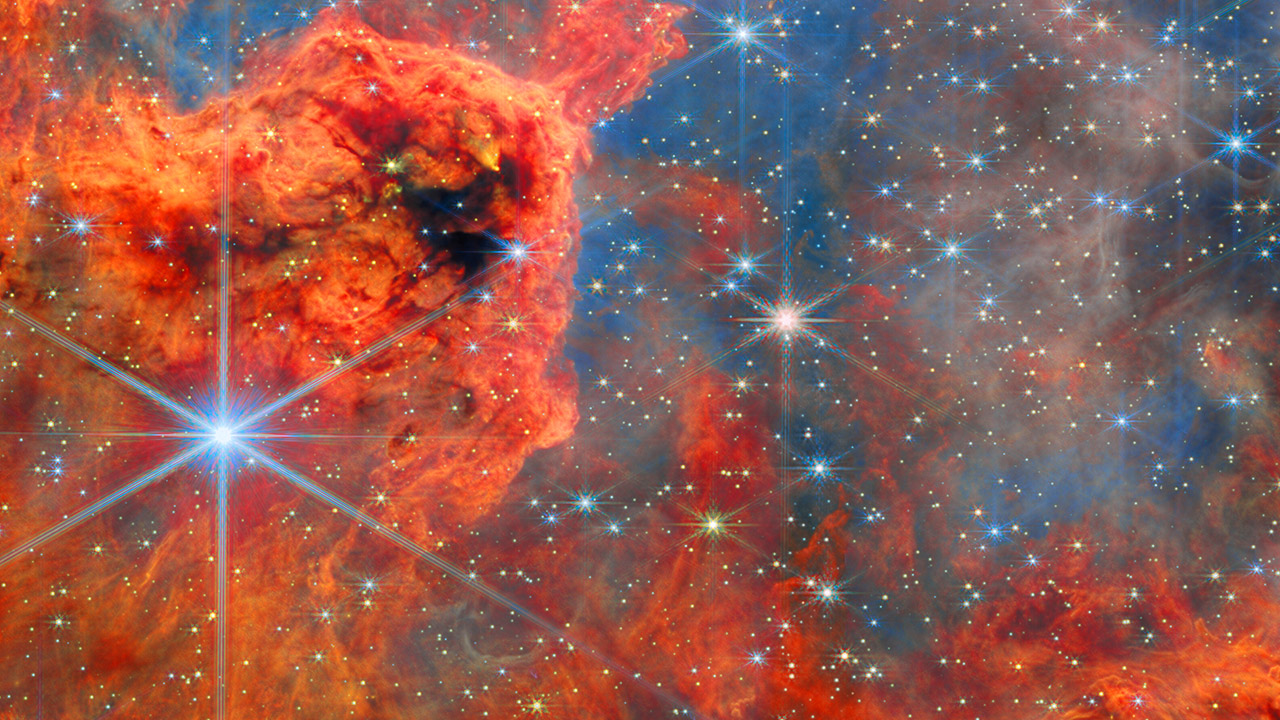
Strands of thinner gas in pale blues and pinks float between the denser masses, representing material forced out by the stars’ winds. Jim Webb captured the event up close, demonstrating how these forces are pushing and destroying the nebula as new stars emerge from their dusty covers. The foreground stars are closer to us and can be identified by their classic six-pointed spikes, which provide a wonderful stark contrast to the softer haze in the background.
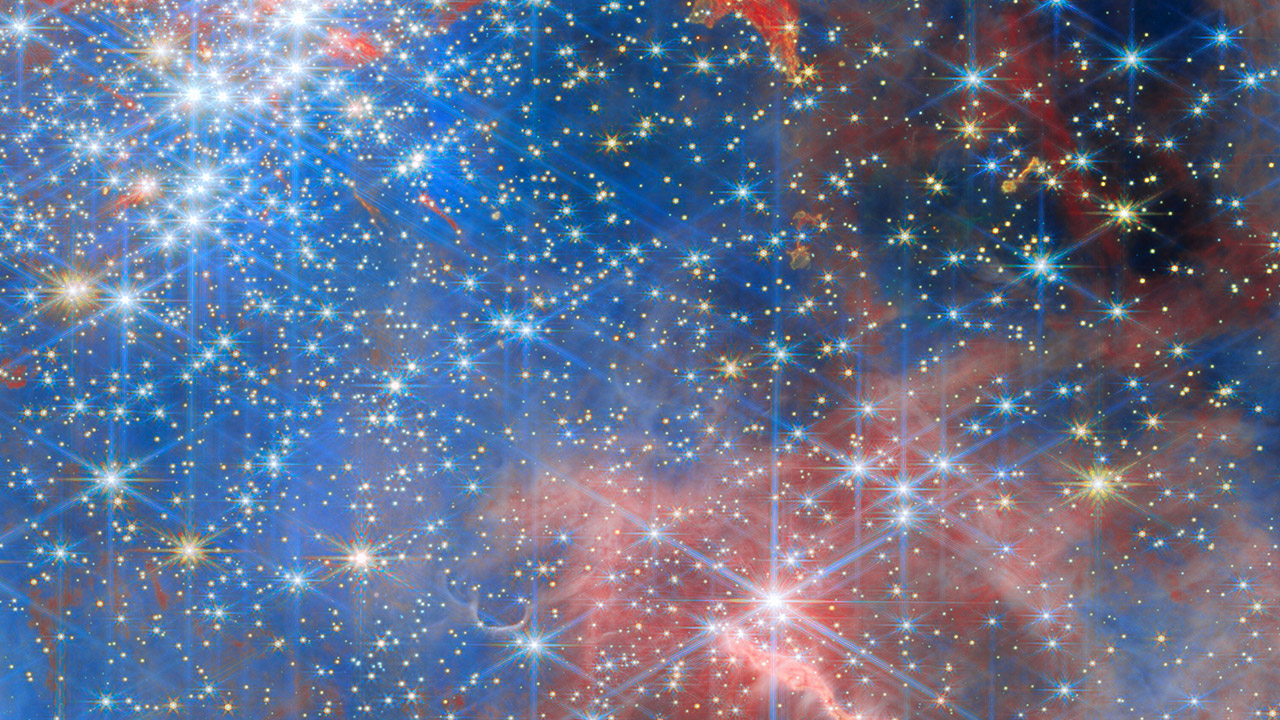
The dense heart of Westerlund 2 is perched right at the top, a tight little clump of small, bright white stars, the majority of which are not much larger than our Sun. These new stars shine with the vigor of youth, and some of them are still enveloped in the gas and dust that gave birth to them. Down below, it’s a bit of a jumble; there are all these clouds of gas stretching out in all directions, with the brightest spot straight down in the bottom-left corner, where it appears that red flames are licking the edges. The foreground stars cast a soft pink hue on the deeper layers of gas. There are over 3,000 stars in this area, including some of the largest and brightest in the Milky Way, O-type giants, and Wolf-Rayet stars, which burn hotter and brighter than nearly anything else. Their UV light and particle winds simply rip across the environment, fueling an endless cycle of destruction and new births.
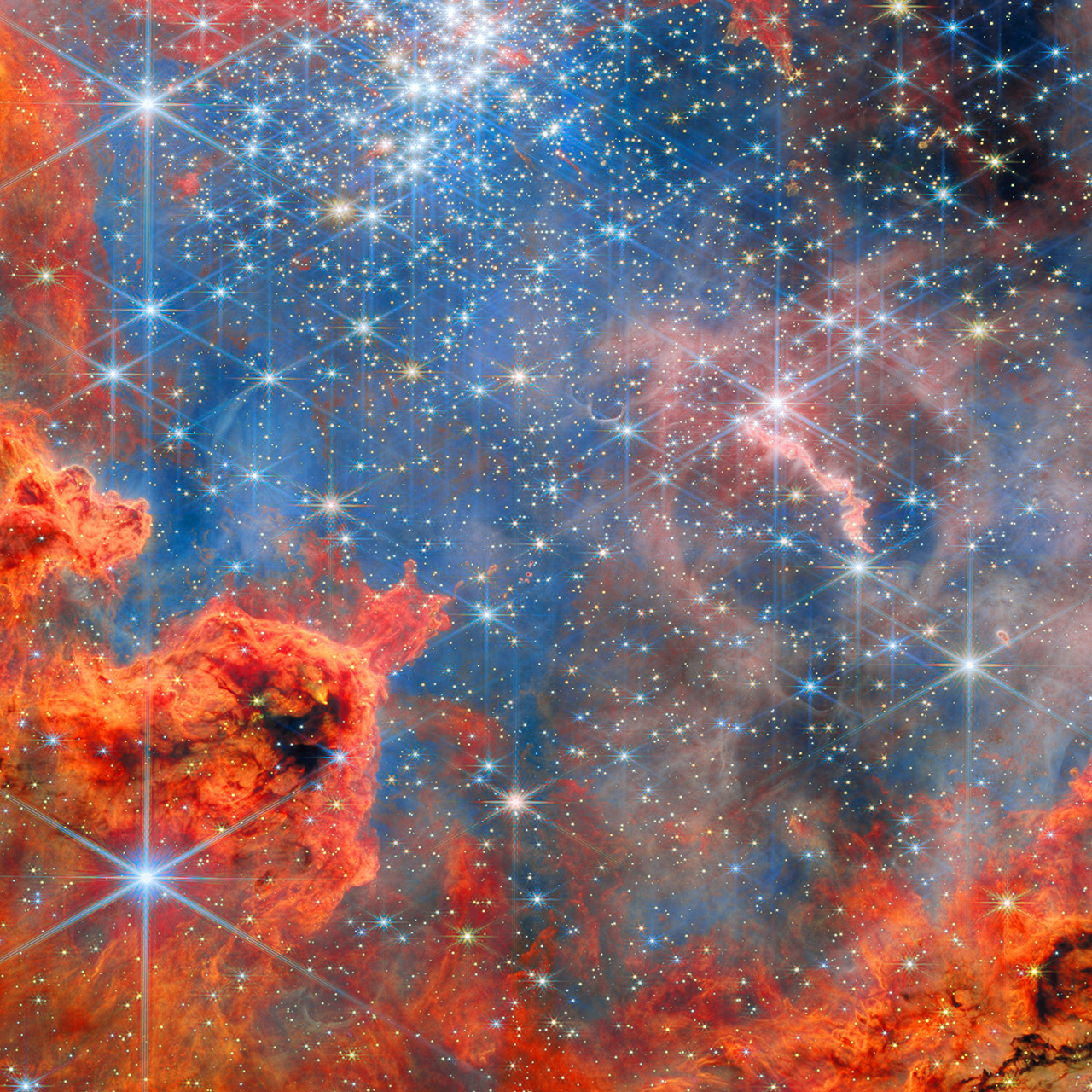
This was the great reveal of the Extended Westerlund 1 and 2 Open Clusters Survey, or EWOCS, conducted by astronomer M. Guarcello. For the first time, the telescope identified all of the brown dwarfs present, including objects only ten times the mass of Jupiter. These failed stars simply lack the mass to sustain continuous hydrogen fusion, so they are left to simmer on the residual heat from their formation. By identifying a few hundred stars with protoplanetary disks in various phases of development, astronomers can follow how planets can form amid the turmoil.
Webb Shows Dwarf Stars Stealing the Show in Westerlund 2
#Webb #Shows #Dwarf #Stars #Stealing #Show #Westerlund