PET plastic waste recycled: Producing an anti-cancer drug medication
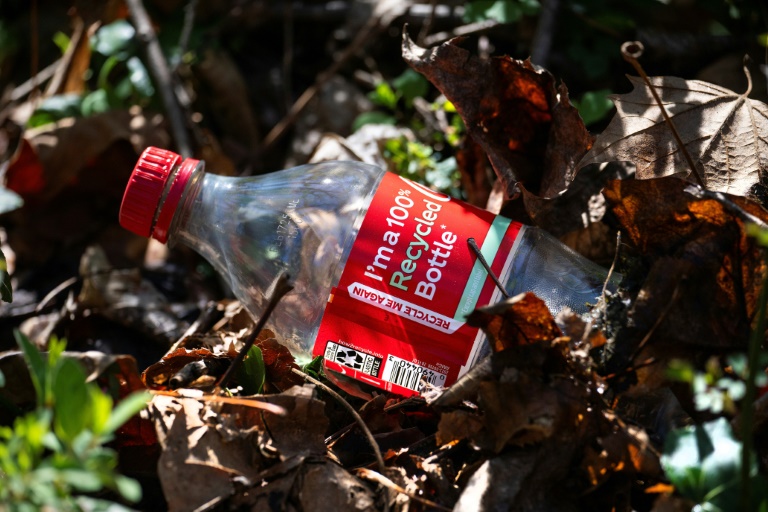
An estimate by environmental conservation nonprofit Oceana found that Coca-Cola’s plastic use is projected to exceed 4.13 million metric tons (9.12 billion pounds) annually by 2030 – Copyright AFP Jim WATSON
A new discovery, ed by the University of St Andrews, has found a way to turn ordinary household plastic waste into the building block for anti-cancer drugs.
The discovery is based on the re-use of household PET (polyethylene terephthalate) waste, such as plastic bottles and textiles. Researchers have shown this can be recycled in two main ways: mechanically or chemically. PET is a strong, transparent thermoplastic polyester widely used for beverage bottles, food containers, and clothing fibres.
For catalytic upcycling to become practical, the catalyst must operate efficiently at low loadings and maintain activity over long periods. All catalysts eventually deactivate, this means understanding when and how this happens was critical to pushing turnover numbers to levels relevant for real applications. The researchers achieved this through detailed kinetic and mechanistic analysis.
In relation to the plastics, chemical recycling breaks down PET’s long polymer chains into individual units called monomers or into other valuable chemicals.
Working on this premise, the researchers discovered that by using a ruthenium-catalysedsemi-hydrogenation process, PET waste could be depolymerised into a valuable chemical, ethyl-4-hydroxymethyl benzoate (EHMB).
The ruthenium-catalyzed semi-hydrogenation process involves the use of a ruthenium catalyst to facilitate the transfer of hydrogen from alcohols to alkynes, resulting in the formation of alkenes.
EHMB serves as a key intermediate for synthesising several important compounds, including the blockbuster anticancer drug Imatinib, Tranexamic acid, the base for medication that helps the blood to clot, and the insecticide Fenpyroximate.
Currently these types of medication are created using fossil-derived feedstock, often using hazardous reagents producing significant waste. The significance of the new research is that it offers substantial environmental benefits compared to conventional industrial methods for producing EHMB as confirmed by a comparative hot-spot analysis in a streamlined life cycle assessment approach.
This means quickly pinpointing the parts of a product’s life cycle that cause the most environmental impact so it’s known where improvements will matter most.
Additionally, researchers discovered that EHMB can be converted into a new and recyclable polyester.
According to lead scientist Amit Kumar: “We are excited by this discovery, which reimagines PET waste as a promising new feedstock for generating high-value APIs (Active Pharmaceutical Ingredients) and agrochemicals.”
Kumar stresses the special properties: “Although chemical recycling is a key strategy for building a circular economy, many current technologies lack strong economic feasibility. By enabling the upcycling of plastic waste into premium products instead of reproducing the same class of plastics, such processes could meaningfully accelerate the transition to a circular economy.”
The study highlighted drug-relevant routes tied to well-known compounds. It also described a path to a new polyester made from the EHMB-derived acid. The team produced poly(4-(hydroxymethyl)benzoate), or PHMB. They reported that PHMB showed strong chemical resistance and could be depolymerized back to its monomer by simple saponification. That gives the material a potential “closed loop” pathway.
The study appears in the journal Angewandte Chemie International Edition. The paper is titled “From Plastic Waste to Pharmaceutical Precursors: PET Upcycling through Ruthenium Catalysed Semi-Hydrogenation”.
PET plastic waste recycled: Producing an anti-cancer drug medication
#PET #plastic #waste #recycled #Producing #anticancer #drug #medication