NASA’s Webb Shows What Happens When Two Spirals Collide
Deep in space, two massive spiral galaxies are slowly but inevitably pushed together by gravity. IC 2163 and NGC 2207 must have had a close call millions of years ago as they flew by each other at hundreds of kilometers per second. From Earth, they appear to be bound together, with their long, sweeping arms stretching out across the expanse in between, like giants reaching out to each other.
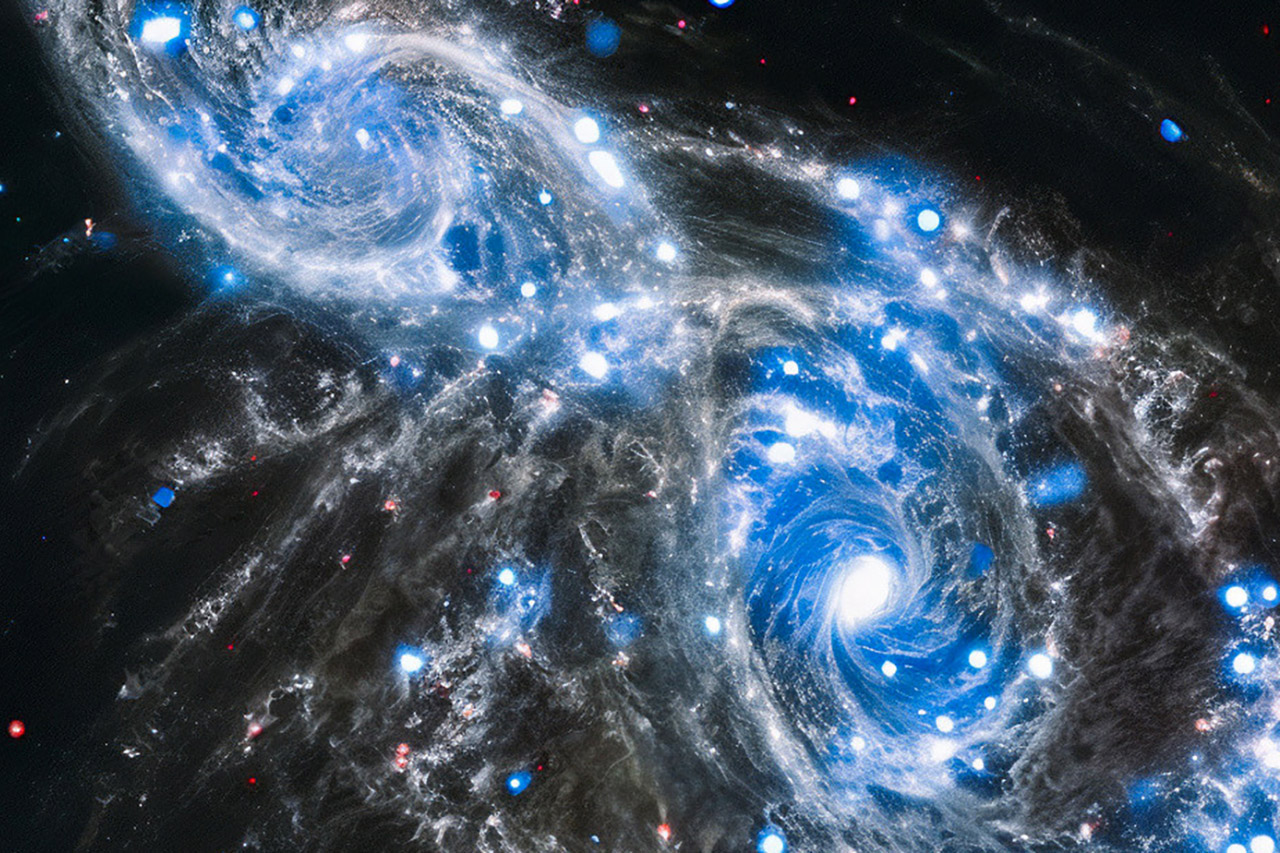
NASA released this composite image to welcome the new year, combining images from two of the world’s most powerful observatories, the James Webb Space Telescope and the Chandra X-ray Observatory. The Webb telescope detected mid-infrared light in white, grey, and red tones, revealing how much colder dust and debris is interlaced throughout each galaxy’s nucleus and arms. The Chandra Observatory, on the other hand, contributed blue X-ray data, which illuminates all of the ultra hot places where gas has reached millions of degrees and is essentially boiling with energy.
Sale

Gskyer Telescope, 70mm Aperture 400mm AZ Mount Astronomical Refracting Telescope for Kids Beginners -…
- Superior Optics: 400mm(f/5.7) focal length and 70mm aperture, fully coated optics glass lens with high transmission coatings creates stunning images…
- Magnification: Come with two replaceable eyepieces and one 3x Barlow lens.3x Barlow lens trebles the magnifying power of each eyepiece. 5×24 finder…
- Wireless Remote: This refractor telescope includes one smart phone adapter and one Wireless camera remote to explore the nature of the world easily…
Gravity is ultimately responsible for everything you see here. When the galaxies shove each other, the tidal forces that act between them warped their spiral arms into the sweeping curves you see here, as well as pulling out lengthy strands of stars. The distortions caused by their arms bending unnaturally towards the other galaxy are visible when their arms meet – but because the stars are so far apart, they do not really collide. Imagine the Sun as the size of a grain of sand, and the nearest star is thousands of kilometers away…that’s how far the distances are. Instead, these immense clouds of gas and dust collide with such force that a massive buildup of pressure occurs, triggering the formation of new stars in large bursts throughout the galaxies.
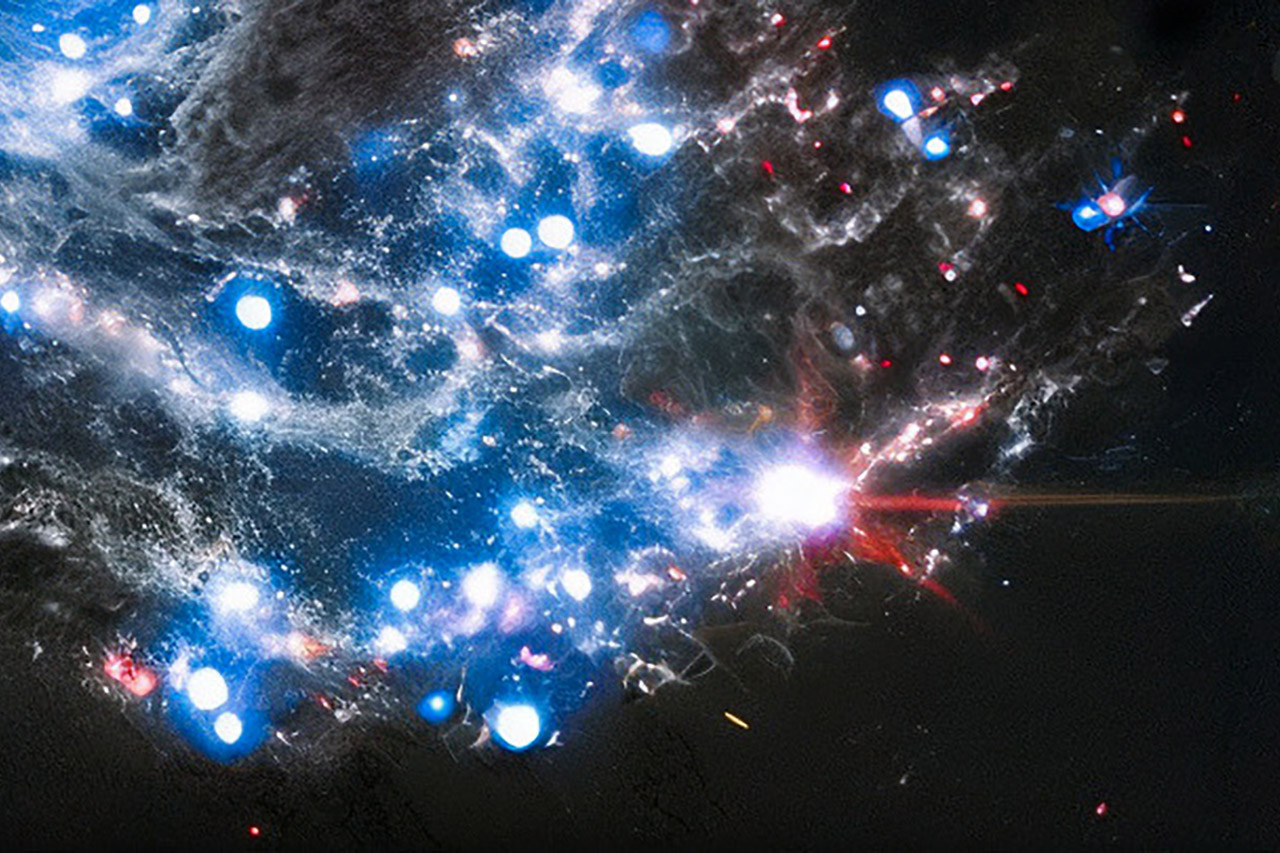
Those young stars then emit massive amounts of strong radiation, heating the gas surrounding them to such high temperatures that Chandra detects them in wonderful bright blue highlights all over the place. Webb’s infrared view allows us to see right through all of the dense dust that normally filters out visible light in images; it appears in soft whites and greys along the arms, with warmer places glowing a gorgeous red. When you combine that with Chandra’s sharp blue lines all over the place, you get an image that reveals all these hidden layers of activity that you wouldn’t notice if you simply looked at typical photographs.
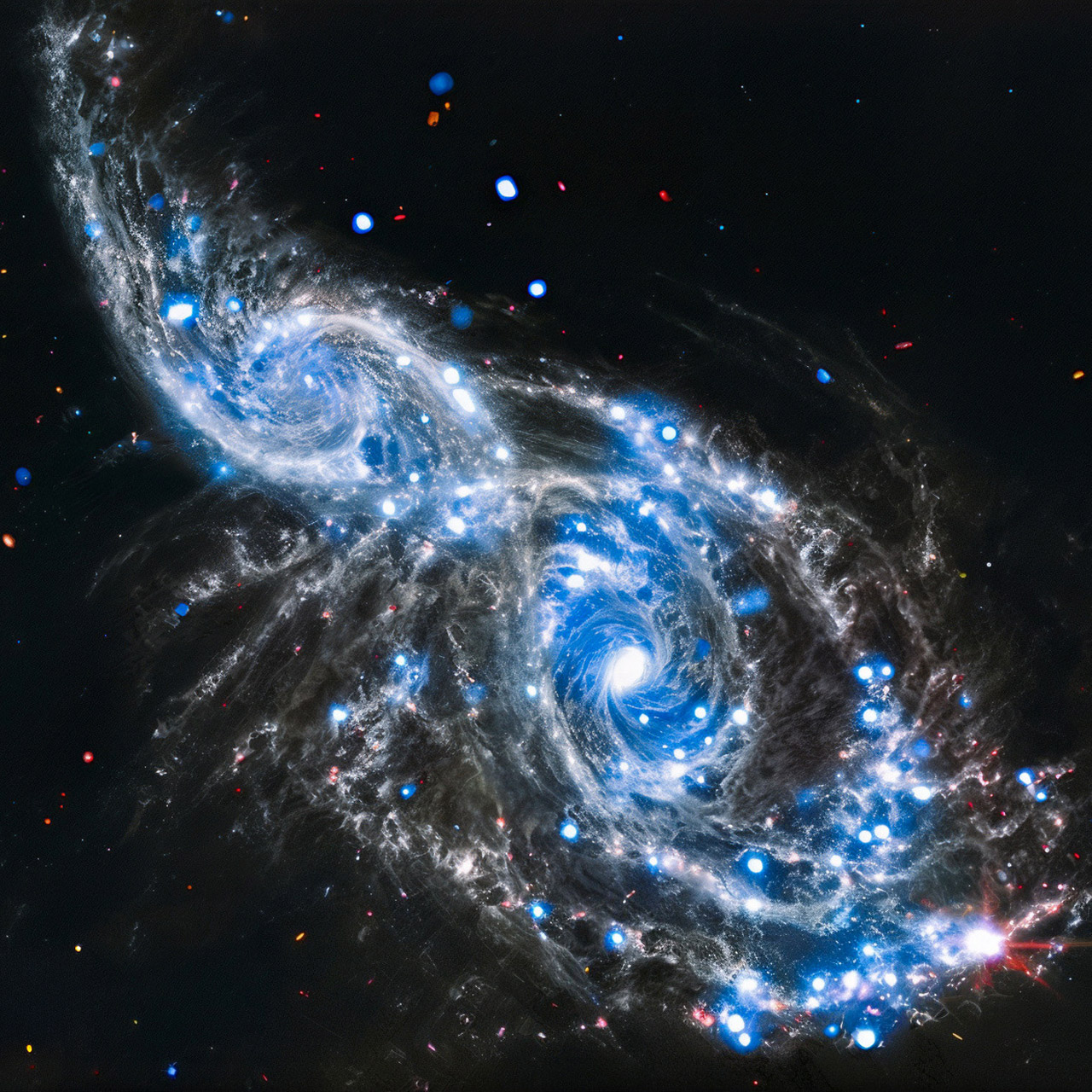
Millions of years have elapsed since that close encounter, and yet there are still a slew of other impacts unfolding, with many more close calls on the horizon before the two galaxies entirely merge in a few billion years. Spiral patterns will almost completely evaporate, leaving you with a single elliptical galaxy with all of its stars drifting around in random orbits.
NASA’s Webb Shows What Happens When Two Spirals Collide
#NASAs #Webb #Shows #Spirals #Collide