Hubble Captures N159, a Turbulent Stellar Nursery in a Neighboring Galaxy
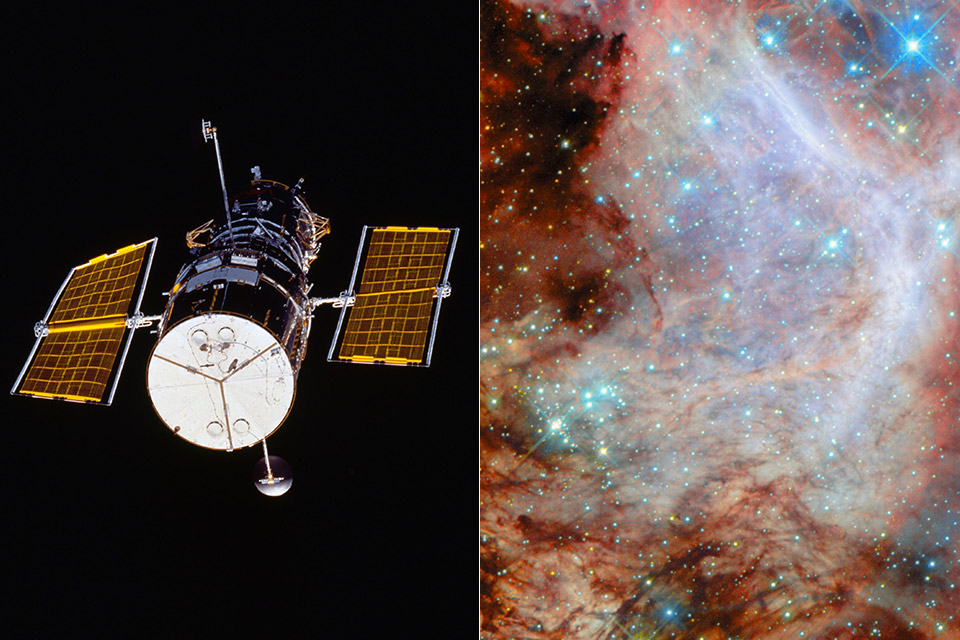
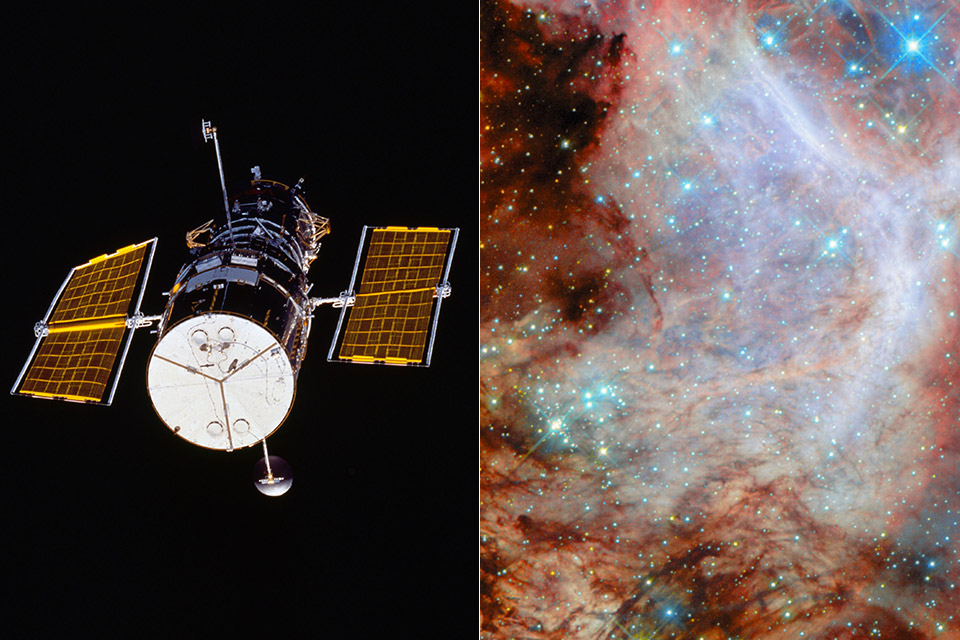
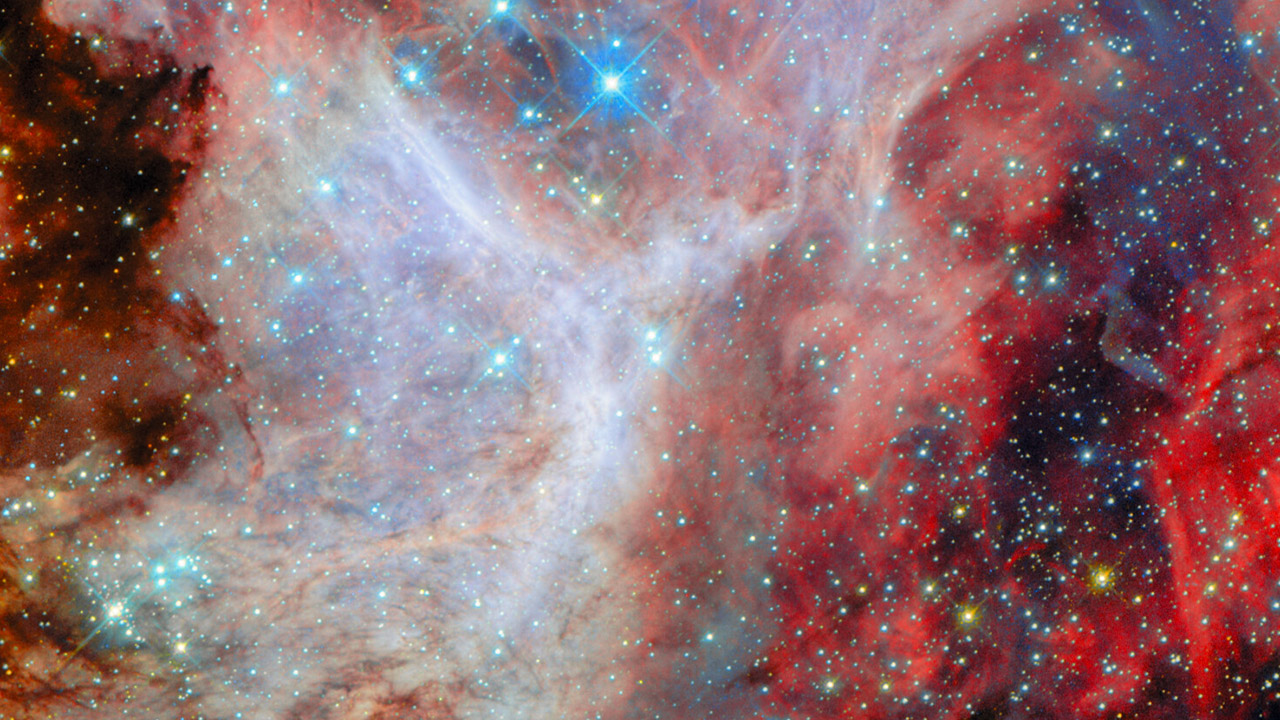
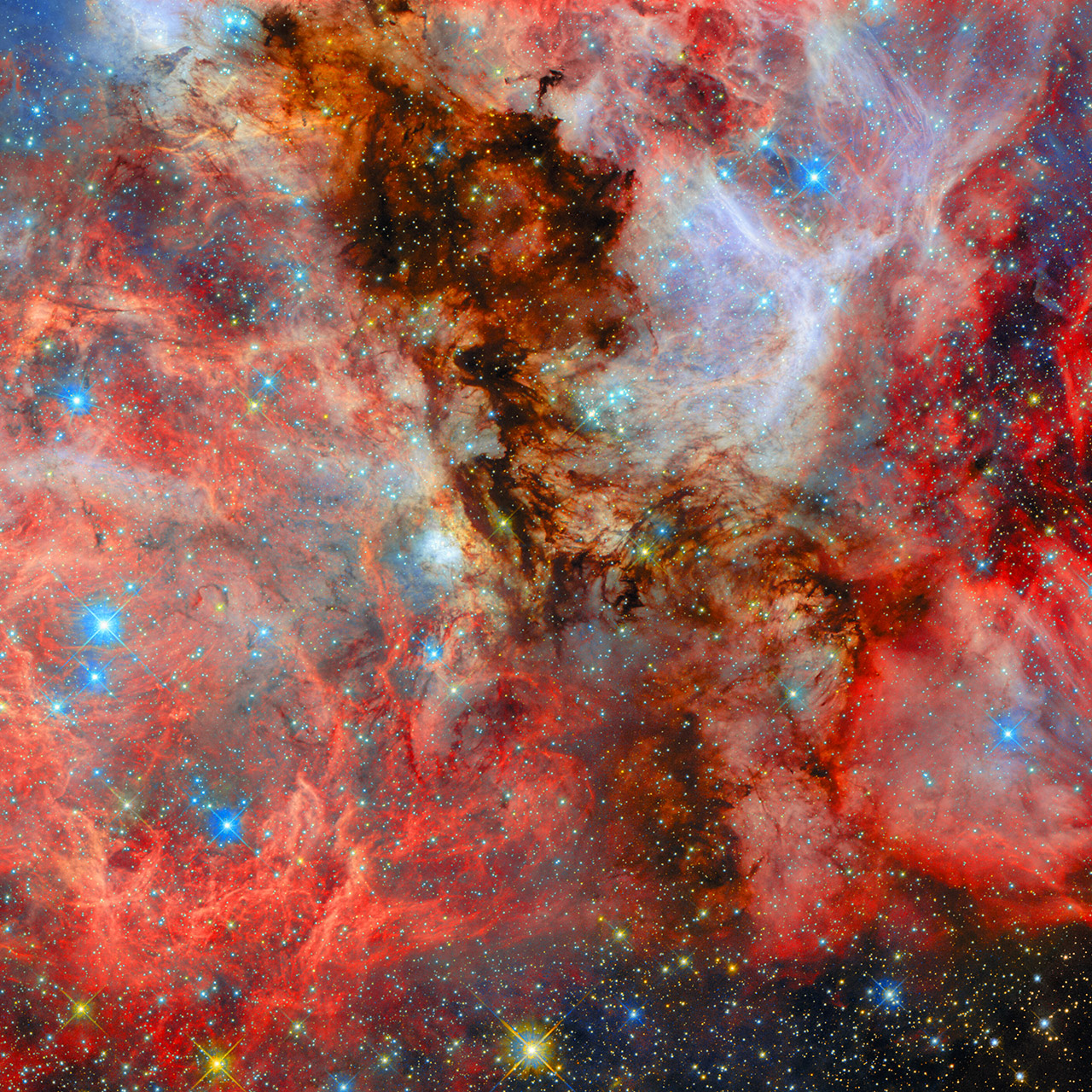
Deep within the Large Magellanic Cloud, a small satellite galaxy orbiting our own Milky Way 160,000 light-years away, sits N159, a mind-boggling region of star creation. This latest image from NASA / ESA’s Hubble Space Telescope depicts only a slice of the entire complex, but believe us when we say that every detail is a monument to the earth-shattering power of cosmic creation on a grand scale.
The majority of the image is made up of gas and dust, with thick streaks of burning red from hydrogen powered by the intense ultraviolet light emitted by a number of hot, young stars hiding deep within. These stars are still essentially caught in their birth clouds, spewing forth all kinds of energy that ionizes the surrounding gas and paints the entire landscape in deep, rich shades of scarlet.
Sale

Telescope for Kids & Adults – 70mm Aperture 500mm AZ Mount Fully Multi-Coated Optics Astronomical…
- High-Quality Optics: The astronomical telescope features 500mm(f/7.1) focal length and 70mm aperture, provides stunning views and protects your eyes.
- High Magnification: Our durable telescope for kids and adults is quipped with two excellent-quality eyepieces (25mm and 10mm) and a 3x Barlow lens.it…
- Portable and Convenient: Telescope comes with a phone adapter and an adjustable aluminum tripod. Wireless remote control and carrying case for…
A large dark column of dust cuts directly through the middle, blocking all of the light from the stars that shine just behind it. This opaque barrier generates a visual knockabout, with contrasts that almost spring out at you. On the other hand, you have these lighter spots in soft blues and whites that suggest distant clouds receiving a gleam of light from all the way over there.

There are stars scattered about in cool blues, whites, and even gold – some piercing right through the veils of material that are hanging around, while others are simply cuddled down deep inside where it is safe.
Did you know that enormous newborn stars generate tremendous winds that create bubble-like cavities and hollowed-out structures around themselves? These features essentially tell the story of the powerful feedback loop: the stars form, ignite, and then reshape the very clouds that birthed them in the first place. They compress gas in some locations while freeing up space in others. N159 is part of a larger star-forming chain in the Large Magellanic Cloud, near to the well-known Tarantula Nebula. You’re looking at a gigantic complex spanning 150 light-years; in astronomical terms, it’s a monster region within this satellite galaxy.
One thing that is particularly intriguing is that N159 experiences conditions that are considerably different from those found in the Milky Way. It has a far lower metal content, which allows astronomers to examine how stars originate and assemble in surroundings with fewer heavy elements present. That information cannot be obtained by studying the Milky Way.
Hubble created this stunning photograph using numerous filters on its Advanced Camera for Surveys & Wide Field Camera 3, capturing images in a variety of optical wavelengths and focusing specifically on the red emission from hydrogen known as H-alpha. The end result is a completely clear image of how dust, gas, and star radiation interact with one another.
Hubble Captures N159, a Turbulent Stellar Nursery in a Neighboring Galaxy
#Hubble #Captures #N159 #Turbulent #Stellar #Nursery #Neighboring #Galaxy