NASA’s Fluid Particles Experiment on the ISS Shows Particles Dancing in Zero Gravity
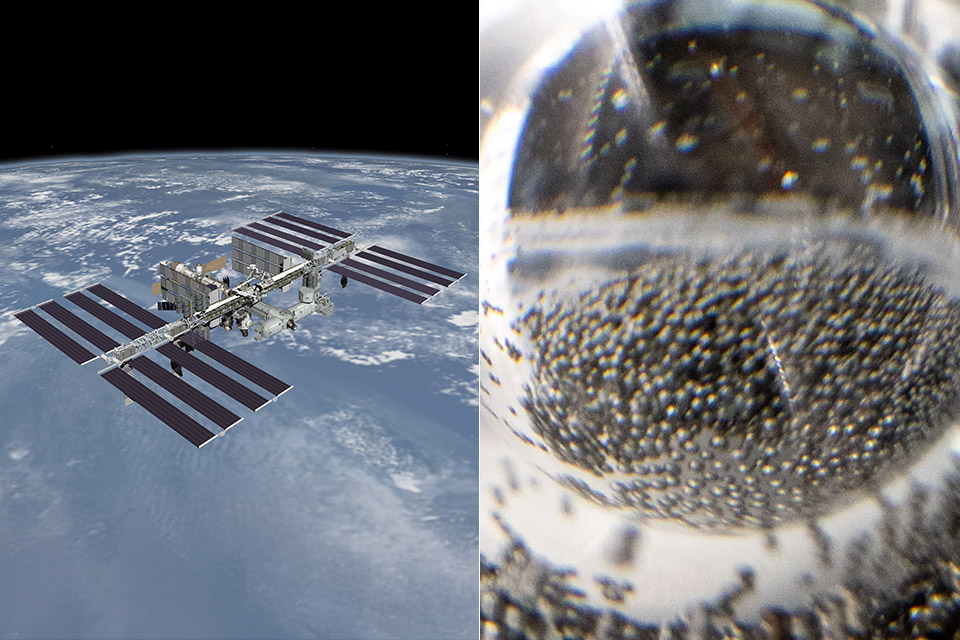
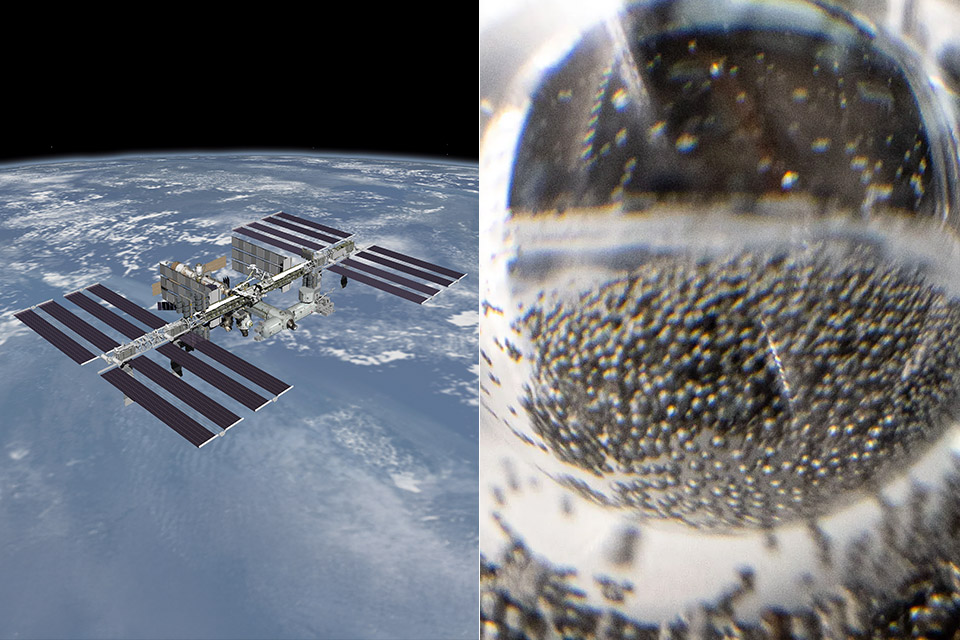
Photo credit: NASA / Zena Cardman
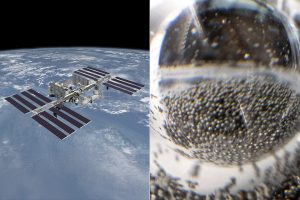
The International Space Station (ISS), located high above the Earth, has been used to demonstrate how strange things behave when gravity is no longer pulling them downward. Recently, several astronauts captured a shot inside the Destiny lab module of a group of ball bearings floating around a larger one. They’re floating in a thick liquid that keeps the metal spheres stable, and they respond to very subtle vibrations in a way that can’t be replicated on the ground.
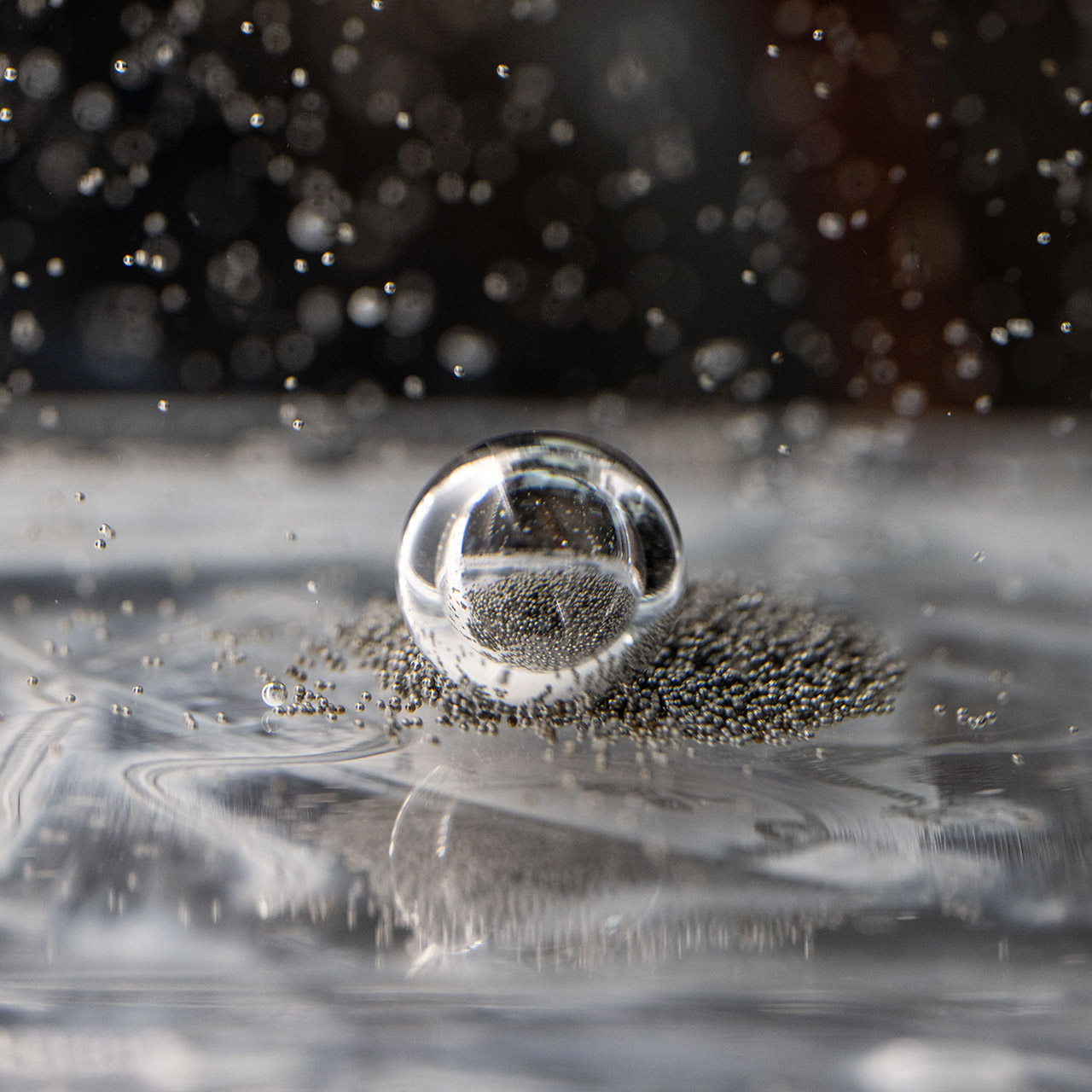
This study, known as the Fluid Particles experiment, is taking place within the Microgravity Science Glovebox (MSG), a small laboratory. This is essentially a safe tiny box that allows astronauts to experiment with materials while preventing anything from escaping into the station’s atmosphere. Inside, there is a container filled with a thick fluid mixed with numerous components, including the ball bearings. Scientists then shake the entire thing a few times, not too forcibly, but with steady back and forth movements, and then watch what happens as the particles cluster together and form various patterns and groupings over time.
Sale

LEGO Technic Surface Space Loader LT78 Building Set, Space Toy for Adventure, Construction, Exploration…
- Space vehicle for boys and girls – This space toy for exploration features steering, a raising and lowering function, a crane and an operator’s…
- Raise and lower the crane – Kids can raise the operator’s cab and raise and lower the crane to pick up and move the cargo
- Adapt to different terrains – Young space explorers can put the loader to the test as they imagine what it would be like to live and work on another…
On Earth, gravity causes the heavier elements to sink to the bottom and the lighter bits to rise to the top, making it difficult to discern what is going on with the smaller forces. But up in space, those hidden interactions take front stage: particles begin to move about one other in strange ways, sometimes clinging to one another and sometimes repelling each other, all because of how they behave in the fluid.
We can learn from all of this by observing the tiny sphere swim around some of the larger ones, and how it settles into a stable pattern or simply evolves over time. The work they undertake here has the potential to help us design better fire suppression systems for astronauts, as the particles in them can clump together and smother flames. It’s not only about astronauts; we might apply the same concepts to prevent dust from kicking up during moon landings or to help regulate the raft of particles that attach to humans and equipment on the moon. Plant development in space greenhouses may also benefit since roots and nutrients circulate in ways that they do not on Earth.
It turns out that all of these strange and fascinating activities taking place in space aren’t just beneficial up there; they can also be used right here on Earth. Consider pollen spreading through the air during allergy season, algae multiplying rapidly in lakes, plastic debris floating in the oceans, or salt aerosols rising from breaking waves. In each of these examples, small particles are moving around in a fluid, governed by the same forces that we sense in space. The data from this experiment will help us construct better models for all of these processes, as well as improve our ability to monitor and clean up the environment.
The Artemis program will eventually include lengthier journeys to the moon and, eventually, Mars. But, first and foremost, we must determine how to keep our astronauts safe in low gravity for months, if not years, at a time. And that is where research like this will come in handy: for storing fluids, developing air filters, and ensuring that the habitats we build are safe and reliable. The findings of this simple experiment will be extremely useful in the future.
NASA’s Fluid Particles Experiment on the ISS Shows Particles Dancing in Zero Gravity
#NASAs #Fluid #Particles #Experiment #ISS #Shows #Particles #Dancing #Gravity