AI could help predict nutrition risks in ICU patients
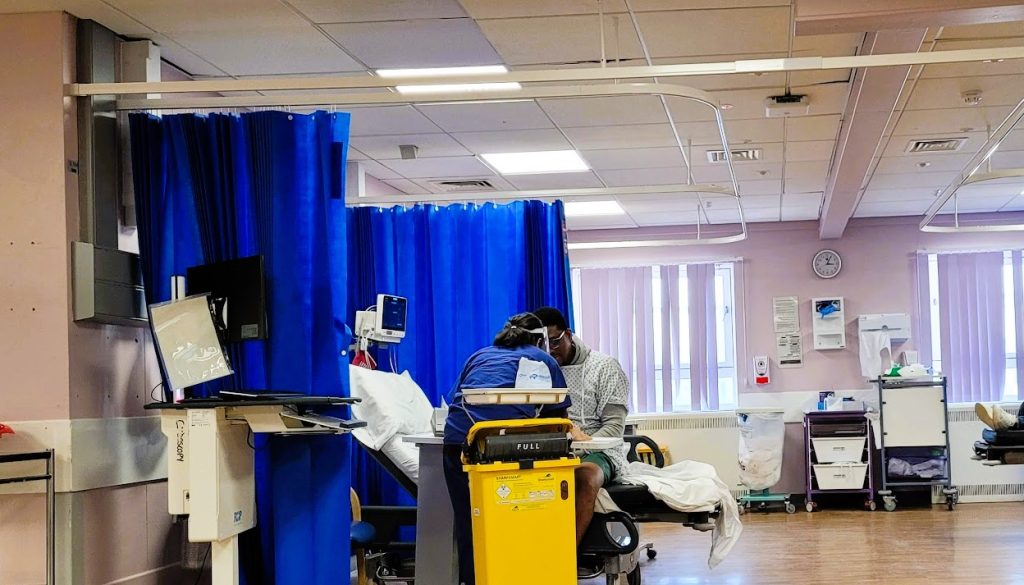
A nurse attending a patient. — Image by © Tim Sandle
A new study by researchers at the Icahn School of Medicine at Mount Sinai suggests that artificial intelligence (AI) could help predict which critically ill patients on ventilators are at risk of underfeeding, potentially enabling clinicians to adjust nutrition early and improve patient care.
Optimal enteral nutrition (EN) is vital for critically ill patients requiring mechanical ventilation to meet their metabolic needs while mitigating complications. Yet tailoring this for individual patients is complex.
The first week on a ventilator is especially important for providing proper nutrition, since patients’ needs often shift quickly during this period, say the investigators.
“Too many patients on ventilators in the intensive care unit (ICU) don’t get the nutrition they need during the critical first week,” acknowledges co-senior corresponding author Ankit Sakhuja, MBBS, MS, Associate Professor of Artificial Intelligence and Human Health, and Medicine (Data-Driven and Digital Medicine) in a research brief.
Sakhuja adds: “Their needs are changing rapidly, and it’s easy for them to fall behind. We wanted to explore a simple, timely way to identify who is most at risk of being underfed so that clinicians could intervene earlier, adjust care, and make sure each patient receives the right support when it matters most.”
The research team built an AI tool, called NutriSightT, which analyzed routine ICU data such as vital signs, lab results, medications, and feeding information to predict, hours in advance, which patients may be underfed on days 3–7 of ventilation. Using large deidentified ICU datasets from Europe and the United States, the model was trained and validated to update predictions every four hours as patient conditions change.
The study identified several key insights that could potentially help guide patient care:
- Underfeeding is common early in ICU care. About 41 percent to 53 percent of patients were underfed by day three, and 25-35 percent remained underfed by day seven.
- The model is dynamic and interpretable, showing which routine factors—such as blood pressure, sodium levels, or sedation—influence underfeeding risk.
- The research could support personalized feeding plans, guide nutrition teams, and inform clinical trials to determine the most effective nutrition strategies for individual patients.
The investigators emphasize that NutriSighT would not be intended to replace clinicians. Instead, it could serve as an early-warning system to help guide timely nutrition interventions.
The research team’s next steps include prospective multi-site trials to test whether acting on these predictions improves patient outcomes, careful integration into electronic health records, and expansion to broader individualized nutrition targets.
The significance of the study’s findings is that it may be possible to identify which patients are at risk of underfeeding early in their ICU stay and tailor care to their individual needs. The findings represent an important step towards giving clinicians better information to make decisions about nutrition and could lay the groundwork for more personalized care strategies.
Details of the study appear in the journal Nature Communications. The research is titled “NutriSighT: Interpretable Transformer Model for Dynamic Prediction of Underfeeding Enteral Nutrition in Mechanically Ventilated Patients.”
AI could help predict nutrition risks in ICU patients
#predict #nutrition #risks #ICU #patients