World’s Smallest Programmable Autonomous Robots are Small Enough to Balance on the Ridge of a Fingertip
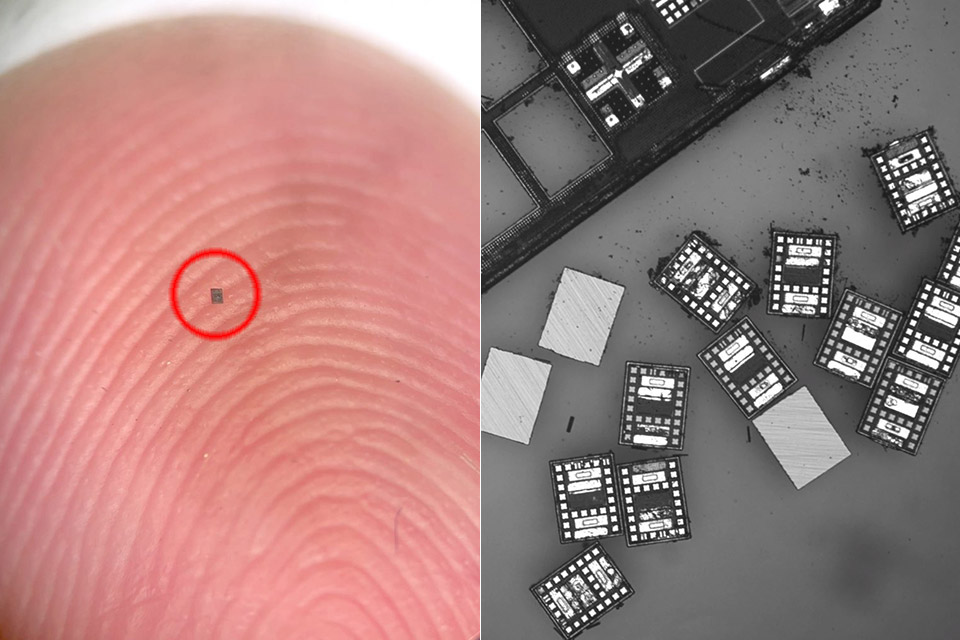
Photo credit: Marc Miskin, Penn
Researchers at the University of Pennsylvania and the University of Michigan have created the world’s smallest programmable autonomous robot. Each one is about 200 by 300 micrometers in size, which is roughly the same size as some of our body’s cells and 50 micrometers thick.
What’s more impressive is how these robots can simply run on their own. They each have a computer built in, which is essentially a tiny brain made up of a CPU, memory, sensors, and solar panels powered by a tiny 75-nanowatt LED light. That’s more than enough to keep them going for months if the conditions are correct.

LEGO Disney & Pixar Wall-E & EVE Building Set for Adults, Ages 18+ – Home Office, Book Shelf, or Room…
- LEGO SET FOR ADULTS – The WALL-E and EVE (43279) building set offers adults 18 years old and up an immersive construction challenge featuring…
- 4 DISNEY PIXAR CHARACTERS – Builders can create iconic robots WALL-E, EVE, M-O and Hal from the hit movie—each with authentic functionality like…
- MINDFUL BUILDING EXPERIENCE – This detailed construction set lets builders practice advanced construction techniques for an immersive and relaxing…

Photo credit: Lucas Hanson and William Reinhardt, University of Pennsylvania
These machines have no legs or arms; instead, they generate an electric field around a line of electrodes, which they utilize to shove water molecules in the surrounding liquid and propel them ahead. They move at a rate of around one length per second, and if you have a large number of them, they can even swim like a school of fish.
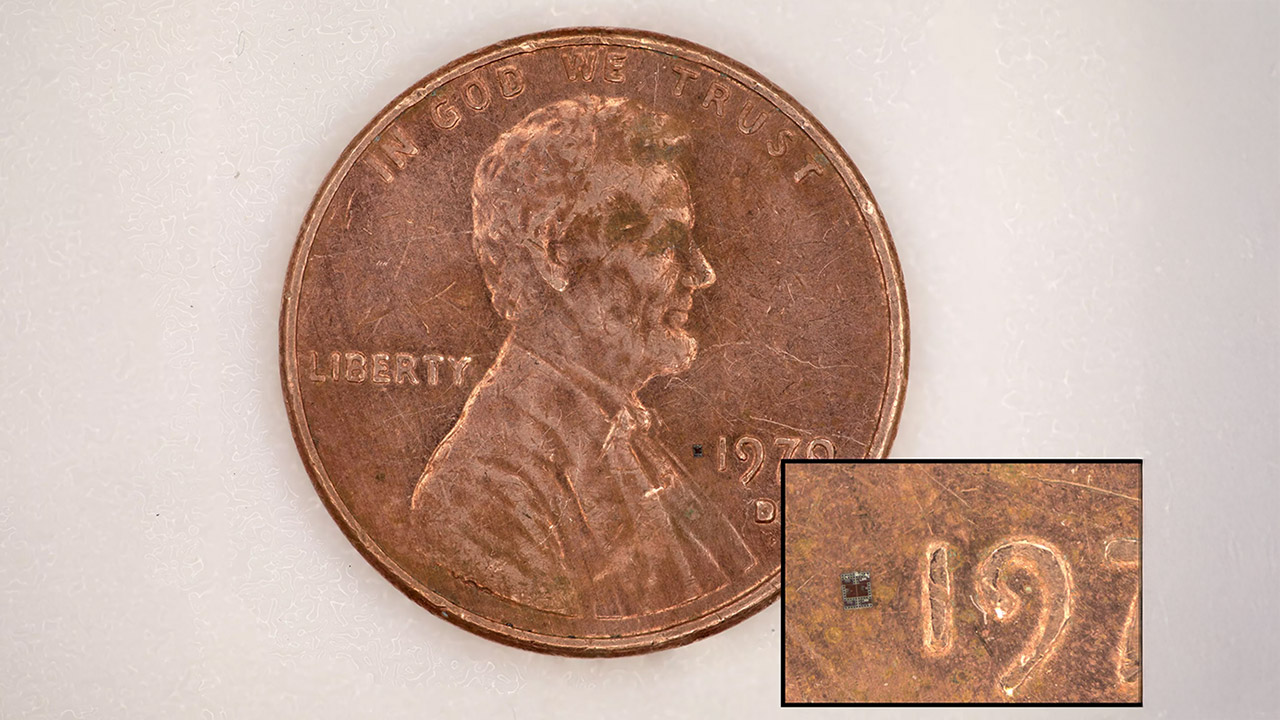
Photo credit: Kyle Skelil, University of Pennsylvania
They are controlled by light flashes, and each robot has its own unique address, allowing you to load instructions onto individual or groups of robots. They are also extremely sensitive, picking up on temperature changes as little as one-third of a degree Celsius. They’ve even programmed them to look for warmth and report findings by performing specific wiggles that encode the data.
What’s remarkable is how the team manufactured them: they used a standard chip fabrication process, similar to how large computers are built, which made them extremely inexpensive – a single unit costs only a cent if you’re making a large batch. The control system is also rather simple, relying solely on off-the-shelf components such as a Raspberry Pi and smartphone camera.
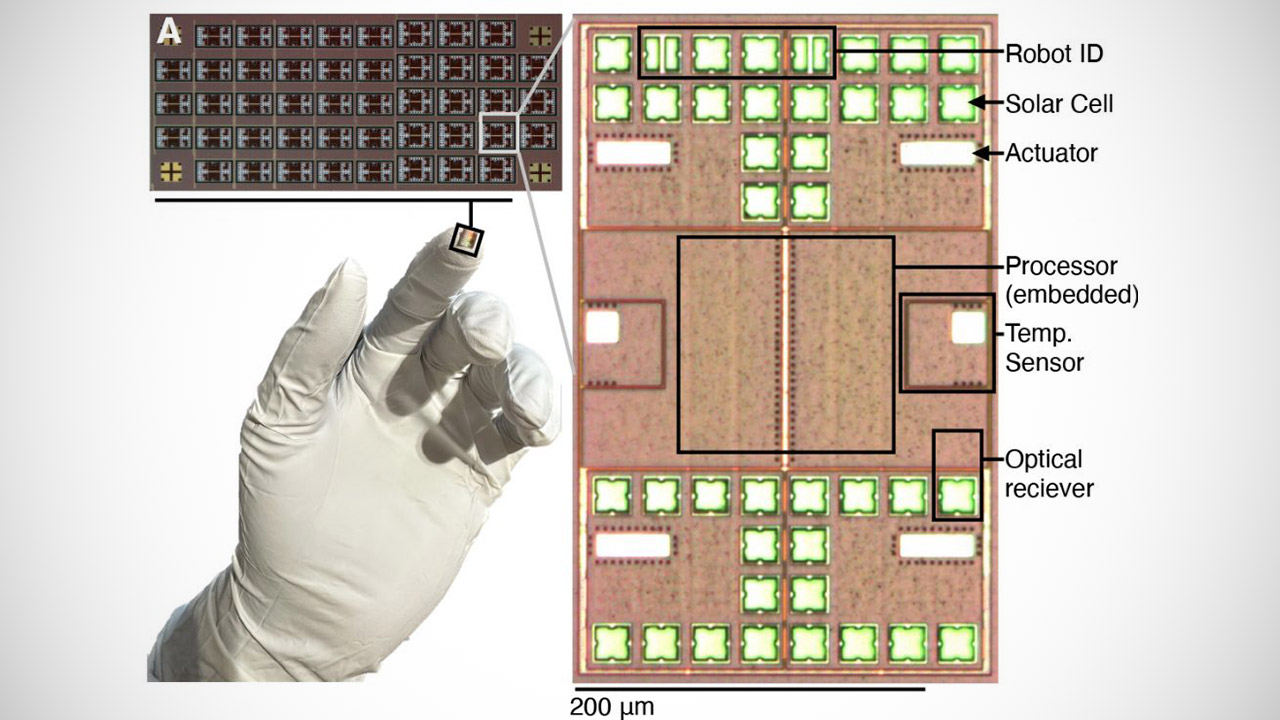
Photo credit: Miskin Lab and Blaauw Lab
Marc Miskin leads the Penn team, which collaborates with the Michigan trio of David Blaauw and Dennis Sylvester to develop this ultra-low-power computer design, which has been a key barrier to getting these types of robots off the ground for years. The problem at this scale is that water feels quite thick, and traditional propulsion simply cannot handle it, but this new electric field method has been a game changer.
The robots are now being tested in a mild hydrogen peroxide solution, but the team is already considering safer liquids for future medical applications. They believe they might be used to monitor the health of individual cells by measuring temperature changes, or to give therapies to specific locations on the body.

Photo credit: Maya Lassiter, University of Pennsylvania
Then there’s the durability, as having no moving parts means fewer breakdowns, allowing the researchers to pick them up with a pipette and move them around without hurting them. With innovations like these, we can now work on scales that were previously beyond of reach. Monitoring individual cells in this way could disclose a wealth of new information about diseases, and properly building things at a micro level could lead to better electronics or even new materials.
[Source]
World’s Smallest Programmable Autonomous Robots are Small Enough to Balance on the Ridge of a Fingertip
#Worlds #Smallest #Programmable #Autonomous #Robots #Small #Balance #Ridge #Fingertip