Hubble Captures Arp 4, Spiral Galaxies That Appear Closer Than They Really Are
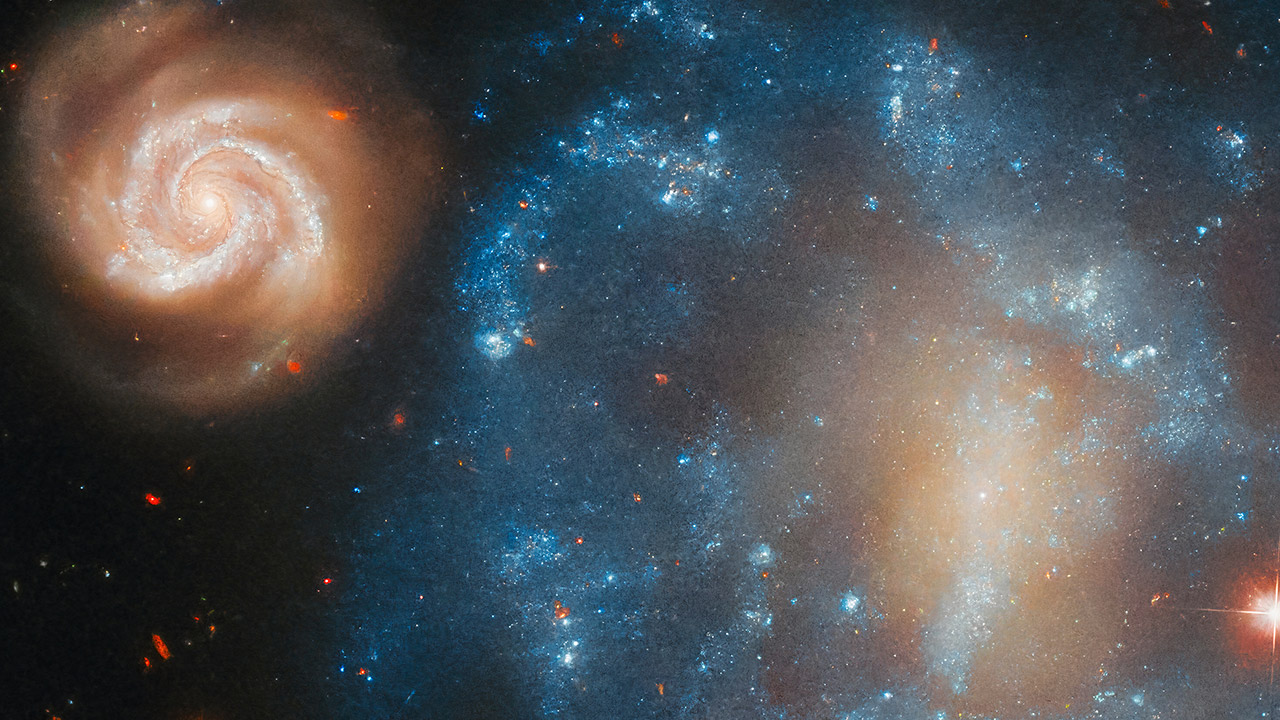
This new image of Arp 4 captured by NASA/ESA’s Hubble Space Telescope appears to have been created for a screen, doesn’t it? The way the galaxies align provides a flawless optical illusion that tricks the eye into sensing intimacy where none exists. It sits in the constellation Cetus, also known as the Whale, a peaceful region of sky far from the crowded Milky Way.
The larger galaxy, MCG-02-05-050, is 65 million light-years closer to Earth than you might expect. Its disk is a dull and uninspiring thing, with arms that are a little haphazard and appear incomplete. Dust lanes cut through the structure, giving it a gloomy, slightly depressed feel. Then there’s the smaller partner, MCG-02-05-050a, which is 675 million light years away. It may appear little on the scale, but it is most likely the larger of the two; its brightness is increased due to the abundance of stars out there, and its core is rather thick.
Sale

LEGO Technic NASA Apollo Lunar Roving Vehicle LRV Building Set – Craft Kits for Adults, Ages 18+ -…
- Build a realistic LEGO Technic lunar rover model – This LRV building kit for adults is packed with authentic details including seats, steering,…
- NASA model for adults – Enjoy a mindful project assembling all the details of the rover and equipment including the battery pack, heating and…
- A build for NASA fans – Remember the Apollo 17 mission with a display that features the lunar roving vehicle alongside 3 detailed equipment…
The Hubble Space Telescope captured this image by merging its own data with ground-based surveys, and it has portrayed the galaxies in natural colors to highlight their unique characteristics. The closer, larger galaxy is all cold blues and black tones, whereas the distant partner is a true firecracker of warm, bright colors. There are stars all over the place, but the contrast between the drab broad disk and the small little dazzling spiral is what gives the whole image its true sparkle.
It’s remarkable that they aren’t interacting, yet Halton Arp included these two in his 1960 Atlas of Peculiar Galaxies because they look so strange. The atlas was primarily about showcasing uncommon structures and figuring out how galaxies evolve over time. Hubble has gone back and examined many of those earlier entries, essentially transforming drab, hazy photographs into crisp, clear images of some of the universe’s more unusual discoveries.
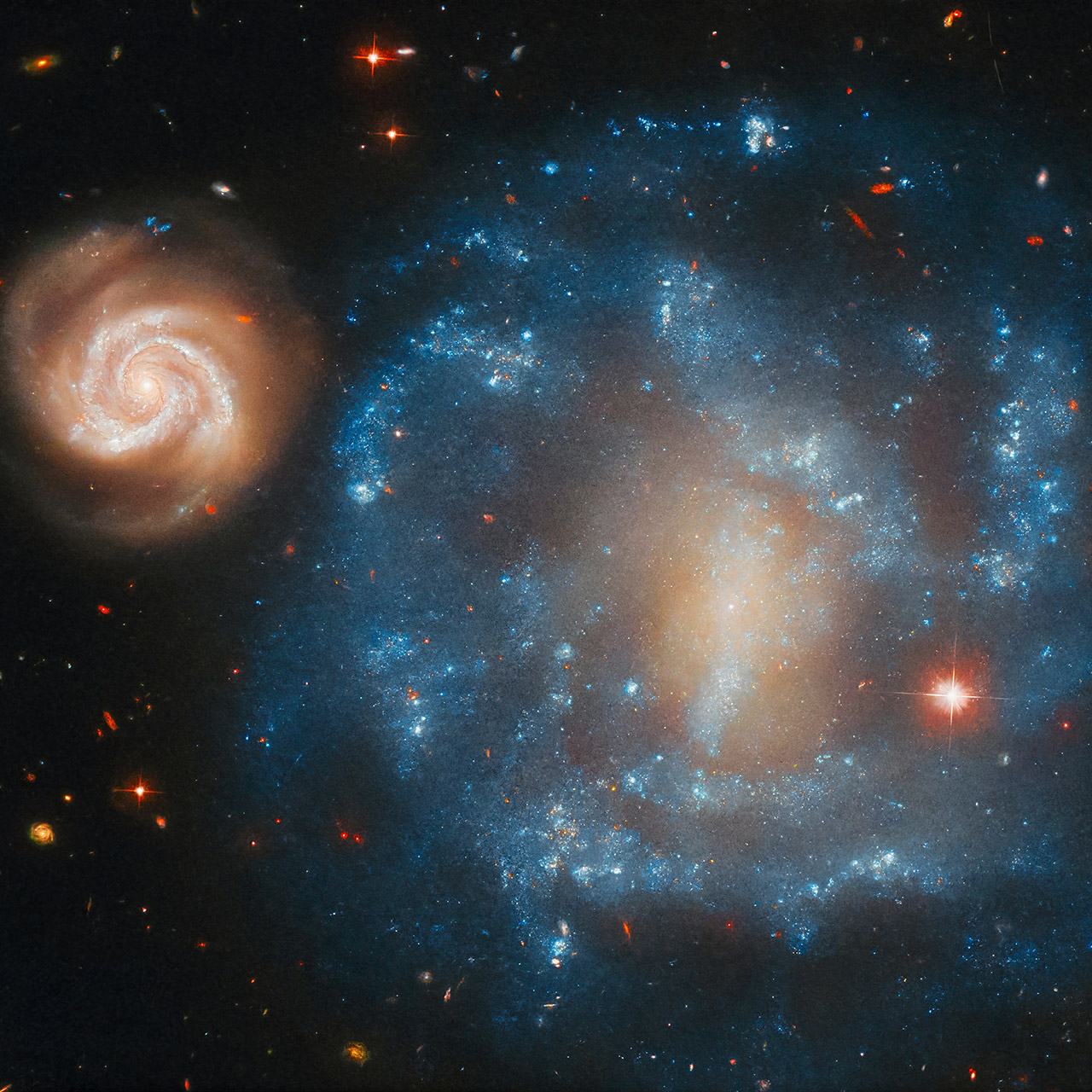
The distance between the two galaxies is hundreds of millions of light-years, but from our perspective, they appear to be sitting right next to each other. In reality, the nearby one is smaller and fainter, indicating a low-surface-brightness kind that people previously overlooked. As you gaze further away, the other one becomes brighter and brighter, which contradicts what you would ordinarily expect to see.
Hubble Captures Arp 4, Spiral Galaxies That Appear Closer Than They Really Are
#Hubble #Captures #Arp #Spiral #Galaxies #Closer