3D-Printed Origami Takes the Art to a Whole New Level

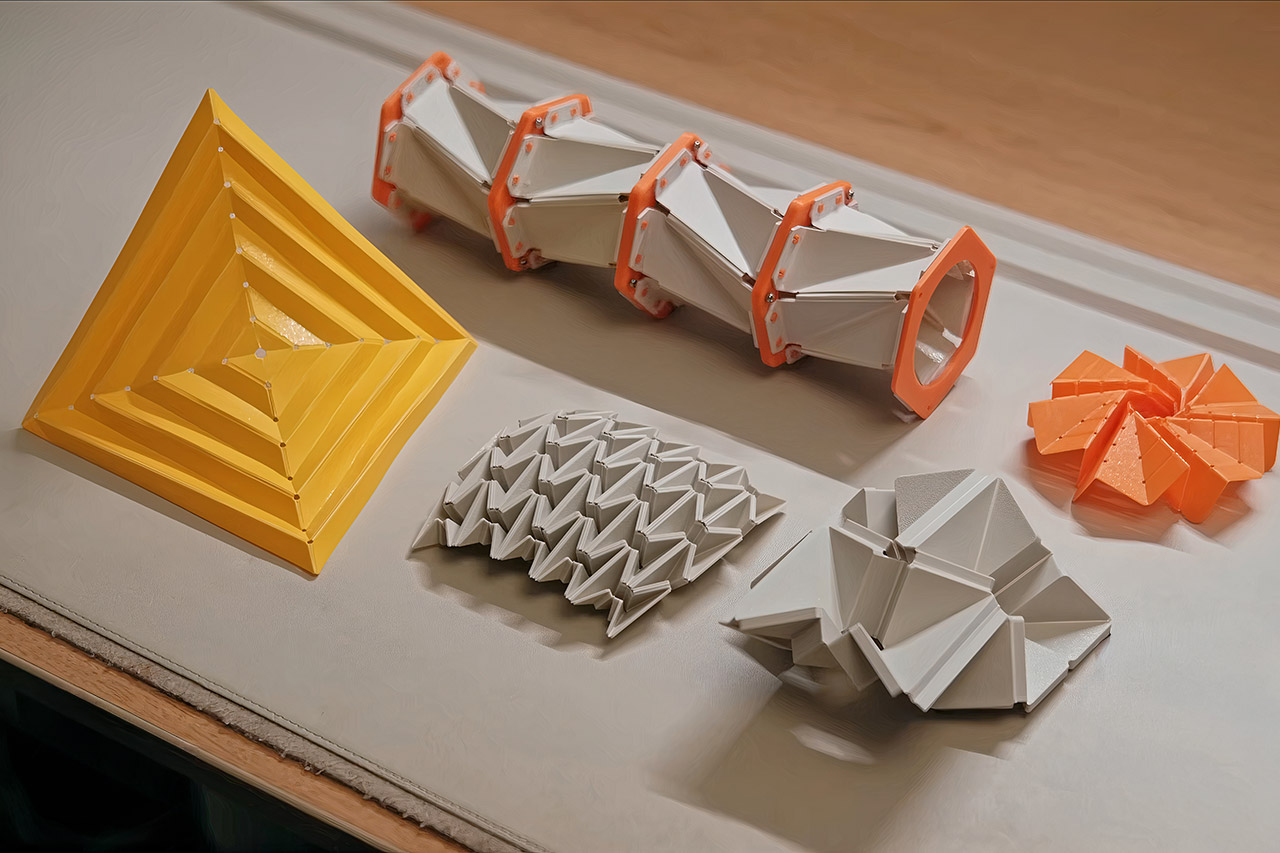
Matthew Lim, a designer with an eye for the strange, has spent a lot of time figuring out how to incorporate the traditional art of origami into the world of 3D printed objects. His most recent video showcases a variety of printed pieces that fold elegantly, retain their shapes, and appear to be full of mechanical possibilities.
Everything begins with basic principles, because origami is based solely on these ultra-precise crease patterns: mountain folds that lift up and valley folds that drop down. Lim develops these in his CAD software, Fusion 360, by designing flat sheets with solid panels and thin creases (0.2 millimeters thick) that allow the material to bend. He also makes tiny little holes at the intersections where the folds meet, so that when the printer lays down the material, it doesn’t become twisted up in a jumble.
Sale

Bambu Lab P1S Combo, P1S 3D Printer and AMS, Support Up to 16 Colors/Multi Materials, 500mm/s Fast…
- Up to 16 Colors: Bring your designs to life with vibrant multi-color/multi-material printing capabilities, perfect for showcasing your creativity….
- 500mm/s and 20000 mm/s² Acceleration True High Speed: Don’t wait around for your masterpieces. Lightning-fast printing speed lets you focus on…
- Enclosed Design: Fully enclosed body improves print performance for advanced filaments. Automatic Bed Leveling: Say hello to high-quality, successful…
To get started, he begins with a simple model such as the pajarita bird. First, he unfolds a paper version of the bird and maps the crease patterns, but then modifies them such that his printed plastic version is biased one way or the other. Then he prints the entire thing. As a result, the bird folds up into a lovely shape with hinges that can bend without breaking. He’s able to test the limits of what these printed parts can accomplish as he becomes more sophisticated, and he goes for some pretty insane shapes.
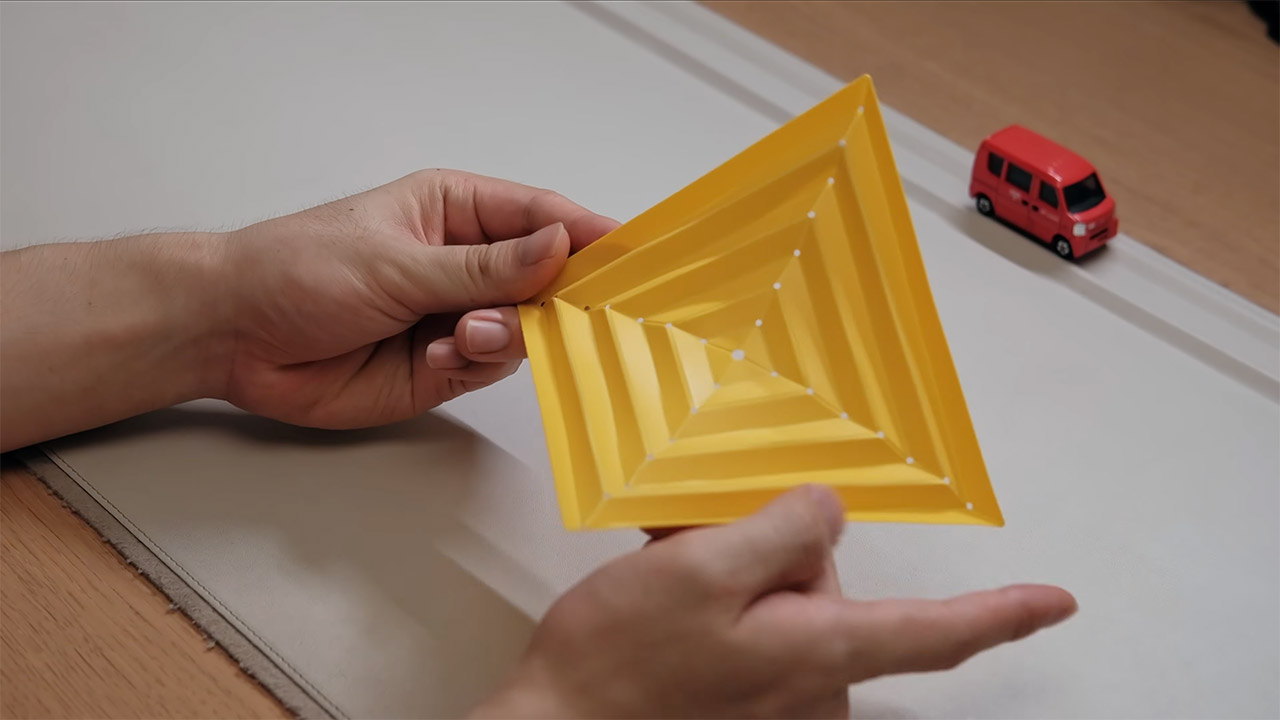
A hyperbolic paraboloid is a shape that seems like a mouthful, but it’s essentially a curved, twisted surface that is difficult to achieve through any other means of manufacture. However, printed as a thin sheet, you can acquire one of these and skip the supports required if printed solidly. What’s even cooler is that this demonstrates how folding can make shapes that would normally require a lot more material.
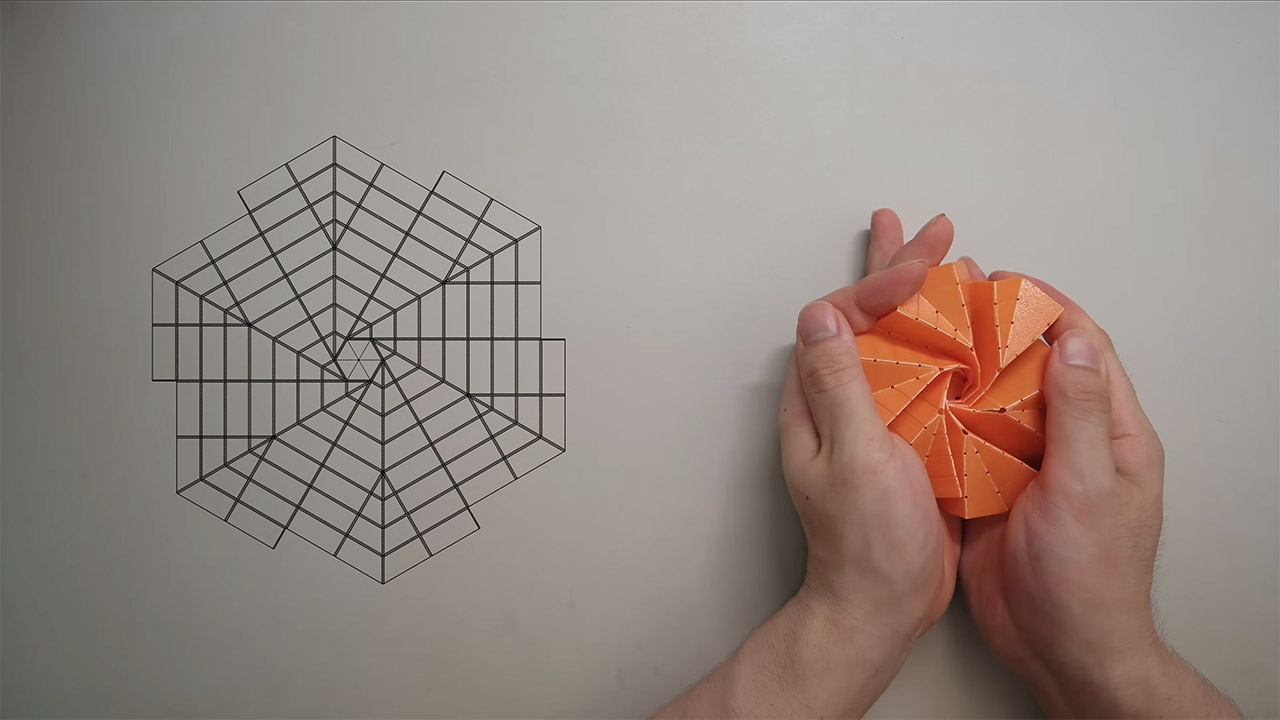
His satellite flasher pattern, which was inspired by the type of deployable structures seen in space missions, has these radial folds that twist round, and when folded up, it moves from completely compact to fully deployed in a single twist. The motion is solely determined by geometry.
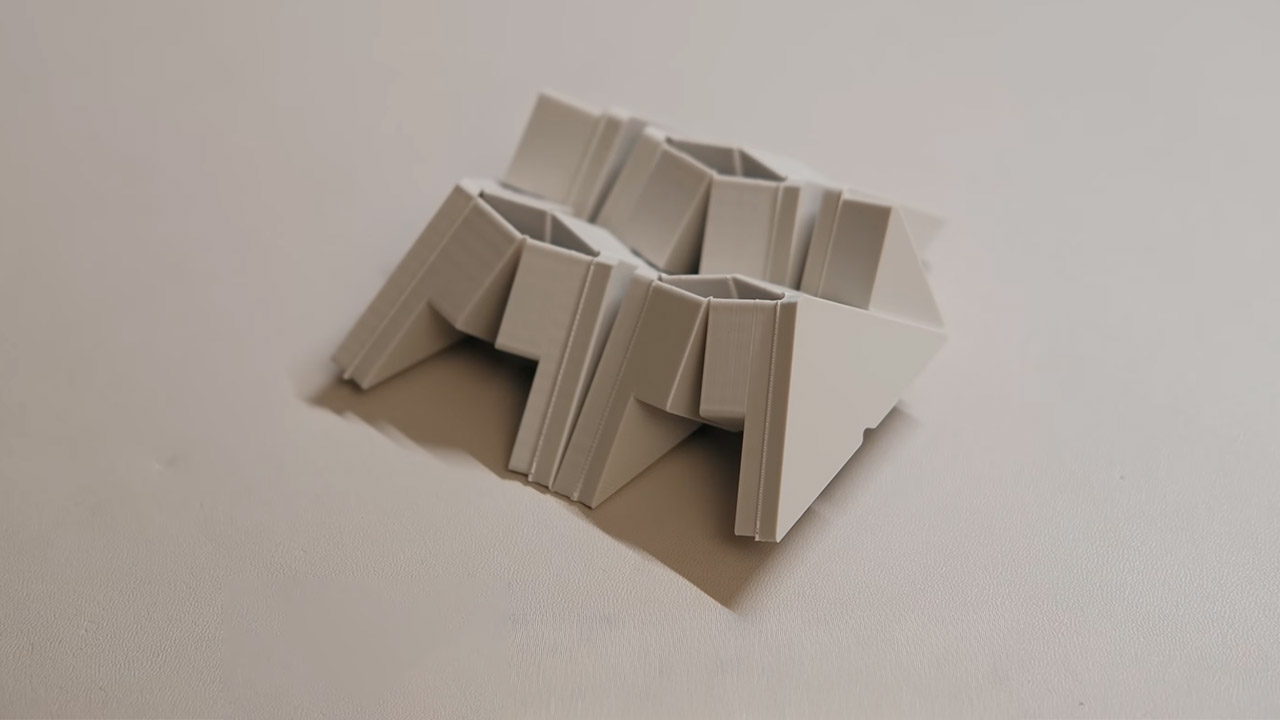
There are issues, of course, because denser patterns, such as a waterbomb tessellation, which has some strange dancing motion as it expands, compresses, and twists, initially result in the hinges snapping off or the panels colliding when printed flat. However, Lim discovered via his research on thick-panel origami that if you offset the panels along specific creases, shifting them over by twice the thickness of the panel, you may end up with stronger, thicker pieces that fold up perfectly without any harm. It appears that you can scale up the design to create larger variants.
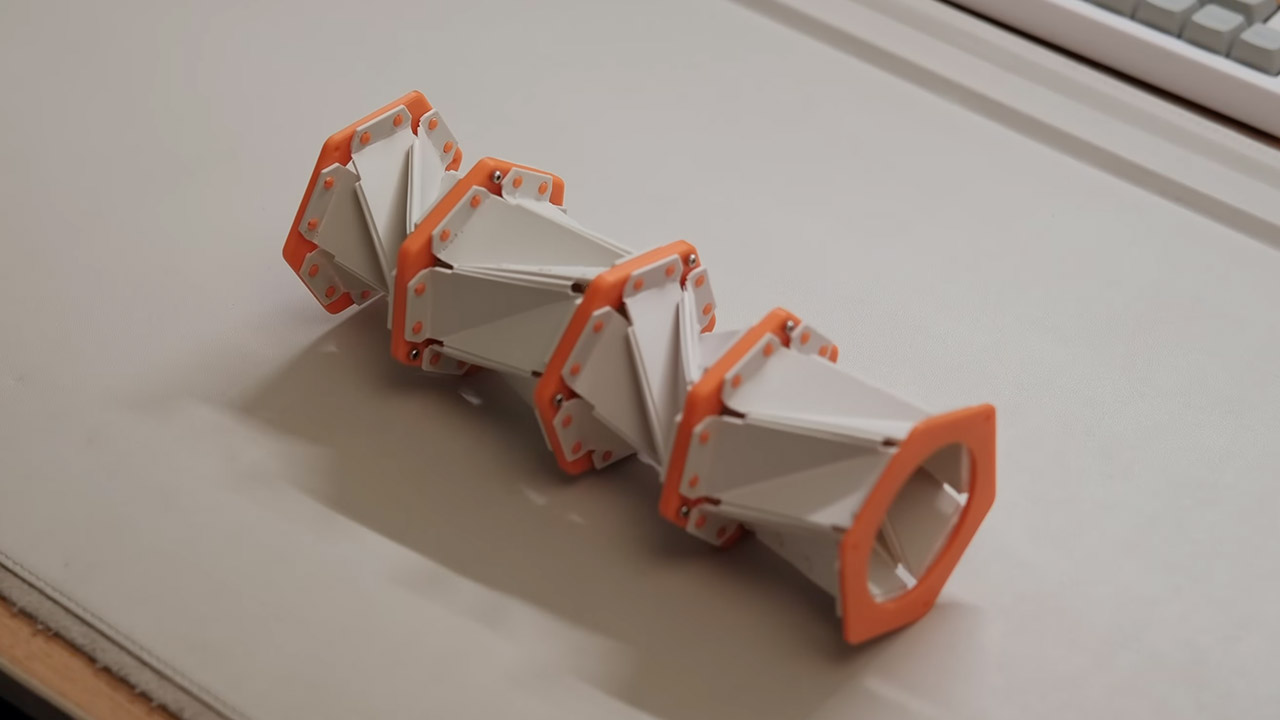
His signature piece is the Kresling spring, which was originally developed by architect Biruta Kresling. It’s one of those things where the parametric equations in CAD regulate the number of units, the height, the length, and the angle at which it twists. He produced it in PLA using a Bambu Lab printer, and the spring is held together with little snap-fit pins, eliminating the need for glue. It snaps back and forth between two stable states, or it operates like a standard spring when properly configured. When you stack the units with alternating creases, it generates a clever linked action in which twisting compresses the units sequentially.

These prints demonstrate how origami is all about efficiency, utilizing the least amount of material to achieve maximum strength, which can also be applied to 3D printing. You can print out these flat designs quickly, fold them into various practical shapes, and incorporate mechanics such as responsive hinges and bistable springs. Lim’s work is an excellent example of the possibilities for deployable tools, compact structures, and lightweight systems that can move without the use of conventional joints.
[Source]
3D-Printed Origami Takes the Art to a Whole New Level
#3DPrinted #Origami #Takes #Art #Level