New three-country study exposes gap between training and innovation capacity
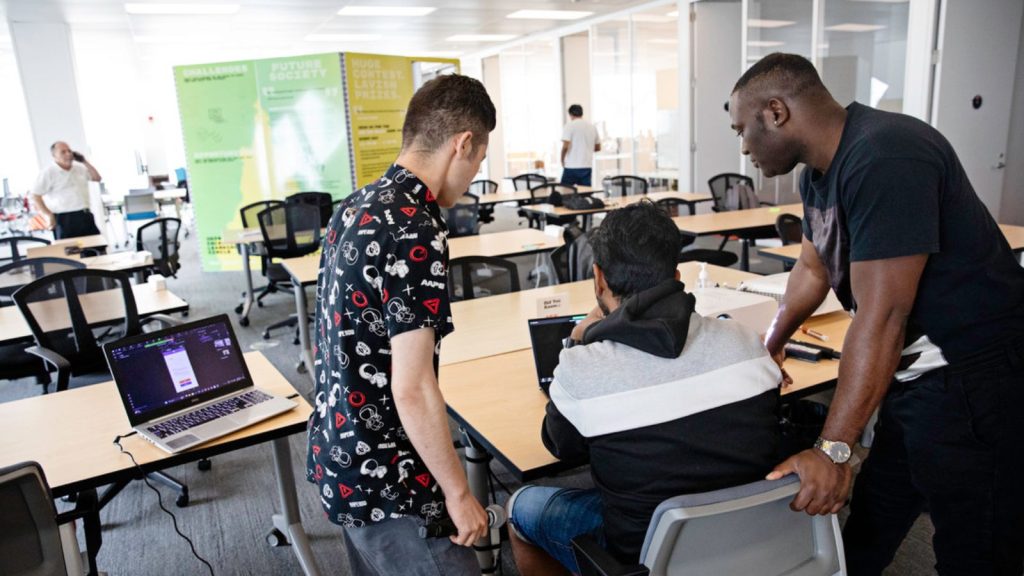
– Photo courtesy InceptionU
There is a particular kind of workplace despair that only appears when the calendar invite says “mandatory training.”
You click the link, the loading wheel spins, and suddenly you are staring at a 47-minute video about a scenario that has nothing to do with your job.
The narrator asks you to imagine a customer approaching you in a retail environment, even though you have never worked a cash register.
A cartoon man named Darren makes a mistake no functioning adult has ever made.
The multiple-choice quiz offers four versions of the wrong answer.
You close the module unchanged, except now you are annoyed and 47 minutes behind.
Many people know the feeling of this workplace training dread.
They also know what follows.
The browser window closes, the real work reappears and none of the challenges they actually face have shifted. The course has fulfilled its administrative purpose, but has not helped anyone actually adapt.
That issue sits at the heart of “Unlocking the Capability to Innovate,” a new multi-country study by InceptionU, a Calgary-based learning and innovation organization that develops the MetaSkills people need to think critically, collaborate and adapt in complex work environments.
The study shows that workers across Canada, the United States and the United Kingdom are being trained more than ever, yet are not gaining the capabilities they need to keep pace with how work is changing. People described a widening gap between the learning they receive and the realities they face on the job, where problems are complex, expectations shift quickly and collaboration is essential. The result is a workforce that is motivated but underprepared, and organizations whose innovation aspirations are constrained by capability.
The study was conducted by RKI and includes more than 3,000 workers in Canada, the United States and the United Kingdom. It offers a rare three-country comparison of how people learn on the job and how prepared they feel to navigate change.
InceptionU expanded on research Digital Journal published earlier this year, focusing on what it takes to unlock the capability to innovate.
The new report defines five innovation archetypes that classify patterns in how people respond to change or a new direction at work. These behavioural profiles, InceptionU says, provide a lens for understanding where people are on the path toward innovation readiness.
Capability is becoming the defining currency of competitiveness, yet the systems workers rely on to build that capability are not keeping pace.

Canada’s challenge is not training volume, it’s capability
Many organizations assume they are preparing people for change because employees are being trained. But participation does not equal progress.
The report found that 81% of workers completed training in the past year, yet only 32% said it helped them do their actual job.
That gap captures the real problem. Workers are spending time in learning environments that signal improvement on paper but rarely build the capability they need in practice.
“Workplace learning and career progression used to be very linear, but with technology evolving so fast, building the capacity to learn and adapt is more valuable,” says Margo Purcell, CEO of InceptionU. “It’s not just what companies need, it’s what the workforce is asking for.”
The study shows that capability grows through practice, not through watching or listening.
Innovation readiness depends on people who can solve problems, test ideas, adjust as they go, collaborate effectively and stay steady when conditions change.
InceptionU calls these MetaSkills, which include critical thinking, systems thinking, creative thinking, computational thinking, scientific thinking, design skills and collaborative skills.
The study sorts workers into five archetypes that describe how people respond to change at work:
- Builders turn ideas into action and help shape what comes next.
- Embracers stay open to new directions and support others through change.
- Drifters focus on immediate tasks and wait to see where things go.
- Resistors hold back until they feel secure.
- Destroyers push against change when they feel they have the most to lose.
These groups are not personality types and instead reflect how prepared people feel to navigate uncertainty and apply new learning.
The study shows that among workers identified as Builders, 43% said their training helped them perform their job. Among Destroyers, only 21% said the same.
Builders were also far more likely to tolerate uncertainty, with 63% saying they were comfortable with the risks associated with new work opportunities. Only 26% of Destroyers reported that comfort level.
The pattern reflects the kind of learning environments people have been exposed to. Workers who have chances to apply new skills in real situations build confidence and adaptability over time. Those who have not had those experiences face change with fewer tools, less support and greater uncertainty.

Collaboration is emerging as the capability Canada is short on
One of the clearest themes in the research is that workers are not asking for more technical modules — they’re asking for a different kind of development altogether.
Collaboration emerged as the clearest capability gap in the study.
Nearly half (44%) of workers said it was the skill they most needed to strengthen, and more than half (53%) said the number one reason they stay in their job is the people they work with and the leaders who support them. In other words, workers are not motivated by courses. They are motivated by the conditions that allow them to learn together.
That insight aligns with what the study found about how people make decisions.
Builders and Embracers, the most innovation-ready groups, said they need the right team members, flexible roles and shared skill development to improve a process or service.
Destroyers reported a different experience.
A total of 70% said they were accustomed to making major decisions alone, compared with 44% of Builders.
For Canadian organizations, this is a strategic signal and innovation should be treated as a team sport. It requires structures where people can test ideas, compare assumptions and practice skills in the presence of others. Training that separates learning from work, or individuals from teams, does not create the conditions for capability to grow.
Gen Z is motivated, but less prepared for risk
One of the more surprising findings in the report relates to generational differences.
Gen Z workers (those born between 1997 and 2012) were 40% more likely than the total sample to fall into the Destroyer category. They were more cautious, more uncertain and more likely to avoid change until they felt secure. Boomers, by comparison, were 53% less likely to land there. Gen X respondents were 23% less likely.
The takeaway is not that younger workers lack adaptability. In fact, the study found the opposite. Destroyers were the group most likely to describe themselves as “regularly motivated and engaged at work,” at 60%. They want to contribute, but what they lack is exposure.
Many entered the workforce during a period of remote or hybrid operations. They had fewer opportunities to watch colleagues make decisions, join impromptu problem-solving moments or build capability through observation and practice.
When early-career workers have not experienced those conditions, uncertainty feels more dangerous because they have had fewer chances to navigate it.
For an innovation economy, that gap is a structural risk. Future industries depend on early-career workers who can adapt as quickly as the technologies around them.
The study suggests that capability building for Gen Z must be intentional. They need applied projects, real feedback, mentorship and collaborative learning environments that accelerate readiness.

What actually works
InceptionU’s study shows that people become more effective when they can practice skills, work through uncertainty with support and build confidence through applied experience. These conditions shape how prepared workers feel when expectations shift.
Workers reported that they gain confidence, purpose and advancement opportunities when learning is meaningful and applied. They described moments where they could take on a task, experiment with an approach, receive feedback and try again. These cycles helped them understand how to handle complexity rather than simply follow instructions.
A total of 96% said they benefit from being in a workplace that values learning and development.
Yet 59% said they had left or considered leaving an employer in the past year, and 40% said training-related reasons influenced that decision.
People stay where they see themselves progressing. When learning adds workload without helping them grow, it becomes a reason to leave.
The findings suggest that organizations need to design learning as part of how work gets done. Workers described feeling more capable when they understood the purpose behind a change, had support while trying new approaches and were given opportunities to build readiness through applied challenges. These conditions helped them interpret uncertainty as something they could manage, which the study identifies as central to innovation readiness.

Why this matters now
Canada is in the middle of a national conversation about how to strengthen its innovation economy, and most of that discussion centres on technology, capital and infrastructure.
This study adds an important dimension to that picture.
It shows that innovation readiness is not only shaped by investments at the system level, but by the day-to-day environments where people learn how to navigate uncertainty. When these environments fall short, capability gaps accumulate quietly inside organizations, limiting how far new ideas can travel.
The findings also suggest that Canada’s innovation ambitions depend on a broader understanding of what it takes for people to contribute to change.
Workers are not passive participants in transformation. They are the ones interpreting new expectations, testing what is possible and carrying ideas forward. Their ability to do that work is shaped long before a project begins, by whether they have had real opportunities to build confidence and judgement in complex situations.
At a national scale, this matters because capability is a form of innovation infrastructure. It does not appear on balance sheets or in budgets, but it influences how quickly regions adopt new technologies, how effectively industries respond to shifts in global demand and how well organizations translate strategy into action.
Canada’s future competitiveness will depend on the readiness of its workforce, in addition to the technologies it develops.
InceptionU’s study also offers a reminder that innovation does not begin with breakthroughs. It begins with people who have had enough practice working through uncertainty to trust that they can handle what comes next.
Canada’s challenge, and its opportunity, lies in creating the conditions where more workers can gain that experience.
The full report offers deeper findings and can be downloaded from InceptionU here.
Final shots
- Canada’s innovation advantage will depend on capability, not training volume.
- Collaboration is emerging as a national capability gap that employers can directly influence.
- Early-career workers are motivated but underexposed, and learning systems need to reflect that reality.
New three-country study exposes gap between training and innovation capacity
#threecountry #study #exposes #gap #training #innovation #capacity