What to know about Havana Syndrome and a device that might be linked to it
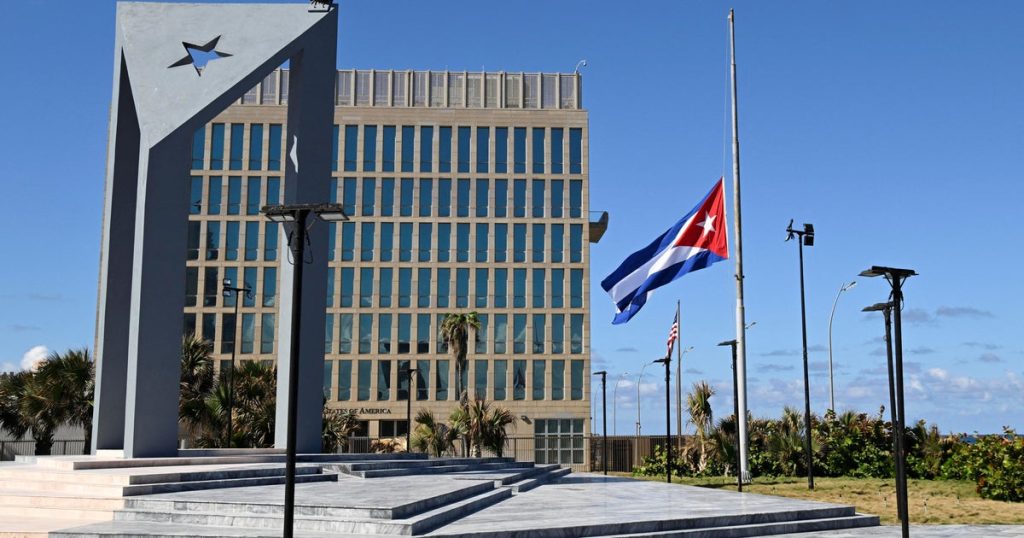
There’s a new development in the yearslong international mystery over Havana Syndrome: The U.S. has obtained and has been testing a device that officials believe could be linked to the debilitating condition.
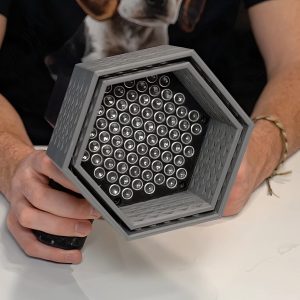
Sources said the device was quietly obtained by the Department of Homeland Security in late 2024, almost a decade after symptoms of what became known as Havana Syndrome were first reported by U.S. embassy personnel in Cuba. The Pentagon has since been testing the portable, backpack-sized device, which emits pulsed, radio-frequency energy and contains components of Russian origin.
The sources said Homeland Security investigators believe it may be capable of reproducing the effects described by victims of Havana Syndrome. The Pentagon and DHS did not immediately reply to requests for comment, and the CIA declined to comment.
Here’s what to know about the mysterious illness.
“My brain is broken”
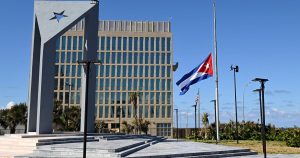
The term Havana Syndrome is derived from the cases first reported by U.S. diplomats and intelligence officers in Cuba’s capital. After the U.S. embassy opened there in 2015, media outlets started reporting on strange medical symptoms affecting U.S. embassy personnel working in the country: dizziness, fatigue, memory problems and impaired vision. Other symptom include nausea, migraines, head pressure, vertigo and ringing or popping sensations in the ears.
Many people with Havana Syndrome describe hearing an intensely high-pitched, painful sound that appeared to subside when they moved to another location, with effects so severe for some that they were ultimately forced to leave their jobs.
“My brain is broken,” former CIA analyst Erika Stith told CBS News in 2022.
“We got this as a result of serving our country. And we deserve to be taken care of,” she said.
The U.S. government refers to the cases as “anomalous health incidents,” or AHIs, and officials have not confirmed what caused them.
But “60 Minutes” has spoken with experts who believe the incidents involve targeted sonic or microwave attacks.
Many of those affected believe that they were wounded by a secret weapon that fires a high-energy beam of microwaves or ultrasound.
Some Havana Syndrome victims have spent more than a decade trying to draw attention to their cases, often faulting the government for failing to provide enough support or access to specialized medical care.
Who has been affected?
More than 1,500 U.S. officials have reported experiencing the condition since 2016, including White House staff, CIA officers, FBI agents, military officers and their families. Cases have emerged in dozens of countries, and have even been reported in Washington, D.C.
In 2021, a Havana Syndrome-style incident was reported in Vietnam shortly before then-Vice President Kamala Harris visited Hanoi. The U.S. embassy there said at the time that a “possible anomalous health incident” required at least one official to be evacuated for medical care, and it prompted Harris to delay her arrival.
“60 Minutes” later learned that 11 people reported being stricken: two officials at the U.S. embassy in Hanoi and nine others who were part of a Defense Department team preparing for Harris’ visit. While Harris was unharmed, some of the injured U.S. personnel were medevac’ed out of Vietnam.
In another case, a State Department security officer who worked in the U.S. consulate in Guangzhou, China, told “60 Minutes” that he and his wife started having symptoms after hearing bizarre sounds in their apartment in 2017.
The security officer, Mark Lenzi, described the sound as a “marble” circling down a “metal funnel” and said he heard it four times — always in the same spot at the same time of day: above his son’s crib when he put him to bed at night. He described the sound as “fairly loud” and like nothing he’d heard before. He and his wife began to feel ill shortly after hearing the sounds.
Lenzi said he believed he was targeted due to his work using top-secret equipment to analyze electronic threats to diplomatic missions.
“This was a directed standoff attack against my apartment…it was a weapon,” he told correspondent Scott Pelley. “I believe it’s RF, radio frequency energy, in the microwave range.”
Questions about Russia’s possible role
“60 Minutes” reported in mid-2024 on a major development in the Havana Syndrome investigation: a suspected link between attacks in Tbilisi, Georgia, and a top-secret Russian intelligence unit, as well as evidence that a reliable source called “a receipt” for acoustic weapons testing done by the same intelligence unit.
Lt. Col. Greg Edgreen, a retired Army lieutenant colonel who led the Pentagon investigation into these incidents, told “60 Minutes” at the time that he was confident that Russia was behind these attacks, and that they were part of a worldwide campaign to neutralize U.S. officials.
“If my mother had seen what I saw, she would say, ‘It’s the Russians, stupid,'” Edgreen said.
U.S. assessments
A U.S. intelligence assessment released in 2023 by the Office of the Director of National Intelligence found it was “very unlikely” that a foreign adversary was responsible for the illnesses — a conclusion reaffirmed in an updated review released a year ago. That review found that most of the intelligence community continued to view foreign involvement as highly improbable.
Two agencies, however, revised their positions, saying there was a “roughly even chance” that a foreign adversary had developed a device capable of harming American officials and their families, while stopping short of linking such a device directly to the reported AHIs.
In 2024, the House Intelligence Committee concluded in a report that the 2023 assessment by the Office of the Director of National Intelligence “lacked analytic integrity and was highly irregular in its formulation.” The report said it “appears increasingly likely that a foreign adversary is behind some cases of what officials refer to as “anomalous health incidents.”
The Office of the Director of National Intelligence says it has been conducting a review of the intelligence community’s previous investigations of the incidents and “remains committed to sharing findings” with the American public when it’s complete.
Former senior CIA intelligence officer Marc Polymeropoulos said that “a new, full analytic review is now warranted, and the DNI must call for one.”
Polymeropoulos, who has spoken publicly of the symptoms he suffered after he said he was stricken in Moscow in 2017, criticized the agencies for what he said were disingenuous prior inquiries.
“The CIA always claimed that none of this technology even existed, that a device didn’t exist, and they based their [assessments] on this,” he said, “so their entire analytic assumptions are now blown up.”
What to know about Havana Syndrome and a device that might be linked to it
#Havana #Syndrome #device #linked