NVIDIA’s DLSS 4.5 Arrives with Sharper Images and Smoother Gameplay
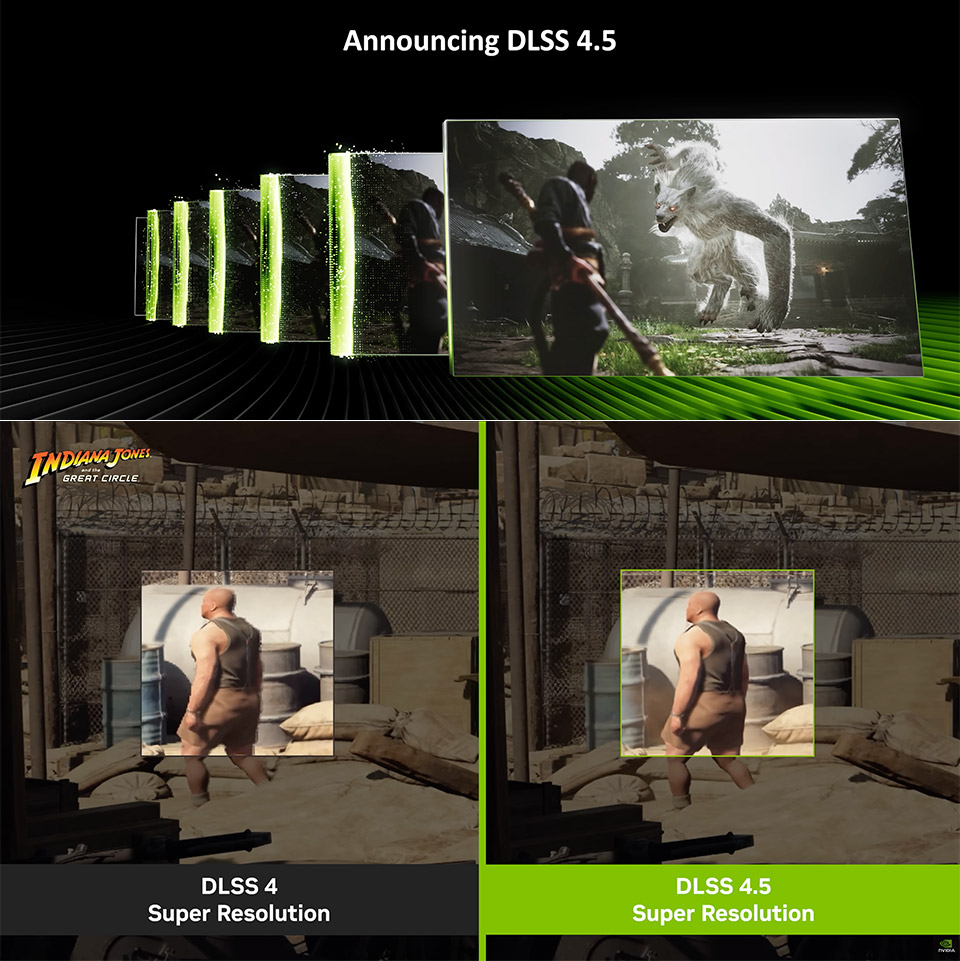
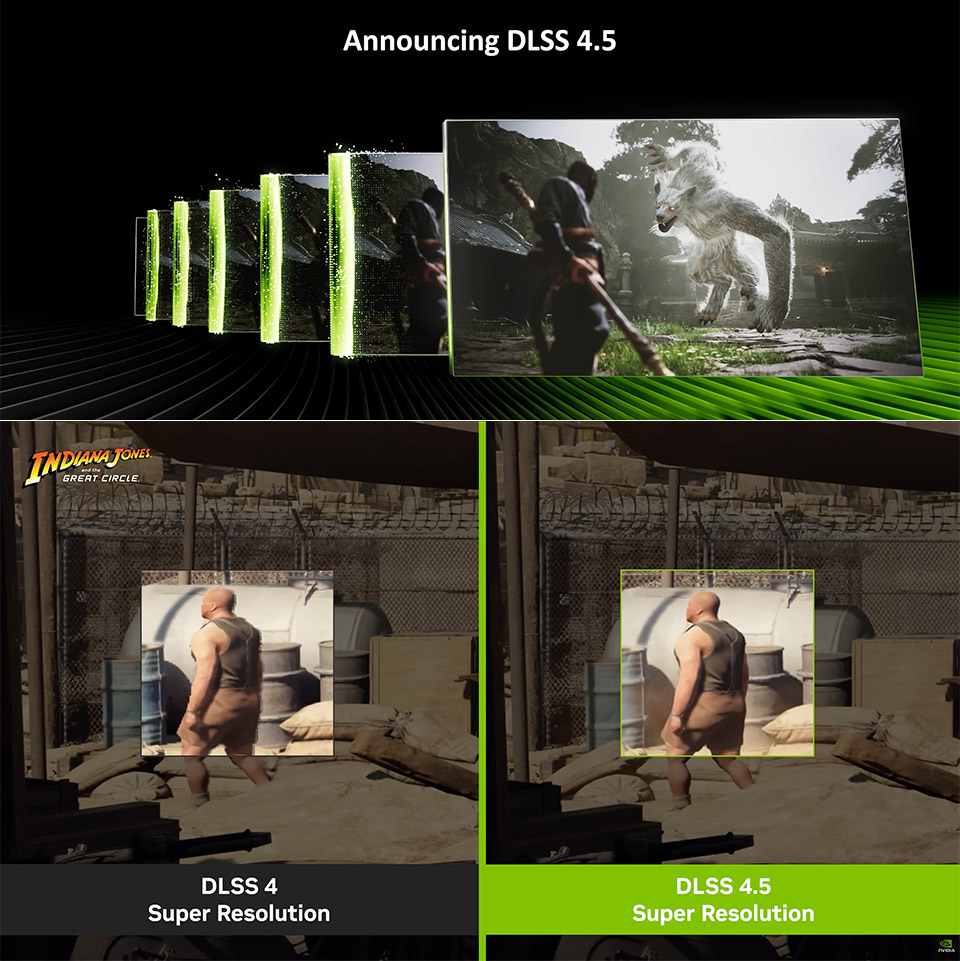
NVIDIA unveiled DLSS 4.5 at CES 2026, marking a significant milestone just a year after its initial debut. There has been a tremendous drive to improve image quality across hundreds of games, and they’ve discovered new techniques to increase frame rates, particularly on the latest technology. Any GeForce RTX graphics card can utilize these much better upscaling functions right away via the NVIDIA app, with more advanced features coming soon.
At the heart of it all is Super Resolution, as they took a long breath and went back to the drawing board with a second-generation transformer model capable of processing scenes with significantly more depth. This one has been trained on a massive amount of high-quality data and requires five times more processing resources than the previous one, allowing it to examine the smallest elements that game engines desire to maintain, such as pixel samples and motion vectors, for example. As a result, you observe much crisper edges, better handling of fast moving objects, and far fewer artifacts such as ghosting.
The developers paid special attention to lighting. Older approaches frequently resulted in dulling bright sections of a scene or simply losing details in the shadows while transferring the content for display. This new version, however, works directly in the game’s native linear color space, preserving all of the exquisite detail in neon signs, sunshine reflections, and so on. As a result, high contrast pictures appear much more authentic, and the glowing effects continue to glow without being clipped off.
Performance modes reap the most benefits, particularly when you move to the Performance or Ultra Performance settings, where images frequently meet or exceed native resolution quality, allowing you to achieve faster frame rates at 4K without being cluttered. For example, in Black Myth: Wukong, the lighting effects are significantly richer. The Elder Scrolls IV: Oblivion Remastered has far less trailing on quick camera turns, Indiana Jones and the Great Circle has considerably more exact edge definition, and so on.
Getting everything to work is really simple. Simply open the NVIDIA app, navigate through the graphics options, and select the most recent model preset. Model M offers balanced performance, whereas Model L aggressively upscaling at ultra-high resolutions. And then there’s the important part: with the RTX 40 and 50 series cards, FP8 precision simply doubles processing speed while sacrificing almost no quality. Even earlier RTX machines benefit from some of the improvements, but at a reduced speed.
Frame Generation takes a huge step ahead with new capabilities exclusive to RTX 50 series graphics cards, which will be released in the spring 2026. Dynamic Multi Frame Generation automatically adjusts itself based on how hard your GPU is working and the refresh rate of your monitor; it knows just when to turn up the frames to protect your game from going below the required frame rate, such as 240Hz. When things quiet down in the gaming world, it scales back again, all in the name of maintaining performance and quality.
Along with this new capability, there’s also a new 6X mode, which can pump out 5 extra frames for every one that the game engine can manage. This works wonders for titles rendered with ray tracing, and can actually push the frame rate of some of these games up to 240 frames at 4K on RTX 50 series hardware, which is a 35% increase over previous 4X settings. Of course, despite all of this, NVIDIA Reflex remains active, preventing input lag even when things get hectic.
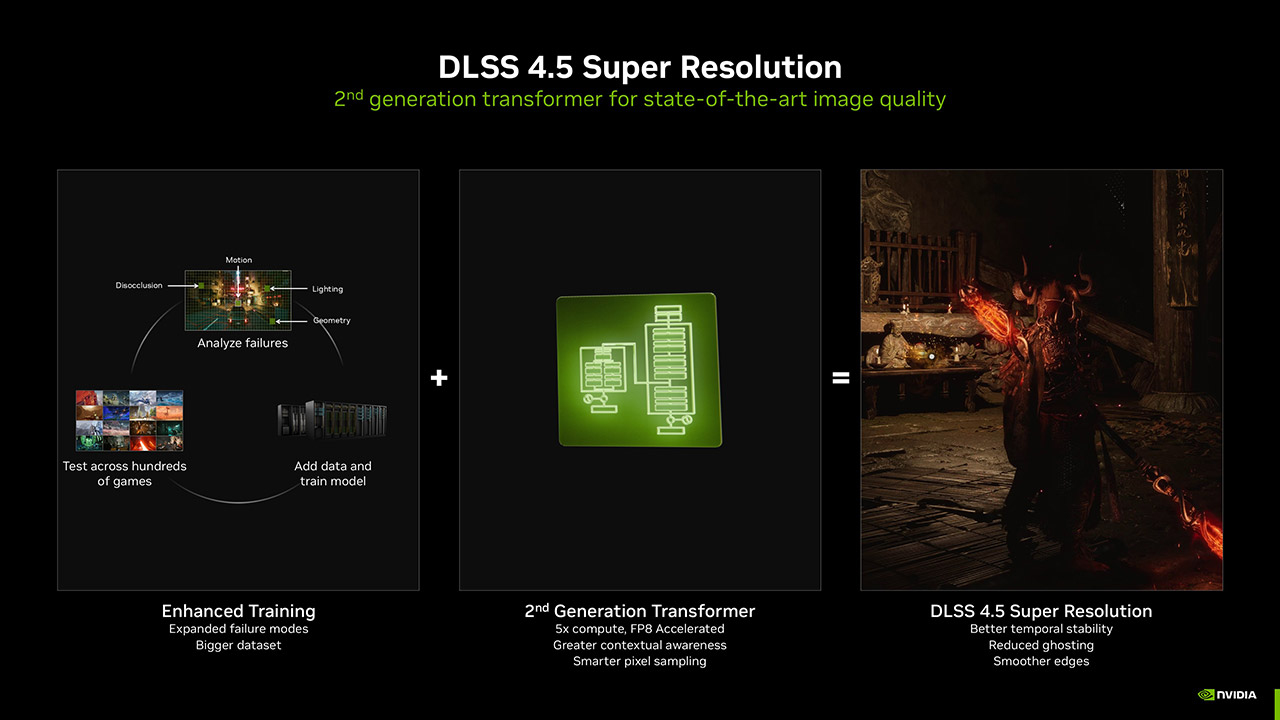
Then there are the noticeable enhancements to static items such as menus. The new model combines even more data from the game engine, resulting in sharper-looking minimaps and menus in games such as Marvel’s Spider-Man 2, Dragon Age: The Veilguard, and Starfield. To demonstrate how widespread support for this new Super Resolution is, over 400 games and programs now support it, with over 250 ready to use the full Multi Frame Generation features when they are available. The icing on the cake is that backward compatibility is built in, so all of your previous games simply function; developers don’t need to do anything but override, and they’re done.
NVIDIA’s DLSS 4.5 Arrives with Sharper Images and Smoother Gameplay
#NVIDIAs #DLSS #Arrives #Sharper #Images #Smoother #Gameplay