Preparing the ground for analog quantum technology
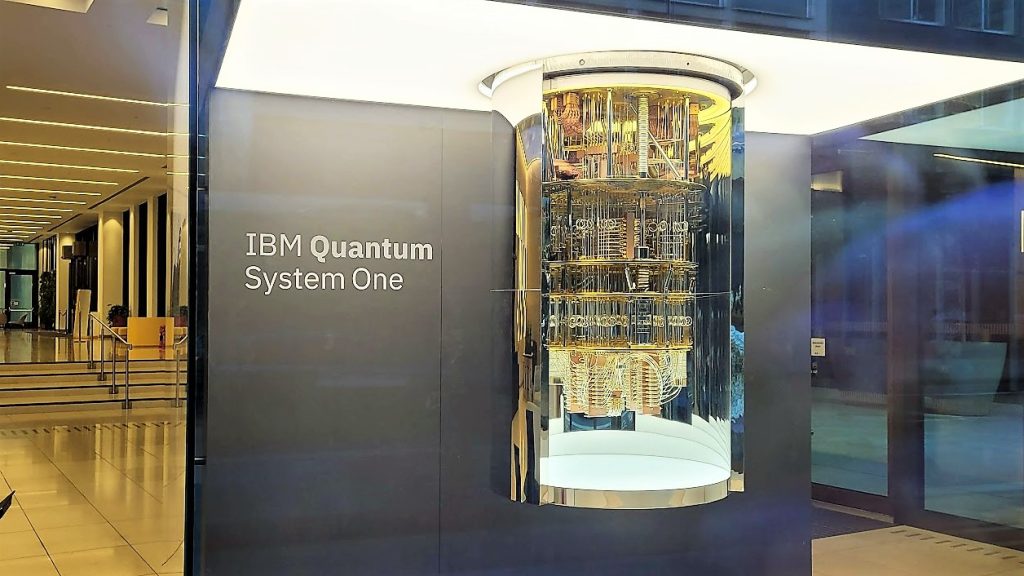
IBM’s quantum computer, London. — Image: © Tim Sandle
A quantum startup running a multimodal data centre is partnering with a commercial provider to expand access to quantum hardware.
Qilimanjaro Quantum Tech opened the first data centre that includes classical compute and two types of quantum computers: analog and digital. Now the company is partnering with Oxigen Data Center, a provider of colocation, private cloud, and hybrid solutions with HPC capabilities. This is to determine the requirements for integrating quantum computers into data centres.
This partnership is set to create a path to a hybrid data centre in the form of infrastructure that is accessible to users from all sectors.
Hybrid quantum infrastructure
The approach integrates classical high-performance computers with specialized quantum processing units to solve complex problems intractable for classical systems alone.
This approach leverages the respective strengths of both technologies, with classical systems managing standard tasks and data, and quantum processors handling specialized, computationally intensive functions.
System design: Advantage analog?
The new system will include digital and analog quantum computers. Analog quantum computing is naturally suited for continuous and complex problems, such as the simulation of molecules, materials, and physical systems. It also offers powerful new ways to train AI models and solve large-scale optimization challenges, opening a path to faster and more energy-efficient computing.
Unlike digital quantum computing, which relies on discrete qubits and gates, analog quantum computing operates on continuous quantum states and employs continuous transformations.
Commercial aims
Both companies are based in Barcelona and share the ambition of building the future of the quantum cloud from Europe. Both note that as the computing landscape evolves toward a hybrid classical–quantum paradigm, defining how these technologies will coexist within industrial environments becomes essential.
Although quantum computers are still in the scaling phase, the time is seemingly now to establish how they will be deployed, interconnected, and operated in real-world infrastructures. If it is accepted that quantum computing will soon become part of the digital backbone, then understanding how to integrate these machines into real infrastructures is important for understanding, designing and using the future cloud ecosystem.
“The future of computation will be hybrid. To make that future possible, we must start defining how quantum processors and classical machines in data centres infrastructure communicate, scale, and operate together,” says Marta P. Estarellas, CEO of Qilimanjaro Quantum Tech in a message sent to Digital Journal.
Preparing the ground for analog quantum technology
#Preparing #ground #analog #quantum #technology