How the U.S. captured Venezuelan leader Nicolás Maduro
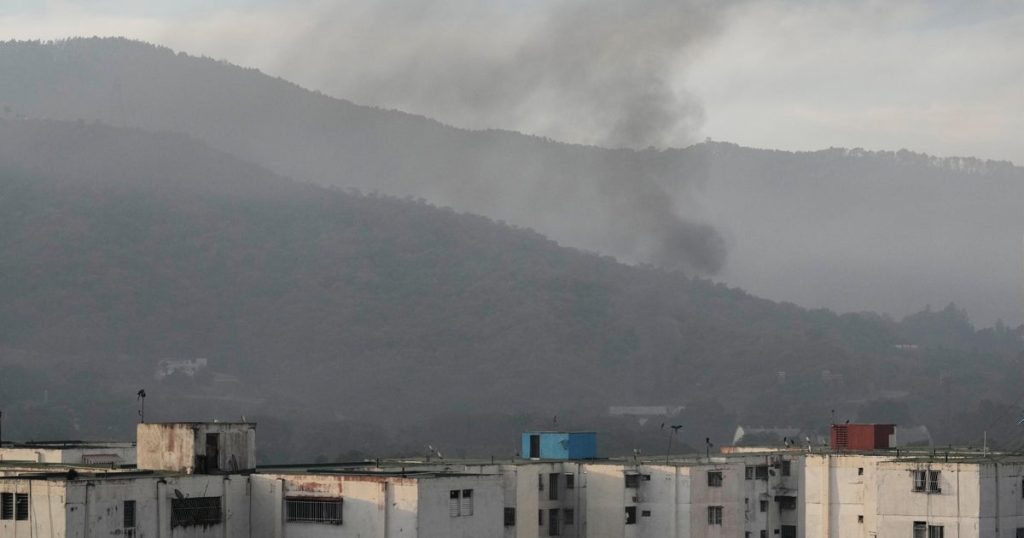
Washington — After months of preparation that included building a replica of Nicolás Maduro’s compound and studying his daily habits, U.S. forces arrived at the Venezuelan president’s residence in downtown Caracas just after 2 a.m. local time Saturday.
President Trump and Gen. Dan Caine, the chairman of the Joint Chiefs of Staff, detailed the stunning operation that ended with Maduro’s capture to bring him to the U.S. to face narcoterrorism charges.
Mr. Trump gave final approval of the mission Friday at 10:46 p.m. ET, telling military leaders, “Good luck and godspeed,” Caine told reporters Saturday afternoon during a news conference at the president’s Mar-a-Lago estate in Florida.
Throughout the night, aircraft launched from 20 bases across the Western Hemisphere toward Venezuela. Caine said the mission, named Operation Absolute Resolve, involved more than 150 aircraft.
“As the night began, the helicopters took off with the extraction force, which included law enforcement officers, and began their flight into Venezuela at 100 feet above the water,” Caine said.
As the helicopters approached shore, they were protected by other aircraft, including drones, bombers and fighter jets. The U.S. dismantled and disabled Venezuela’s air defense systems as the helicopters neared Caracas, according to Caine, who also said they deployed weapons “to ensure the safe passage of the helicopters into the target area.”
Mr. Trump said the lights in Caracas had largely gone dark “due to a certain experience that we have.”
“As the force crossed the last point of high terrain where they’d been hiding in the clutter, we assessed that we had maintained totally the element of surprise,” Caine said.
Once at the compound, the helicopters came under fire but remained operable, Caine said.
“It was a lot of gunfire,” Mr. Trump said.
U.S. forces and the FBI eventually entered the compound, where Maduro and his wife “gave up” and were taken into custody, Caine said.
Mr. Trump said that Maduro tried to escape during his capture.
“He was trying to get into a safe place,” Mr. Trump told reporters. “The safe place is all steel, and he wasn’t able to make it to the door because our guys were so fast.”
“It was a very thick door, a very heavy door,” Mr. Trump said. “He made it to the door. He was unable to close it.”
But even if Maduro had made it to the safe room, Mr. Trump said the military forces could have blown up the door in about “47 seconds.”
After Maduro and his wife were apprehended, the helicopters swooped back in to exfiltrate them. Fighter aircraft and drones also provided protection during their journey out of the country. Caine said there were “multiple self-defense engagements” during the withdrawal.
“The force successfully exfiltrated and returned to their afloat launch bases, and the force was over the water at 3:29 a.m. Eastern Standard Time with indicted persons onboard,” Caine said.
One of the U.S. helicopters was hit and some U.S. soldiers were injured in the raid.
Mr. Trump watched the mission unfold at his home in Mar-a-Lago as soldiers of the Army’s elite Delta Force dropped in and breached Maduro’s compound shortly after 2 a.m.
The U.S. began planning the operation months ago, with U.S. intelligence agencies working to “find Maduro and understand how he moved, where he lived, where he traveled, what he ate, what he wore, what were his pets,” Caine said.
The operation had been ready to go since early December, but the U.S. was waiting for the right time to minimize civilian harm and maximize the surprise, Caine said, adding that it was also weather-dependent.
“Last night, the weather broke just enough, clearing a path that only the most skilled aviators in the world could maneuver through — ocean, mountain, low clouds, ceilings,” Caine said.
How the U.S. captured Venezuelan leader Nicolás Maduro
#captured #Venezuelan #leader #Nicolás #Maduro