Will AI become medicine’s new operating system?
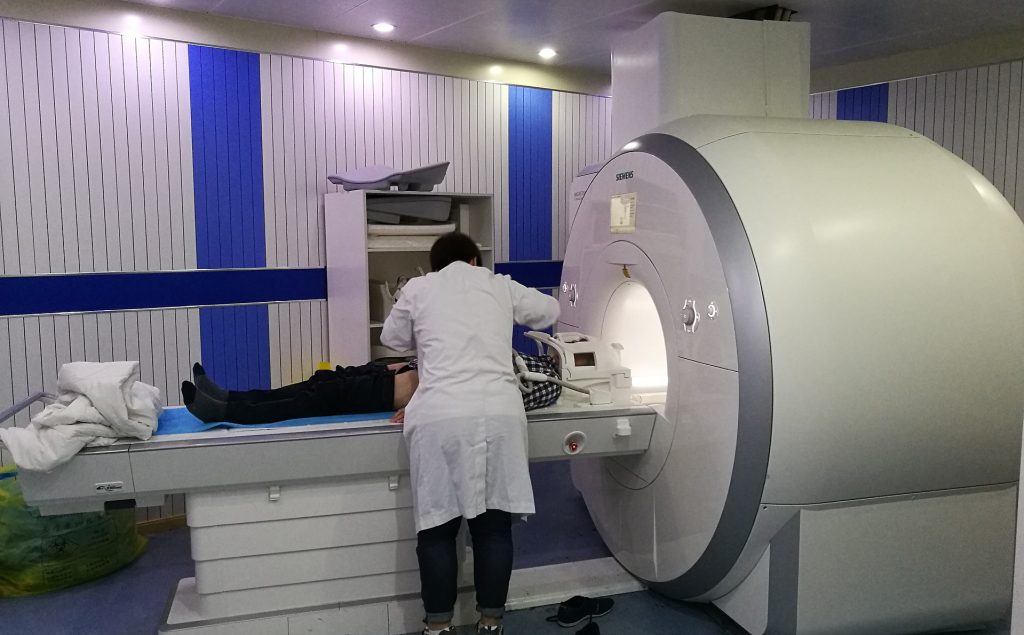
Patient being positioned for MR study of the head and abdomen. — Image by Ptrump16. CC BY-SA 4.0
Is AI moving into the medical mainstream? Will the technology unleash its potential to help medical personnel treat patients faster and more accurately?
To learn more, Digital Journal heard from Steve Brown, founder of CureWise—an AI-powered precision oncology platform helping cancer patients take control of their care—and a STAT First Opinion contributor. Brown outlines how AI is poised to reshape medicine in 2026.
Brown’s perspective is uniquely grounded: he is an AI pioneer who built his own multi-agent diagnostic system after his cancer was initially missed. That system helped save his life and now powers CureWise, making the same intelligence accessible to other patients.
What is next for AI and healthcare for 2026?
Prediction 1: Big Tech Turns Its AI Toward Health
Major AI labs will enter healthcare at scale by launching health copilots—AI assistants embedded directly into medical systems, Brown explains.
Brown’s key points
● Big Tech won’t build hospitals; they’ll build the intelligence layer for medicine.
● Copilots will live inside patient portals, EHRs, and messaging apps, translating symptoms, labs, and notes into actionable guidance.
As examples, Brown cites:
● OpenAI: A general health assistant that synthesizes histories and flags contradictions.
● Google: Integrates wearables, medical records, and lifestyle data into adaptive health insights.
● Anthropic (Claude): Competes on trust, safety, and interpretability.
U.S. healthcare spending will exceed $5 trillion, Brown observes—small gains in accuracy or efficiency are enormously valuable. AI already “knows” more medicine than most institutions; it simply hasn’t been embedded into real-world care.
Prediction 2: Precision Medicine Gets Democratized
Platforms like CureWise will shift precision medicine from academic centres to everyday patient care, according to Brown. He thinks precision medicine will become a dynamic process—not a single drug. Because cancer is a constantly evolving target, patients need systems that adapt in real time.
Prediction 3: Policy Becomes the Make-or-Break Factor
In 2026, the biggest barrier to medical innovation won’t be technology—it will be bureaucracy, according to Brown. he finds that over 1,000 AI bills introduced in 2025 created a confusing regulatory patchwork. in addition, fear-driven rules risk treating life-saving systems as existential threats.
To combat this, Brown foresees AI-guided treatment programs will show survival advantages, increasing pressure on policymakers.
Brown says that three major shifts will emerge:
1. Adaptive trials that learn continuously.
2. Conditional FDA approvals when AI predictions align with real-world data.
3. Insurance coverage for AI-guided treatments, including evidence-supported off-label use.
Yet he cautions that progress is fragile since a single failure could set innovation back years. Moreover, the cultural challenge will be distinguishing real risks from imagined ones.
Prediction 4: Cracking Cancer Means Cracking the Code of Life
Understanding cancer at its deepest level means understanding life’s operating system, Brown opines. To combat cancer, Brown thinks whole-cell sequencing will move from concept to practice. He also expects AI models to predict:
○ Tumor evolution
○ Emerging mutations
○ Drug responses before they appear clinically
These models will enable adaptive, personalised drug combinations, marking the beginning of understanding cancer the way life understands itself.
Will AI become medicine’s new operating system?
#medicines #operating #system